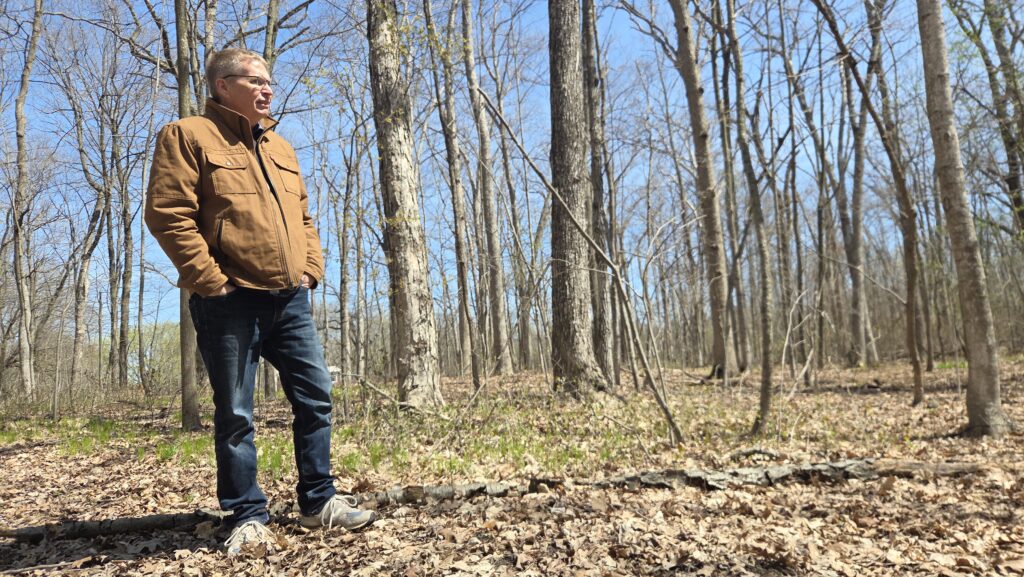
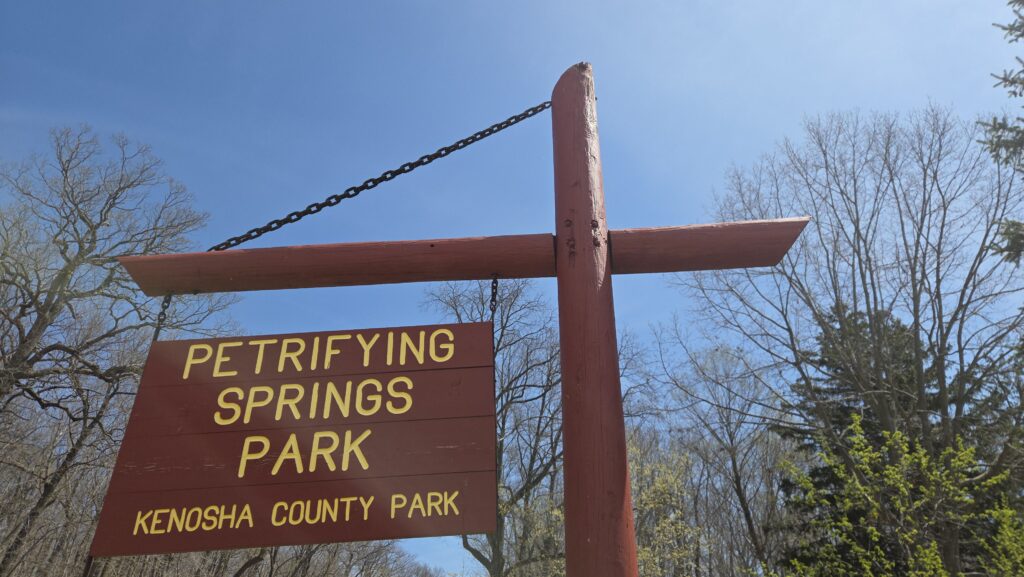
Clark Williams and I walk the woods through Kenosha’s Petrifying Springs Park on a bright Monday, the April sun splitting the slender trees. Parents stroll their babies, joggers prattle past, and a lithe doe keeps her distance, all unaware Clark and I search the leaves for signs of human remains.
The welcoming rays of morning were nowhere to be found on September 27, 1983 when Eric Hansen’s torso was deposited on the forest’s floor, where it sat until it was discovered by a hiker a week later. Born in Wisconsin, Hansen was killed at age 18; the circumstances of his murder remain a mystery.

If someone has inspired you through their service, leadership or dedication, the Unity Awards are your opportunity to recognize them!
Criminologist Clark Williams, fresh from his work helping to find Wisconsin native Billy Newton’s killer in the long-cold case from 1990 (documented in “My Brother’s Killer,” which recently played at the Milwaukee Film Festival) was in Milwaukee to search for links to Hansen’s death this April. He invited me to join him for two days of his investigation, and gave me some back story on Hansen.
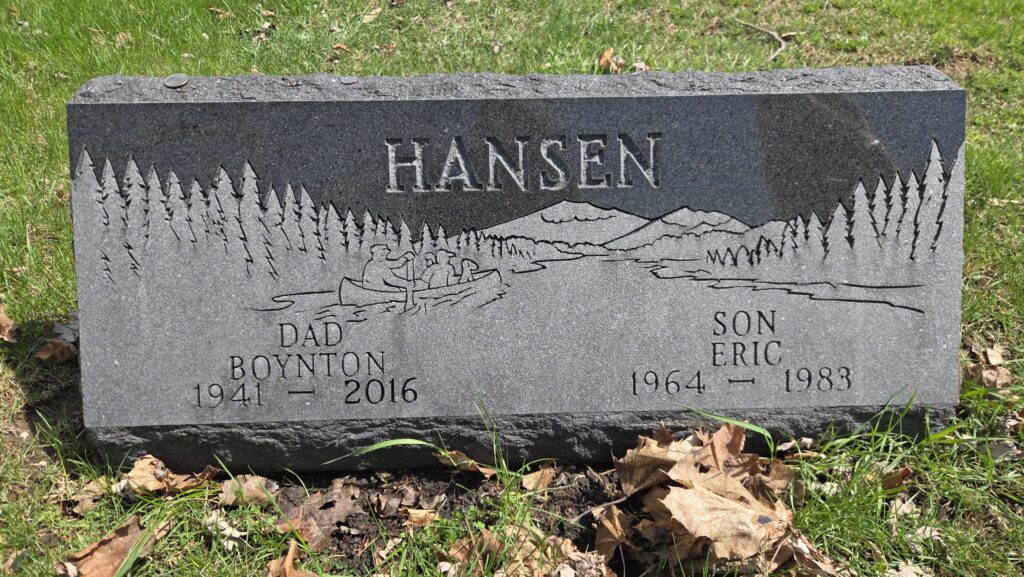
Hansen’s early life was beset with difficulty. Despite occasional fishing trips with his father, his youth accelerated briskly to the local watering hole. Hansen, like many LGBTQ+ youth of his generation, was mislabeled, misdiagnosed and left to flounder alone with his identity.
Eventually, he gravitated toward Milwaukee’s gay bars, in search of community and companionship. Hansen drifted among addresses, going stretches without a home, eventually employing himself in sex work to maintain financial freedom.
In the early hours of September 27, 1983, Hansen was spotted near Paradise Books in Milwaukee’s Historic Third Ward. The next, and last person to see him alive, was his killer.
Like many Milwaukee-area murders of LGBTQ+ people in the 1980s and 90s, Eric Hansen’s case was criminally under-investigated. Despite dismissive reports attempting to link his death to serial killers Larry Eyler, Joachim Dressler, and Jeffrey Dahmer, Hansen’s actual killer has never been determined.
Williams, who grew up in Eau Claire and lived in Milwaukee for much of the 1990s, developing a deep familiarity with gay culture in the city, is determined to put his knowledge to work to solve this case. Below are conversations from my two-day ride-along experience with him.
How do you begin an investigation of a death that took place 43 years ago?
I always start with the victim. Getting to learn who Eric Hansen was, not necessarily how Eric Hansen was killed. The schools he went to, the streets he walked, the places he hung out in, the people who loved him and the people he loved. So I can understand Eric and the choices he would’ve made when he was last seen on September 27, 1983, at 3 in the morning. I’m still meeting people and trying to find people who knew Eric to help inform that profile. The more people I talk to, the more accurate my profile becomes.
Tell us about the profile you create.
The profile includes pieces of Eric’s life, his family history, his school history, his work history, his employment history, traumas in his life … his value system. I try to rehabilitate Eric, almost bring him back to life. I can only do that through the eyes and ears of those who knew him. I’m asking people to go back 43 years. I need partners, I need people to join the investigative team. With seemingly disparate pieces of information, I don’t always know where they fit, but they fit somewhere, because I am building this mosaic of the case. So that’s the process. Where am I in the process? I don’t know – am I at the beginning, the middle or the end?
What happens after you build the profile?
For the Eric Hansen case, I’m trying to reintroduce people to him, go back and find him again so he can participate in his own murder investigation. I trust that all of this time and energy, all of these contributions that everybody is making, it’s going to lead to something. I really believe it. It’s something I believe in – a victim-centered homicide investigation, particularly without any DNA … what do you do if there’s no DNA? Eric Hansen deserves a good quality murder investigation, even if there is no DNA.
How can people’s memories of Eric Hansen help to solve this case?
When I talk to people who knew the victim, initially they don’t think they have anything to contribute. But almost inevitably, they make huge contributions. That’s how these cases are solved: It’s oftentimes the smallest piece of new information that can blow a case wide open. Almost every day leads to a dead end in my investigatory work, until one day when it doesn’t. That’s what I learned in the Billy Newton case. I worked on that case for ten months, and every single person of interest led to a dead end until it didn’t … and we found the killer.
How do you discern between useless and useful information?
Eventually, I think the truth does reveal itself if you’re looking for it, in whatever shape that takes. That’s why I’m agnostic to the information I’ve been developing. I don’t know where it’s taking me. I know I’m closer to finding Eric’s killer than I was a month ago. I just don’t know yet who it is. And that’s what justice looks like.
How can people who knew Eric Hansen, or something connected to his death, help?
I would love to talk to anyone who knew Eric Hansen as a friend, family member, classmate, coworker or acquaintance, as well as anyone who frequented Walker’s Point and Third Ward gay bars during the 1980s including C’est La Vie, Ball Game, the Phoenix and Wreck Room, as well as Paradise Books and Video. Please contact me, Clark Williams, at clarkwilliams@hotmail.com.