

Even in a city known for its magnificent places of worship, Church of the Gesu stands out. The unevenly matched steeples, evoking the Gothic splendor of the cathedral of Chartres in France, soar high above the busy Marquette freeway interchange, making Gesu – Jesus in Italian – perhaps the most visible religious structure in Wisconsin.
More than a century after it was built, the Catholic church is now undergoing a top-to-bottom renovation that will ensure that visibility for the next century and beyond.

If someone has inspired you through their service, leadership or dedication, the Unity Awards are your opportunity to recognize them!
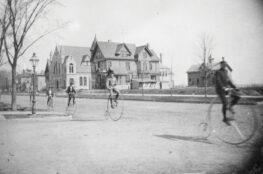
Gesu has experienced two very different incarnations under its Jesuit leadership. The building was dedicated in 1894 as the parish church for a working-class Irish neighborhood called Tory Hill, whose ghost hovers squarely above the Marquette Interchange.
Although their homes were dwarfed by the mansions of neighboring Grand (now Wisconsin) Avenue, the parishioners and their priests chose to build on the avenue itself, a powerful, even defiant, statement of the Irish Catholic presence in a city dominated by Yankees and Germans.
Gesu’s Irish working-class character endured for decades, but the plutocrats of Grand Avenue eventually departed for quieter suburban locales, and the Irish themselves moved steadily westward. By the 1950s, Gesu had become what its pastor called a “transient” parish, serving the elderly, visitors and a swelling population of Marquette University students.
In 1907, the Jesuits had built MU’s Johnston Hall in the afternoon shadow of their flagship church. From that nucleus grew a campus that now covers over 100 acres and enrolls roughly 11,000 students.
Gesu became a university church, but it remains a thriving parish as well. Drawn by the splendor of the building, the beauty of the music, and the erudition of the resident Jesuits, today’s members come from throughout the metropolitan area, joining Marquette students who infuse the congregation with youthful energy, four years at a time.
TAKE A CLOSER LOOK:
- The church’s west steeple rises 250 feet from sidewalk to cross, making it one of the tallest in town. Gesu’s Gothic Revival design was the work of local architect Henry Koch, whose other 1890s projects included City Hall and the Pfister Hotel.
- Gesu’s cavernous interior was heated by a coal-fired furnace plant tucked behind the church.
- Elm trees were ubiquitous on Milwaukee’s streets until Dutch elm disease ravaged the species in the 1960s.
- When this photo was taken in the late 1890s, Marquette University was a decade away from putting down roots in neighboring Johnston Hall.
IN COLLABORATION WITH MILWAUKEE COUNTY HISTORICAL SOCIETY