

From the Imaginations of Black Women
How does a city transform when Black women build dreams for the healing and well-being of a city?
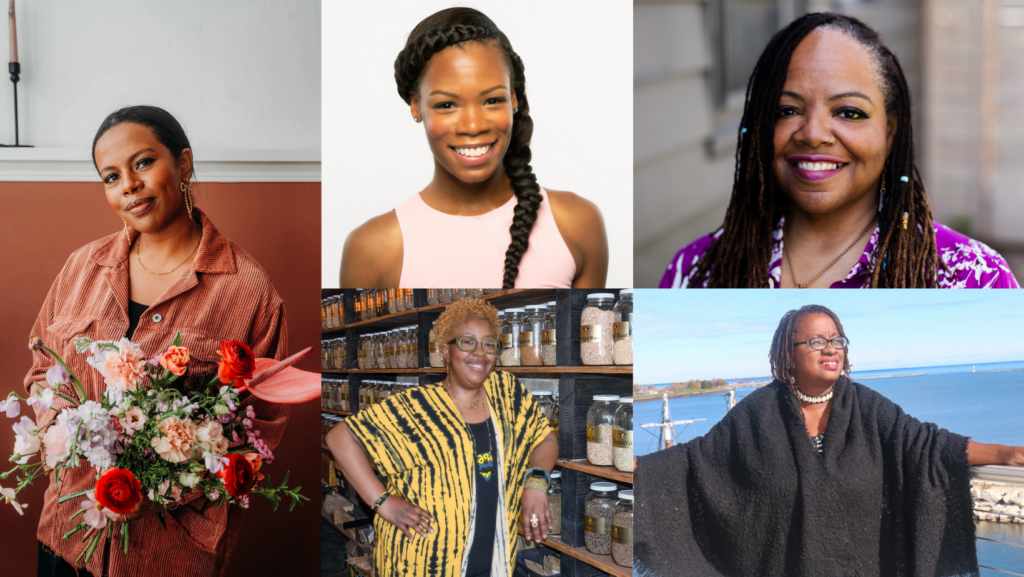
HoneyBee Sage, a healing café offering tea, non-alcoholic beverages, medicinal herbs and natural products. 414loral, a floral shop that hosts sound baths, yoga and Black men’s healing circles. Alice’s Garden, a community garden that cultivates the whole person by hosting outdoor yoga, moon rituals and an herbal apprenticeship. Zen Dragonfly, a holistic spiritual shop rooted in Black folk traditions offering reiki, readings, spiritual products and more. Embody Yoga, a studio where Black women can freely explore yoga and Pilates.
If you know, you know. If you don’t, you just may need a map to find your way to a powerful and flourishing healing and wellness ecosystem brought to you from the imaginations of Black women in Milwaukee. Maybe, you need what Marcus Hunter and Zandria Robinson call, “a Black map.”
Throughout Milwaukee, Black women founders, curators and business owners have woven together an ecosystem of healing and wellness spaces. Although birthed from the imaginations of Black women, they call in all of Milwaukee on their healing journeys.

Celebrate this year’s winners of the Betty Awards!
Even as the city is 40% Black, Milwaukee’s significance as a site for Black culture, heritage, and placemaking often goes unrecognized. Or worse, Milwaukee’s status as one of the most segregated cities in the country, and one of the last ranked places for Black thriving often defines its reputation. Even as historical and ongoing structural factors shape the unjust conditions of the city, scholars like Katherine McKittrick assert that Black spaces are more than sites of oppression. She calls us to consider how a “Black sense of place” is shaped “as and with” dominating systems of power that create unjust spatial conditions. There is much more to Black life than subjugation. We can map where there’s more to Black life. If we know how and where to look.
A Black Map of Milwaukee
Artist Derrick Adams offers a way of tracing Black Milwaukee. His Our Time Together mural, a permanent installation in the Milwaukee Art Museum’s East End, is a Black Map. The mural showcases Black life in Milwaukee by centering Black joy. It’s inspired by Victor Hugo Green’s Jim Crow traveler guide that made visible businesses that did not discriminate against Black people,The Negro Motorist Green Book. Similarly, this exhibit captures an alternate mapping of Milwaukee based on a vantage point that may go unnoticed: Black joy. Weaving together archival photographs and paintings we see scenes of Black Milwaukee’s culturally significant sites such as Coffee Makes You Black and Gee’s Clippers. Rooted in joy, it captures everyday Black life: girls jumping rope, family picnics, rallies, singing and political organizing.
The Black women’s healing and wellness spaces featured here are the newest layer of sites on Milwaukee’s Black Map and can reshape how we experience and understand the future of the city as a whole. These sites offer important geographic information that reshapes what we know about Milwaukee, and from where we know it.

To some, this ecosystem may be under the radar. Angela Smith, owner of Zen Dragonfly, sees this as a remnant of old ideas about what “spirituality, healing, and wellness looks like, and for so long in Milwaukee, we weren’t in it. We weren’t visible.”
She notes how Black women built things that didn’t previously exist but were needed. “We’re not at the tables, so we all decided that we’re going to build our own,” Smith says. “And that’s pretty much what happened – all of us built our own tables. We didn’t have these things until these women decided they wanted to see it.”
Joanna Brooks, owner of Embody Yoga, entered the yoga space after being the only Black student in many of her classes. She wanted to bring yoga to Black communities, and after her initial approach of “traveling to the people,” she evolved into a permanent home in Glendale (though she still hosts free yoga classes across various public spaces such as Johnson’s Park, the Milwaukee Art Museum, and more). There, she is currently expanding her yoga and Pilates studios into a full-fledged Wellness Center with suites hosting additional services by women of color wellness providers and a common area for gathering.
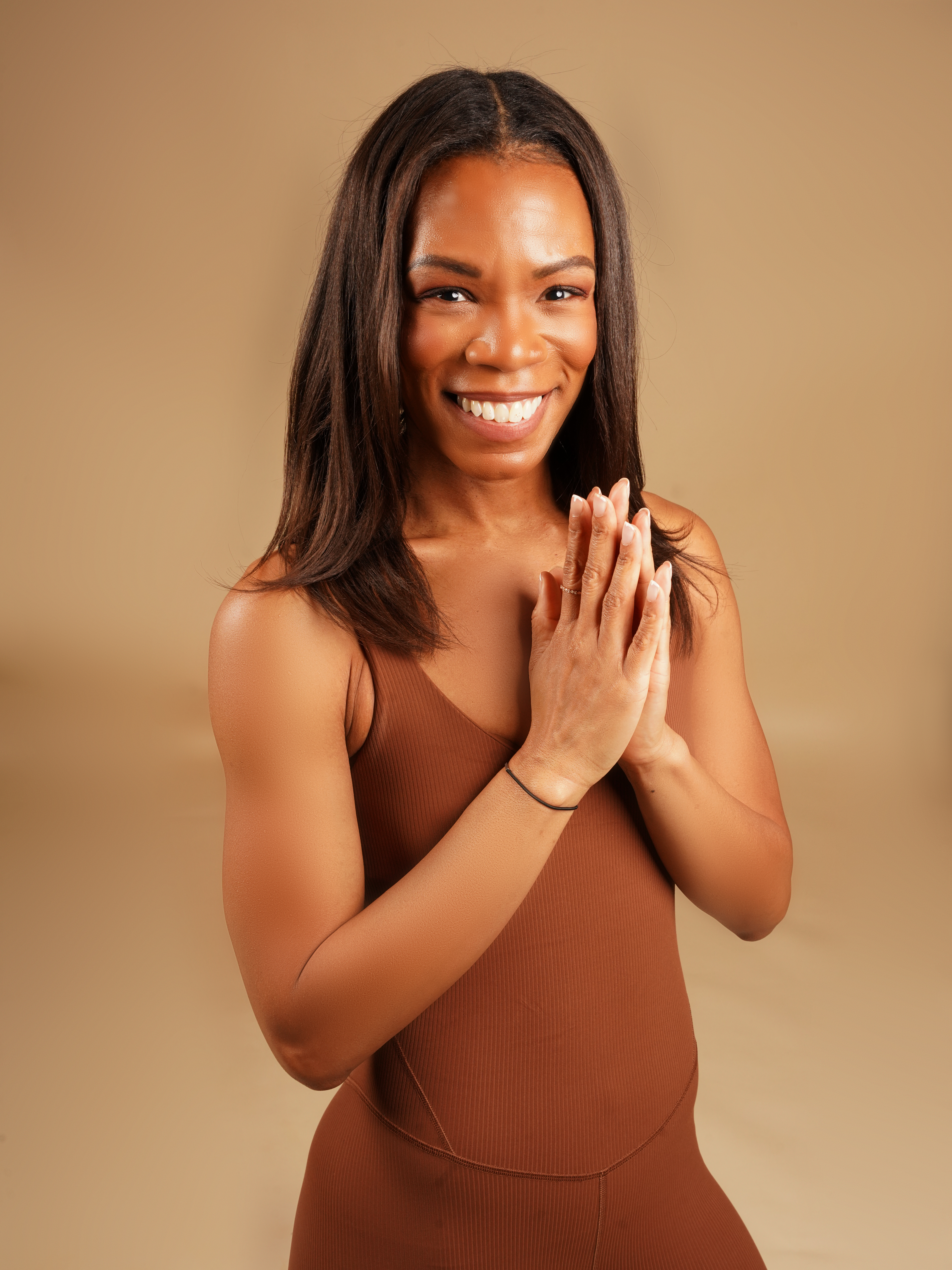
Early phases of growth are already at work with the addition of a licensed professional counselor (LaKeisha Russell) and a doula and massage therapist (Mia Morris) in offices just outside the studios. Brooks envisions the space as feeling like home.
“I want them to feel like they can just come in and hang out here, and gather themselves, or have a little bit of respite in this space,” Brooks says. “It’s going to feel like laughter, joy, and loud conversations. It’s going to be community. It’s going to feel like the aunties around at the cookout. That’s how it’s going to feel with us [Black women] and wellness at the center.”
The Space to Return to Ourselves and Home
While most of the sites sell products and offer services, it’s about more than what can be bought and sold. It’s about carving out spaces in the city where healing and wellness is possible.
Angela Mallett, owner of the Bronzeville healing café HoneyBee Sage, jokingly told a friend that she wanted to be “a professional space holder.” And she is.

Space is more than the room one is in, even one as intentionally designed and curated as HoneyBee Sage. Anyone entering the café knows that they have entered a sacred space. “More than anything, the product that I was offering that didn’t have a price on it was safe space,” Mallet says.
For Mallet, what most people need to heal is within them and accessible to them within safe space. “Even if we are going to be guided to utilize something – an herb, a stone, to connect with a person – it’s in that space of stillness, quiet, safety that we’re able to hear what the next direction is,” she says.

“It’s not a trend,” says Venice Williams, Executive Director of Alice’s Garden, “it’s an awakening.” This awakening is rooted in ancestral guidance, leading back to traditional healing systems that were erased and suppressed by African enslavement, and its ongoing residuals in our present lives.
Williams says that “healing work is in our DNA,” whether it’s through “plant material and the healing power of nature, observance of moon cycles, or deep care of our bodies and souls, it’s about coming home to original spiritual traditions.”
Smith says that Black folk traditions are a “loving, healing spiritual placement that is deeper than most can understand. But when you feel it or you walk into it, you know that it is something that is inside of you. Inside of you.”
It’s in us. All we need is the space to return to them.
Milwaukee Home(place)
Black women carve out these spaces across Merrill Park, Lindsey Heights, Bronzeville, and Glendale. These spaces are what bell hooks might call homeplaces, “that space where we return for renewal and self-recovery, where we can heal our wounds and become whole.”
Black women’s tradition of making homeplaces created affirming spaces to recover from systems of domination, a necessary site of resistance. “This work is an invitation to slower living, to interrupt the madness that is presented as the only option,” Williams says.
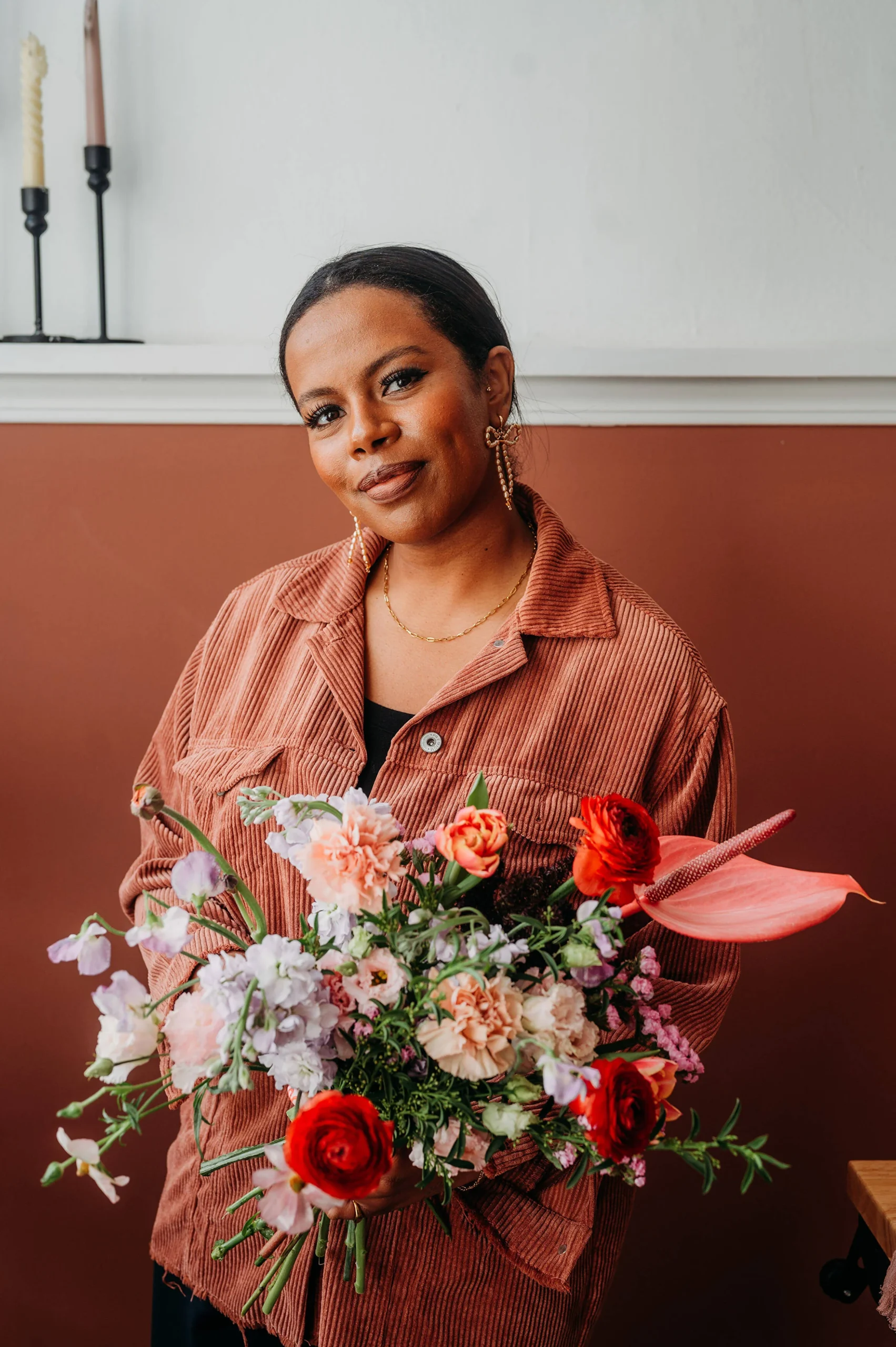
Mikel McGee, owner of 414loral, sees floral arrangements as an “immersive experience,” almost meditative, that reminds her to stay present. Her shop collaborates with other organizations to create space for the community to slow down the everyday rhythm, such as sound baths and yoga.
These spaces reverberate outwards across the city, fundamentally reshaping it. As Williams – who is reverently considered a mother of Milwaukee spiritual and healing communities – says, she can take “a deeper exhale, knowing that it’s going to be okay,” because of the many Black and Brown women who were “not front and center 20 years ago in Milwaukee,” but are today.
Smith and Williams nurture and mentor women healers in various modalities. Brooks supports Black healers’ education through the Aspiring Black Healers Fund. She sees the “ripple effect,” in the He Do Yoga Program by Lorenzo Edwards, who expands the reach of Embody Yoga to Black men by providing free classes and healing conversations. Mallet envisions franchising HoneyBee Sage, expanding beyond Milwaukee. When I ask if the city has changed because she and the other Black women curated wellness spaces exist, Mallet speaks affirmatively, “yes, and that’s a bold statement to make, but it was a prayer that I feel like has been answered for me. I do feel like the city of Milwaukee is elevated by my presence and the presence of those like me, who desire to see healing come to our people in the space that is Milwaukee.”
Brooks noted that while an individual Black woman and her dreams generate something different and special in the city, the magic is in support of the community: “It’s not a dream in isolation. It’s a dream in community,” she says.
These dreams are homegrown. Milwaukee home(place), indeed. Or, to put it the way Williams greets everyone entering the garden: “Welcome home.”