April is an exciting, changeable time. The gardening catalogues have stopped flooding my mail box, my plants are ordered and I’m awaiting deliveries. I’m anxious and excited at once – are they the same thing? If green tips are one sign of spring, another is when our next-door neighbor, ACE Hardware, puts out its annual offering of seeds, soils, mulches, bark, sand and pea gravel. (It’s fantastic living next to a hardware store – they are kind, hardworking neighbors, and carry a lot of things I need in a pinch. They are often recipients of bags of produce in thanks for their gardening support.)
I took my first serious look in the yard this week, picking up twigs (there were lots) and looking for bunny nests (there were none … yet). I made a deposit into my compost account by starting a new “cold” pile so my two fall batches can decompose in peace.

If someone has inspired you through their service, leadership or dedication, the Unity Awards are your opportunity to recognize them!
I encourage anyone and everyone to compost. It keeps valuable organic material out of the landfill and is free, rich soil for you. I learned the hard way to keep your piles away from the house, there can be a smell if you don’t have the right 3-to-1 “brown” (leaves, newspaper) to “green” (vegetables, flowers) recipe. If you want to buy bins, buy two: one for decomposing materials, the other for kitchen contributions. I tried indoor composting with worms one year: when I found them making a break for freedom by getting under the bucket lid, outside they went.
My compost bucket was filled with coffee grounds and tea leaves, Trader Joe’s tulip leaves (I need some cheer before my own bulbs start coming up), banana skins, kale and lettuce stems, eggplant ends, and shredded New York Times. My compost piles are on the west side, behind my tree line where they get enough light, next to the animal super highway connecting our yard to three neighbors. If the critters don’t dig up my plants (I’m looking at you, woodchuck), I am fine with their grazing on whatever strikes their fancy. (We put our wildlife cam out this week – we’ll see who is making the rounds.) I learned to turn the piles once or twice a week to break the pile down within the season. You are in the yard anyway, take your shovel with you.
You are surely surveying your beds for clean-up – but hold your horses, don’t start yet! In her class, Melinda Meyers advised cutting plants back when it is reliably 50 degrees outside. Just as the no-till movement is teaching us about preserving soil nutrient structures and organic matter to feed our plants, we also need to leave leaf debris and plant stems in our yards later in the spring. This provides shelter and habitat for the creatures that overwinter on site. And we live in Wisconsin – it’s safe to say it will likely snow again. Stay the course, let your garden awaken on its own schedule.
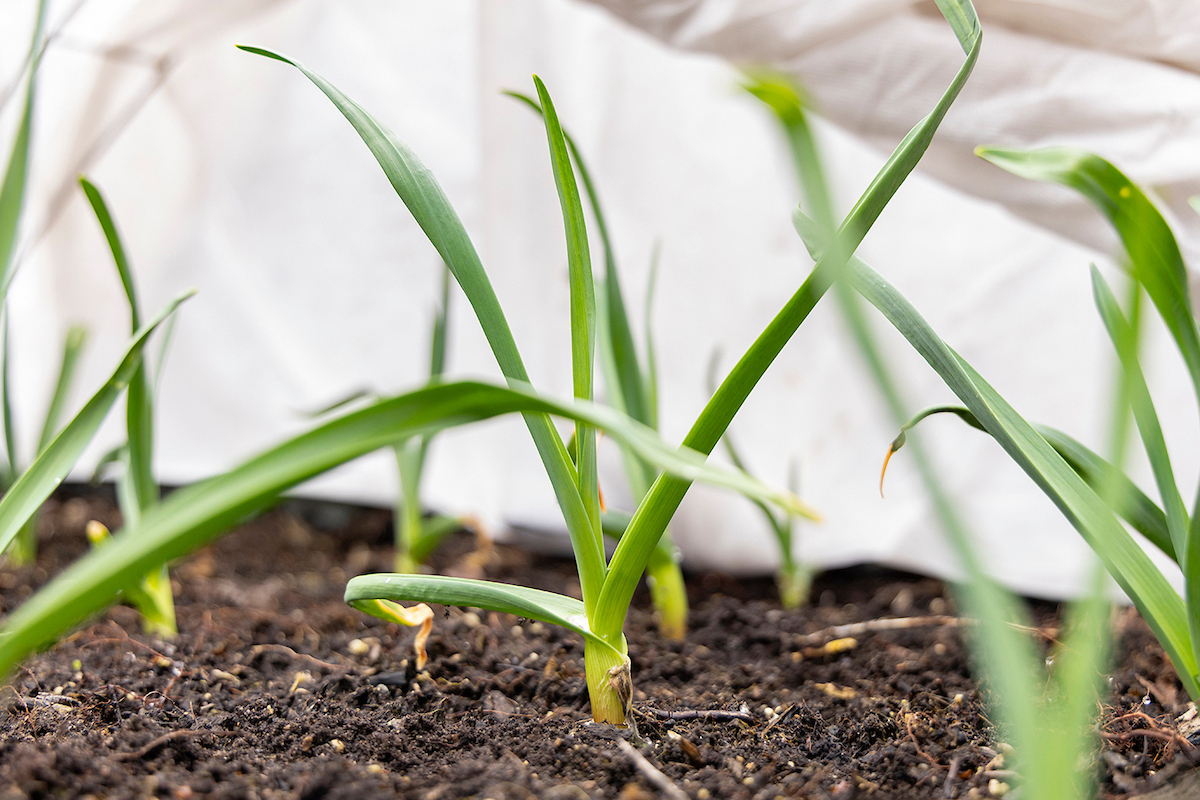
I peeked into my covered bed full of garlic. (No, I am not jealous of your greenhouse … well maybe a bit. Maybe one day.) I keep the garlic covered so they can grow unmolested, away from the marauding squirrel pirates. The garlic isn’t ready until July, so once the garlic comes out, I’ll sow another round of greens.
I tossed prairie clover seeds for cover crops into a few raised beds last fall. None of the seeds came up! I can’t blame the birds since the beds were covered. Perhaps the seeds were past their use-by date (normally three years). Another good lesson: keep your seeds fresh! Too bad about the clover – when I pulled it all last year I had an instant, three-foot heaping compost pile. I’ll buy some more seeds for the fall.
Also noted in the covered beds: my kale did not survive the winter – which is good news, we need that freeze cycle to knock the mosquitoes back. I nestled some of my pot empire into two raised beds, as Wisconsin garden guru Melinda Meyers’s suggestion in her fall 2024 class. Every little trick helps, even if it’s just about protecting clay from the freeze-thaw cycle.
Some other things to consider while waiting for your garden green light: what are your primary goals for your garden this year? Is it infrastructure expansion by adding a rain barrel, drip hoses, a bird house, bee hotel or a bird bathing feature?
I have had a rain barrel in mind for years. I water a lot to get the seeds out of the ground but want to be more diligent and reduce my water use through the rest of the season so a barrel would help.
Have you ever had your soil tested? You can download instructions from University of Wisconsin-Madison Extension, follow their guidelines on gathering your samples, send dirt through the mail and get your results in an email. They will report your soil’s organic composition, guide you on any remediation or reinforce your good work for all the amendments you’ve been adding! Or is your goal this year to diversity your plant types with more natives and flowers or a wider array of vegetables to eat? A mix of food for you and wildlife is a great combination.

What’s keeping me up at night is that my replacement broad-spectrum indoor lights for seed starting haven’t arrived yet. (My fault, I left the ordering too late.). I have added a small oscillating fan that brushes the seedlings around, making them stronger for real outdoor conditions. Make sure you read the packets: turns out the native sunflower and green milkweed seeds I just got in the mail need cold to germinate. I followed the instructions from C(30) from Prairie Moon Nursery. C means cold stratification, 30 means keep them in the fridge on moist paper towels for 30 days, then plant. Wish me luck getting these to sprout, I’ll save some for a fall toss just in case.
You can start sowing seeds in late April. Look for planting guides online, including this one from UW-Milwaukee Extension. There are opportunities for early spring planting, second crops and late summer planting. Go at your own pace, do it all if you have the bandwidth!
Don’t forget that April 22 is Earth Day. Founded in spring 1970 by Wisconsin Senator Gaylord Nelson to force environmental issues onto the national agenda, Earth Day connects concerned activists and regular gardeners alike in becoming good stewards of our home. Let’s continue Nelson’s Wisconsin legacy.
Gardeners, it’s time to get your engines started and be ready for May’s frenzy!
Upcoming Local Gardening Events
Care for the Land Series: Native Gardens in Small Spaces, Urban Ecology Center
APRIL 3, 5-7 P.M. | WASHINGTON PARK, 1859 N. 40TH ST. | $20-25
Tosa Wildlife Habitat Spring Kick-off Event
APRIL 5, 10 A.M. TO NOON | WAUWATOSA LIBRARY FIREFLY ROOM, 7635 W NORTH AVE, WAUWATOSA | FREE
Guest speakers are Danielle Bell and Marian French of Native Roots, who will walk us through the steps to bring wildlife to your yard, and artist/activist Eddee Daniel, who will share images of the varied ways neighbors in Wauwatosa have brought in nature to fit their property. This event is free to all, with hand-outs, stickers and giveaways.
Vegetable Gardens for Beginners, Lynden Sculpture Garden
APRIL 5, 10-11:30 A.M. | 2145 W BROWN DEER RD, RIVER HILLS | $15
Earth Day Tree Planting, Schlitz Audubon Nature Center
APRIL 12, 10 A.M.-NOON | 1111 E. BROWN DEER RD. | $35-50
A Few Gardening Resources
BUYING PLANTS
- Southern Wisconsin Native Plant Sale through May 5. For instructions on how to order through Johnson’s Nursery use this link.
- Friends of Horicon Marsh Education and Visitor Center and Bombus Wildflowers for Wildlife plant sale. Order now to pick up on May 17, 9:30-1:30 pm
- Pay on-line to Bombus nursery, look for “Horicon” Pick up site: N7725 State Road 28, Horicon, Wisconsin
- Johnson’s Nursery
- Prairie Nursery
- Prairie Moon Nursery
EDUCATION
- Monarch Watch
- Melinda Meyers: She’s got how to instructions, up-coming appearances and instructional videos, books & cds to help you on your gardening path
- Milwaukee Film, “Let’s Dig In!” series explores our planet’s ecosystems and the importance of sustainability
SUSTAINABLE GARDEN INFORMATION
- National Wildlife Federation: How to create and certify gardens for wildlife
- Wild Ones Milwaukee: Specific plans for a Milwaukee-specific climate resilient, landscape plan by Danielle Bell, Native Roots
- UW-Madison Extension soil testing
- UW-Milwaukee Extension planting guide
- New Directions in the American Landscape is an educational organization dedicated to the “art, culture, and science of ecology-based landscape design and practice”