In theory, schnitzel is a pretty simple dish: a cutlet of meat is pounded thin, dipped, breaded and pan-fried. But it’s so delicious that many countries have a version of it – Austria’s veal Wiener (Viennese) schnitzel, Italy’s cotoletta alla Milanese (a veal cutlet fried, traditionally in butter), Japan’s tonkatsu, France’s escalope. Even the Southern classic chicken-fried steak is an iteration of the same.
If you’ve been to a German restaurant, you have likely encountered several variations of schnitzel including à la Holstein, which means with an egg, anchovies and capers on top. The schnitzel in all its forms is, to me, the epitome of the kind of eating you’d gladly loosen your belt for. You can reliably find it in the few places around that serve German cuisine, like Kegel’s Inn, Bavarian Bierhaus, Wegner’s St. Martins Inn and Jack Pandl’s Whitefish Bay Inn, where you might have it with pan-fried spaetzle and red cabbage.
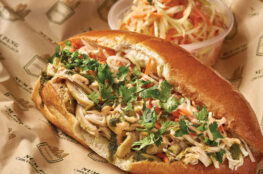
And because of its versatility, it’s a technique we’re seeing in other applications. A Goodkind special this fall was puffball mushroom schnitzel with pickled celery and caraway gravy. And at the new, modern-German WurstBar on Brady Street, the pork schnitzel is served in sandwich form (with Usinger’s apple kraut) and as tenders served with spaetzle and dipping sauce.