
Milwaukee celebrated Bastille Days, its annual showcase of all things French, with music, dancing, the Storm the Bastille run, and many memorable outfits. We went to the festival in search of some of the most striking. Here are three to check out, each inspired by French fashion and history.
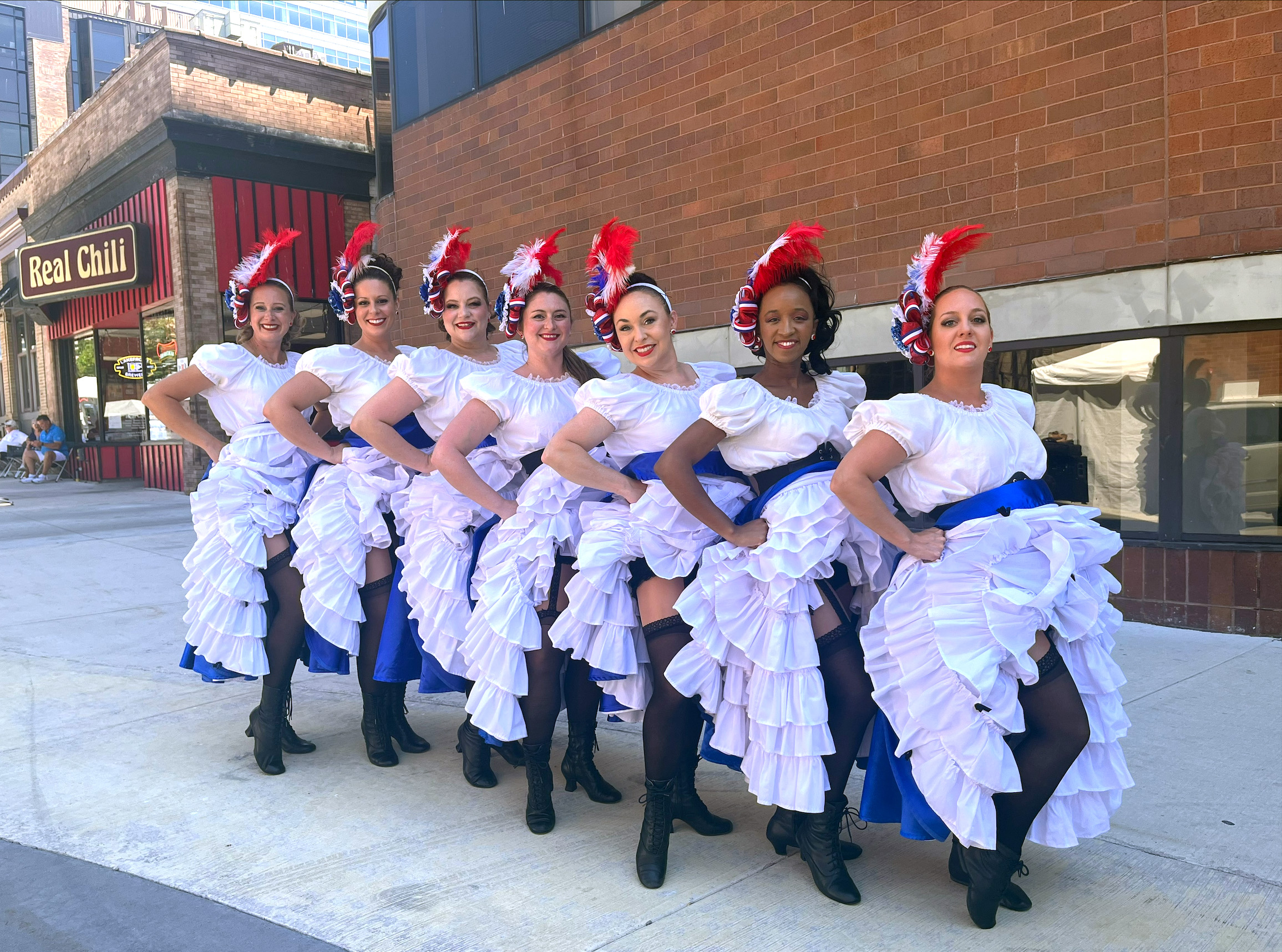
Madame Gigi’s Outrageous French CanCan Dancers
Adorned in custom-made ruffled petticoats and headpieces matching the colors of the French flag, Madam Gigi’s dancers brought a little Moulin Rouge to Milwaukee for their Bastille Days performances.
The cancan they perform is an important piece of French history – the dance emerged in the 19th century during the French Revolution as a symbol of female liberation and disrupting the status quo. During a time when bare women’s ankles were considered scandalous, this dance defiantly stormed past norms with a high kick. The cancan grew in popularity in Paris due to its impressive showcase at the Moulin Rouge cabaret venue.
Madam Gigi’s dancers have been performing the cancan since 1999. Their petticoats are practical as well as stylish – they’re easy to swirl around in while performing. Feathers or rhinestones add decoration. These dancers kept the look easy and breezy, with a romantic puffy sleeve top and lacy neckline, cinched in by a bold black corset and paired with a royal blue skirt that was pulled up during the dance to reveal white ruffles galore! Their feathery headpieces brought the look together, all topped off with a classic red lip.
Nanette Bonyata
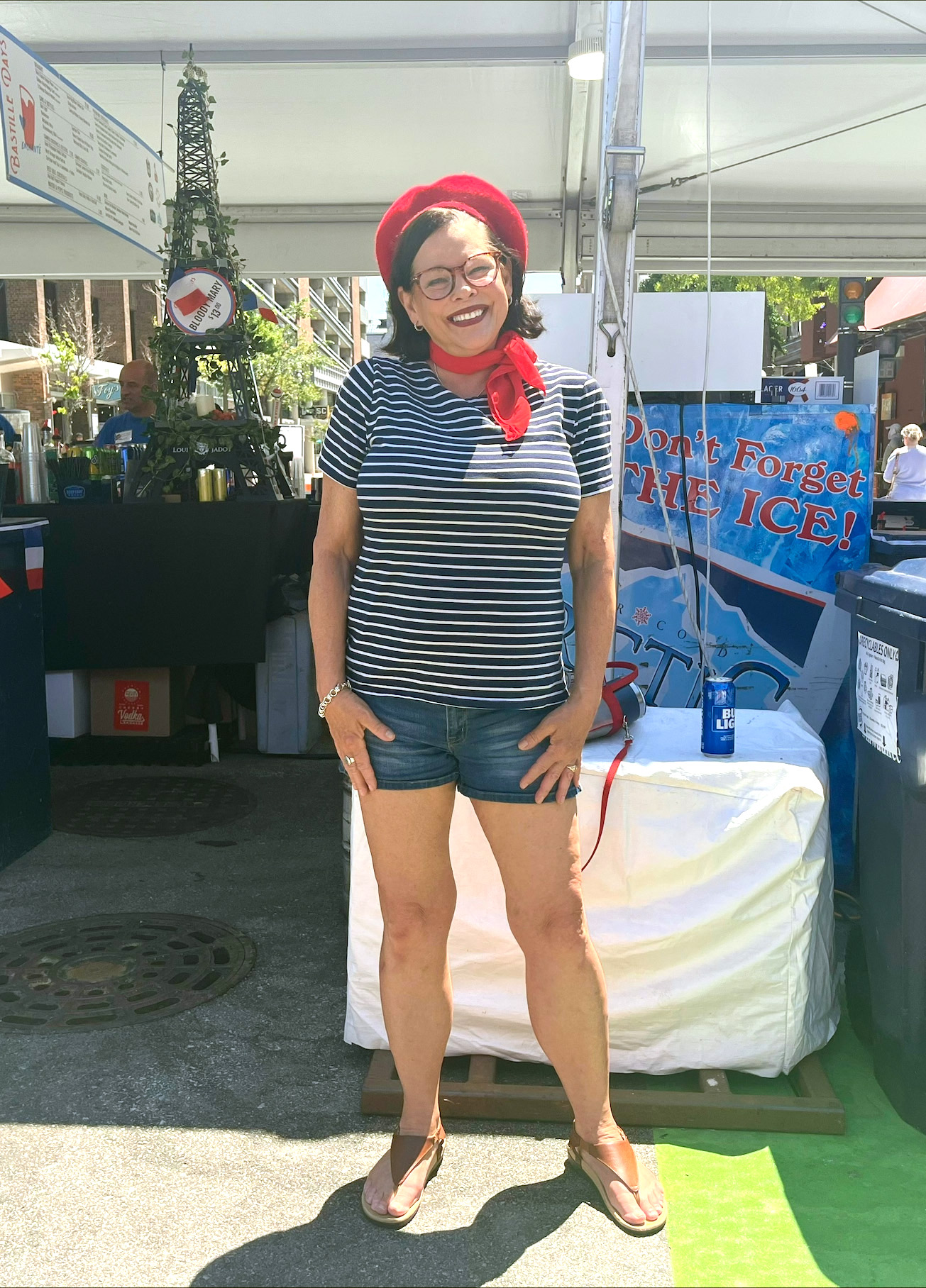
For 30 years, Nanette Bonyata has been attending Bastille Days – and her expertise shows. At this year’s event, the Wisconsinite wore an indisputably French look: the Breton shirt, also known as tricot rayé, a bright red beret and neck scarf to match.
“We actually got an outfit like this for our dog, a little beret,” Bonyata says.
The Breton shirt, a top that features horizontal blue and white strips, has an interesting history. It began as the French Navy’s official undergarment in 1858. While originally a practical piece, the shirt soon gained widespread popularity, becoming a famous example of workwear being adopted by the fashion world. Fashion icons like Jean Paul Gaultier and Coco Chanel were seen styling the classic top.
While many different takes on the shirt now exist, the original featured exactly 21 stripes. Bonyata’s red beret is also seen as très français: While associated with France, the beret actually has different versions existing in places like Scotland and Spain. The beret first became a trendy headpiece starting in the 1500s. Made of affordable felt, the hat was accessible to many of Europe’s less wealthy.
Bonyata also displayed the colors of France’s flag, with some twists for the warmer weather: a short sleeved stripe top instead of the traditional long sleeve, paired with denim shorts and a sandal.
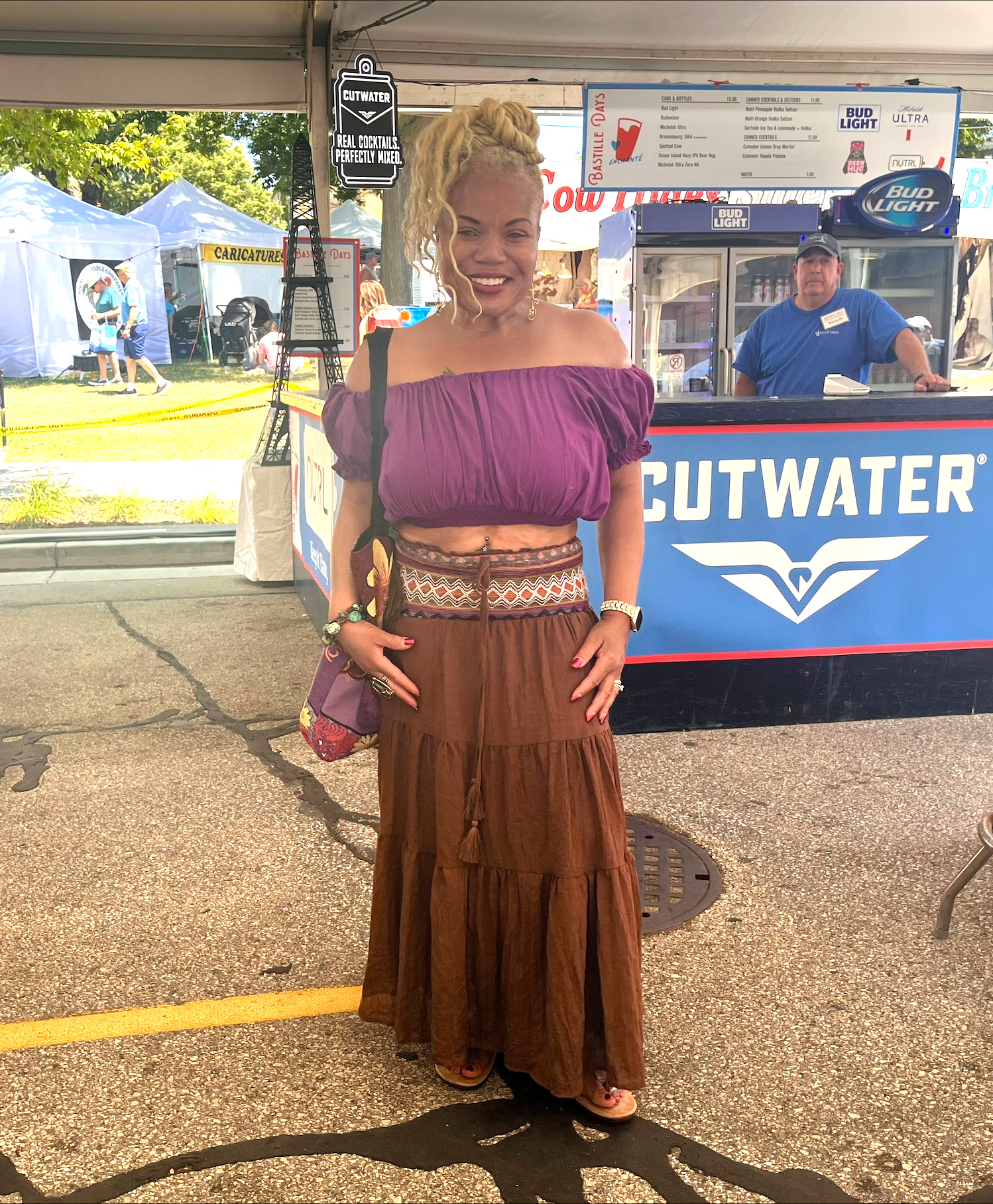
Lia Knox
“I call this boho chic or boho beauty,” says Lia Knox of her Bastille Days outfit. “I just took inspiration from all of the freedom in France during the times of ’70s and ’60s. It was free. It was vibrant, shoulders off … really easy and relaxed.”
The “boho” France of the 1960s-70s that inspired Knox was a time of women’s liberation, as well as the LGBTQ+ rights movement. The country was also receiving a lot of influence from overseas. In the United States, the hippie movement was in full force, with fashion leaning more bohemian: Colors were bold and styles were relaxed and flowy.
But “Bohemian” culture dates back much further than the 1970s. When the Romani people migrated to France in the 15th century, they traveled through Bohemia, now the Czech Republic, to get there. The French mistook them for Czech natives and called them “bohémiens,” associating them with their nomadic nature and bold, unique garments. During the 19th century in France, specifically Paris, many prominent artists settled in the same communities as the Romani people, embracing the idea of “bohemianism.” The movement was centered around artistic expression and love, with its fashion defined by natural fibers, flowy silhouettes and earthy colors, all rejecting the rigidity of mainstream culture.
Knox’s take on the bohemian look featured a plum-colored off the shoulder crop top with puffed sleeves, paired with an earthy brown three-tiered flowy maxi skirt, its waistband decorated with multi-colored embroidery. She accessorized with a Pamela Hills woven tote bag, a chunky stone ring and bracelet, and an effortless updo to fight the heat.