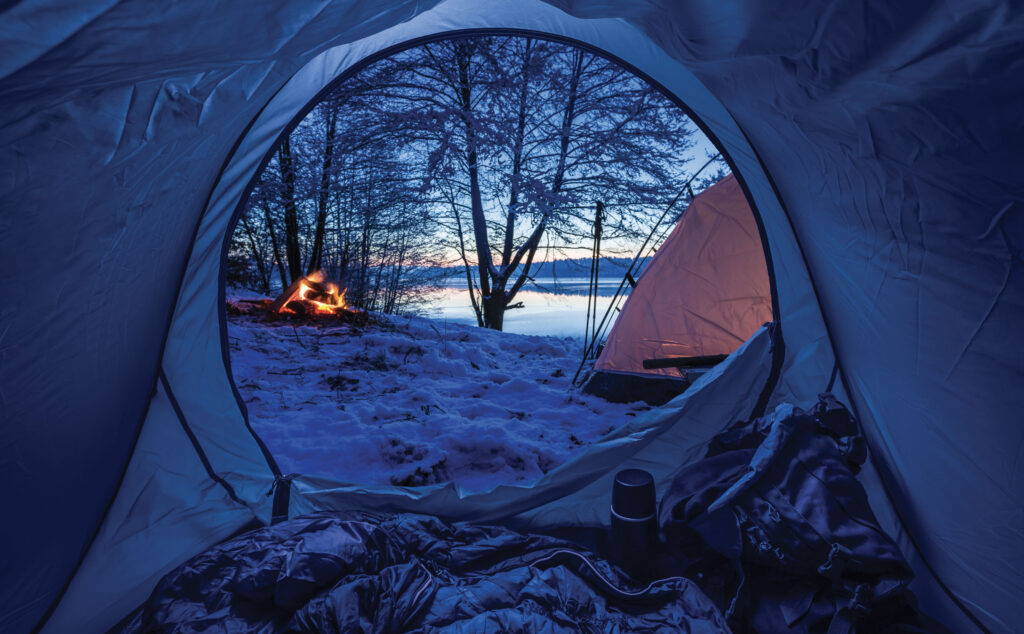
I fancied myself a winter camping veteran, having woken up in the U.P.’s Porcupine Mountains with a dusting of snow on my tent. But then I met the real deal.
Jim Bishop recalls one of his frigid outings, camping with friends on a sand spit in the Apostle Islands, crossing “the great white desert of Lake Superior” on a clear, 10-degree day. A driftwood fire kept them warm, and that night he looked up. “That sky was filled with more stars than I had ever seen in my life.”

Nominate Somebody Now!
He walked out on the ice half a mile into darkness unblemished by moon or mainland lights, and the whole surface of the world around him lay snug in a blanket of fresh snow. “I was alone in a world of whiteness and stars. The quiet was deafening.”
This is the best answer to the most common question about winter camping: Why would you put yourself through that? You can travel to spots that are inaccessible in the summer and devastatingly beautiful in a new way. “I like the challenge of facing the raw elements,” adds Bishop, a retired DNR public information officer who hosts workshops on winter camping. “There are no bugs, you don’t need any refrigeration for your food and you got the woods to yourself.”
Many Wisconsin state parks offer winter camping, but not all of them plow the campgrounds. Options closest to Milwaukee include Mauthe Lake and Long Lake recreation areas in Kettle Moraine State Forest or Kohler-Andrae State Park in Sheboygan County. Reservations are required.
When Bishop was 13, he and a fellow Boy Scout decided to try winter camping on an island in the Wisconsin River, forgetting the Scout motto, “Be Prepared.” A surprise cold front took the expected 32-degree temperature down to zero. “We almost froze to death!” Their gear didn’t cut it, but they clung to each other by a campfire to stay warm, and the near disaster became a valuable lesson. “I’ve had a fondness for camping ever since I can remember,” he says. “Anyplace, anytime.”
To be prepared yourself, the most important thing to worry about is hypothermia, when your body loses heat faster than it can produce it. Cozy camping starts with good gear: a sleeping bag rated for 10 degrees colder than the temperatures you expect, an insulated sleeping pad and a sturdy, waterproof tent.
For clothing, you’ll need layers of wool, moisture-wicking clothing, a hat and hooded coat, boots with dryable liners. Avoid getting wet (including sweat) and know what to do if it happens. Bishop fell through ice once, a quarter-mile from camp. He ran back with stiffening pants, but had dry clothes and a fire already set up for quick lighting.
Hearty meals and hydration are also key. “I can eat anything I want all day long and still lose a few pounds.” But winter camping isn’t just about surviving: Plan activities like snowshoeing, skiing, fishing. “Take a blaze orange tennis ball and bring an old golf club and set up a course on the lake,” he says, “or bring a Frisbee or a football and enjoy the outdoors!”