
The City is all in on planting new trees, according to Urban Forestry Services Manager Erin Stoekl, and there’s a couple ways the community can participate. First, there’s a service that provides a request line to plant trees in the green spaces often found between the sidewalk and curb outside of people’s houses. Via the City’s website, call center or app, you can point out spaces that you think could use a tree. On the website, you’ll find a “plant city tree” option in the “forestry” section.
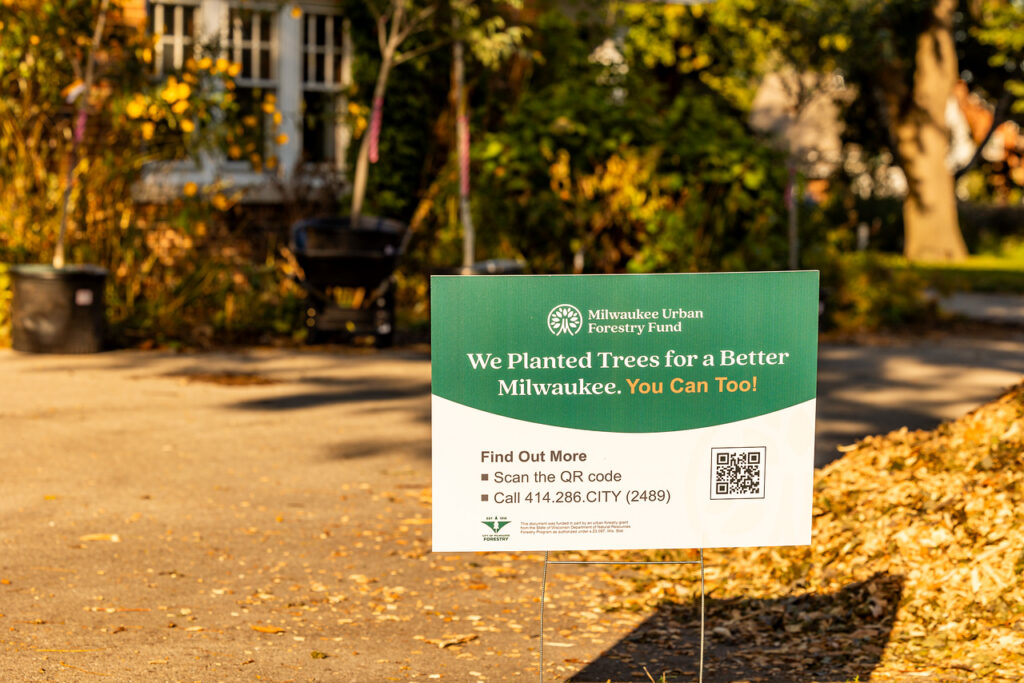
“It’s a way for us to have a direct communication line with the public so we can get a tree where they might have been overlooked,” Stoekl says. A community tree planting program, the Urban Forestry Fund, started in 2024, was also designed to increase the City’s tree cover with the help of private property owners.

Celebrate this year’s winners of the Betty Awards!
“Sometimes the only way we can increase tree canopy and the benefits trees provide in highly paved areas, might be in someone’s front yard,” Stoekl explains. “We need to think of the forest as a whole, not just the trees on city property.”
The Urban Forestry Fund provides a minimum of ten, and up to fifty trees for a project. A simple application asks for info about your project.
“It could be as simple as organizing a few of your neighbors and between you, you can plant ten trees on your property,” said Stoekl. The Forestry Department then reviews the applications and picks projects every spring and fall. They try to determine areas with the highest need, with some factors considered including how much tree canopy is already present, areas that have flooding risk and neighborhoods that have been marginalized historically that could benefit from trees.
“We’re trying to make an impact across the city,” she remarked.
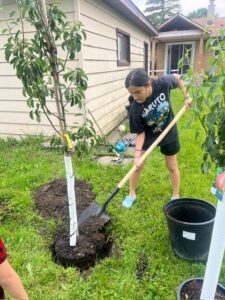
Applicants can request certain types of trees, but Stoekl says, “part of our responsibility is we access the properties to be sure we’re giving a tree suited for the location and to make recommendations.” Applicants don’t need any prior knowledge about trees, and part of the program offers instructions on how to plant and care for the trees with proper tools. After the trees are dropped off, though, it’s in the hands of the requestor.
“They’re not City trees after they’ve been delivered,” says Stoekl. The applicant must plant the trees and agree to a watering schedule. Stoeckl notes the main reason new trees die is a lack of water.
Stoekl says that more trees can benefit the city with improved air quality, shade, animal habitats and much more.
“There’s also economic benefits – trees improve property values, and lower costs of heating and electric bills in the summer especially,” Stoekl says. “On the environmental side, they store carbon monoxide and help with water runoff. In recent years studies have shown correlations between improved anxiety, improved focus for people with ADHD, higher rates of women bringing babies to term, and our overall wellbeing in many ways.”