Sykes, in turn, called her “one of the rising stars on the right” – the sort of outsourced political coloring that Supreme Court candidates have to rely on. But fear not. Fellow judges (and even justices) are more than willing to lend their endorsements, and can do so without violating their position’s usual ban on political involvement, because the races are technically nonpartisan.
The system is lightweight, a bit like authors trading cover blurbs. Until a sitting justice on the state Supreme Court gets involved to side with either a colleague (more common) or a challenger. As of January, the only such justice to weigh in was Michael Gableman, a conservative jurist elected in 2008. He backed Bradley, whom Republican Gov. Scott Walker soon appointed to the court (at least until the April 5 election) to fill the seat vacated by the late Justice Patrick Crooks.
Is this just how the game is played in Wisconsin? “I do not think that Justice Gableman crossed any line that hasn’t been crossed before,” says Marquette law professor Ed Fallone, who lost a race for the court in 2013. However, “Some observers might prefer for the current justices to stay out of this race as a matter of discretion.”
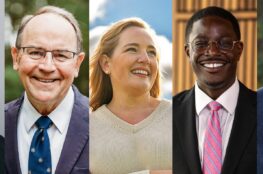
One such watcher is Charles Gardner Geyh, a law professor at the Indiana University Maurer School of Law. “When a justice within one ideological faction endorses a justice within his ideological faction,” he says, “it looks like coalition building, which cuts to the quick of traditional notions of an apolitical, impartial judiciary.” Bradley’s opponents in the Feb. 16 primary, Milwaukee County Circuit Court Judge Joe Donald and Court of Appeals Judge JoAnne Kloppenburg, have trumpeted endorsements from sitting judges only in lower courts, as of January.
Plaudits from high and low are “a commendation for one’s judicial philosophy and ability on the bench,” says a Bradley spokeswoman. “All endorsements are welcomed and appreciated.”