
On a chilly night in December 1909, hundreds of Milwaukeeans clogged Third Street between Wells and Grand Avenue. Above the mass, the facade of the Princess Theater – the city’s newest – glowed with 1,500 humming bulbs. Pressing their way into the lobby, the crowd passed a pair of bubbling fountains and caught the sweet fragrance of the fresh-cut flowers.
Their footsteps went silent as they pressed into the auditorium, outfitted with a specially designed cork floor and 900 chairs as plush as you’d find in any opera house. The theater’s orchestra played while the crowd found their seats and an organist readied the 27-stop pipe organ for the evening’s show.
Moviegoing in Milwaukee would never be the same.

If someone has inspired you through their service, leadership or dedication, the Unity Awards are your opportunity to recognize them!
It had only been a few years earlier that the first full-time movie theater opened Downtown. Thomas and John Saxe – sign painters by trade – opened the Theatorium in 1906. By that time, the moving picture had evolved from a medium exclusive to the coin-operated “peep shows” that permitted a person to view a few seconds of action in a stationary machine to something that could be projected onto a sheet or wall to allow for mass viewership.
Only the year before, the first dedicated film theater had opened (in Pittsburgh, of all places), but by 1908 it was estimated that nearly 8,000 similar houses were operating across the nation and demand for new product had given birth to what would become the modern motion picture industry.
But this was still a time when visiting a “theater” meant seeing a stage drama, opera or vaudeville show, and the social gravitas of such offerings was directly linked to the ticket price. An evening in Downtown Milwaukee was still something people made time for.
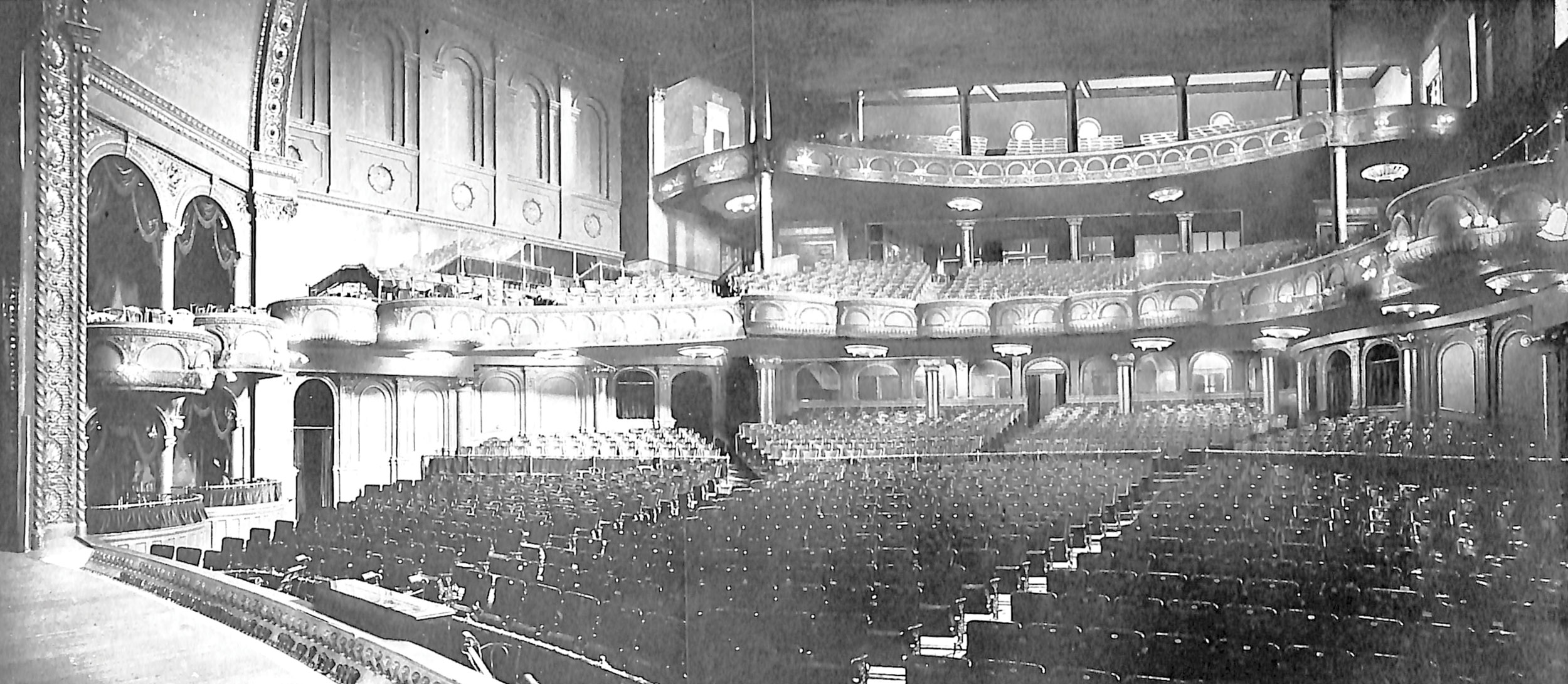
The moving pictures, on the other hand, seemed to prowl on impulse. Duck inside, see a quick show, and be on your way. The Saxe operation initially consisted of about 50 seats, a Kinedrome motion picture machine and a few musicians who would inevitably be teased by their friends for taking such a low-class job.
By 1909, a handful of other “nickel” theaters (so called for their admission price) had joined the Theatorium Downtown: Grand Avenue’s Lyric and Theater Delight and Third Street’s Wonderland Scenic. These were not purpose-built structures. Like the handful of other nickel theaters in the city, they were converted spaces, with seating for a few hundred on wooden benches or chairs. Programs usually consisted of a few short silent films and a sing-along.
It was cheap entertainment, not regarded with much esteem by the city’s social climbers, but popular enough with kids and laborers that programs needed to be changed over three times a week.
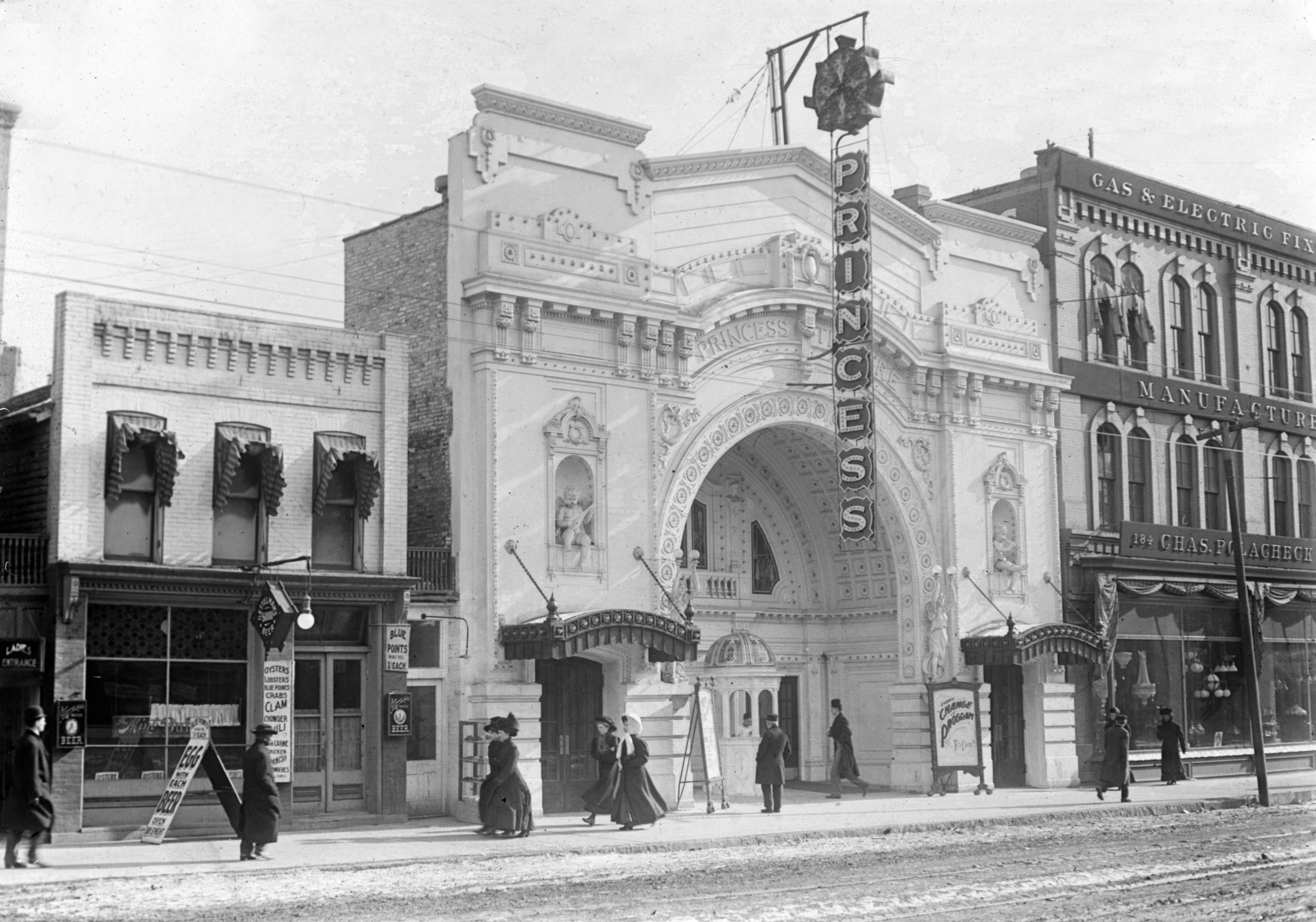
The Saxes had a feeling that all they needed to take their business “legit” was to give the city a proper movie house. So they put $50,000 (nearly $1.8 million today) into renovating an underused Third Street stage theater and presented the remade venue, dubbed the Princess, as the perfect antidote for anyone who still felt a twinge of embarrassment over movie-mania.
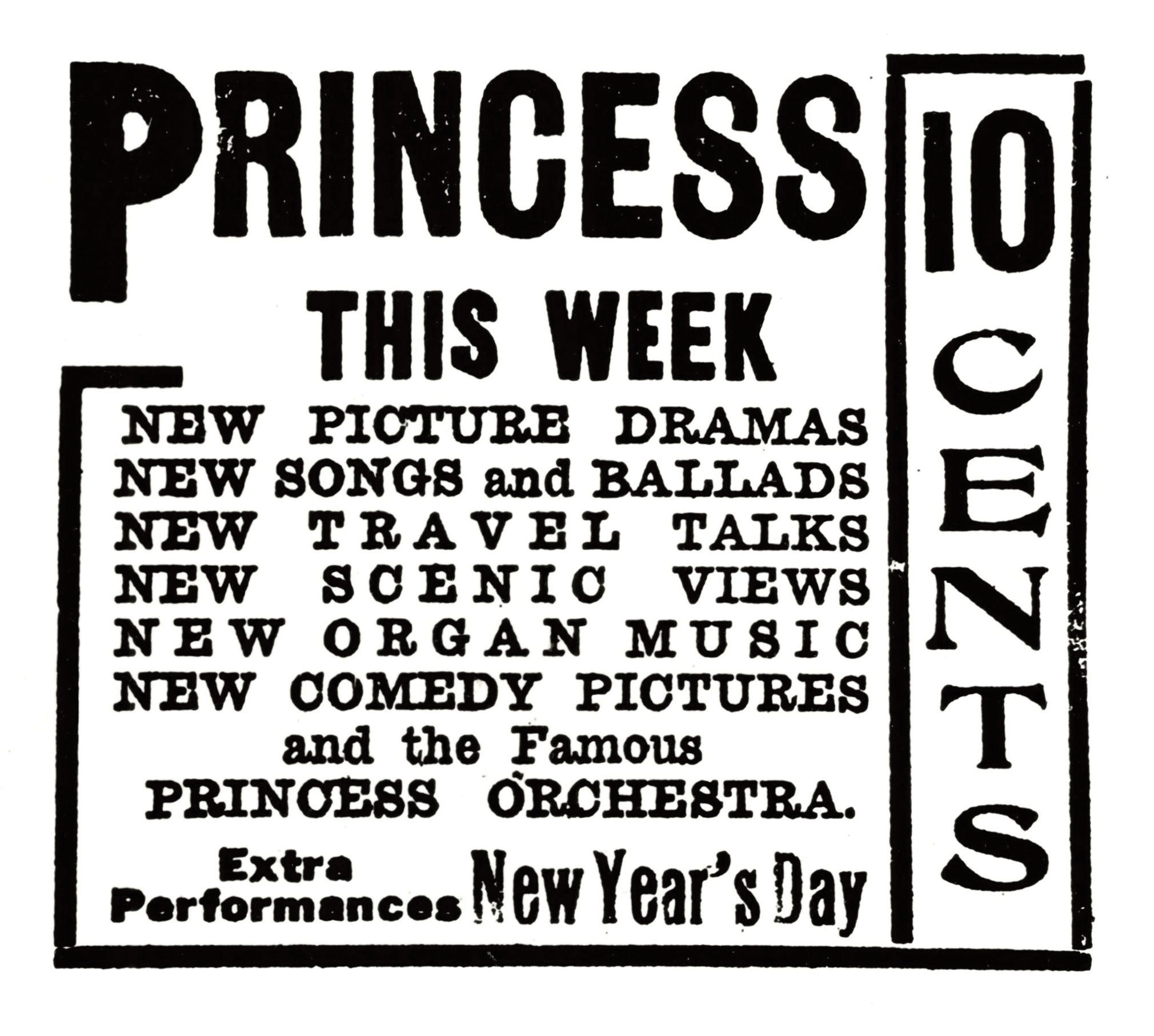
“This invitation affair,” Thomas Saxe told the papers after the Princess’ opening, “was given in an effort to secure the patronage of a better class of people.” Ungrateful as this statement might have been (after all, it was all those dirty nickels that had built the Princess), the sentiment was spot-on. The success of the Princess was the death knell for the nickel house.
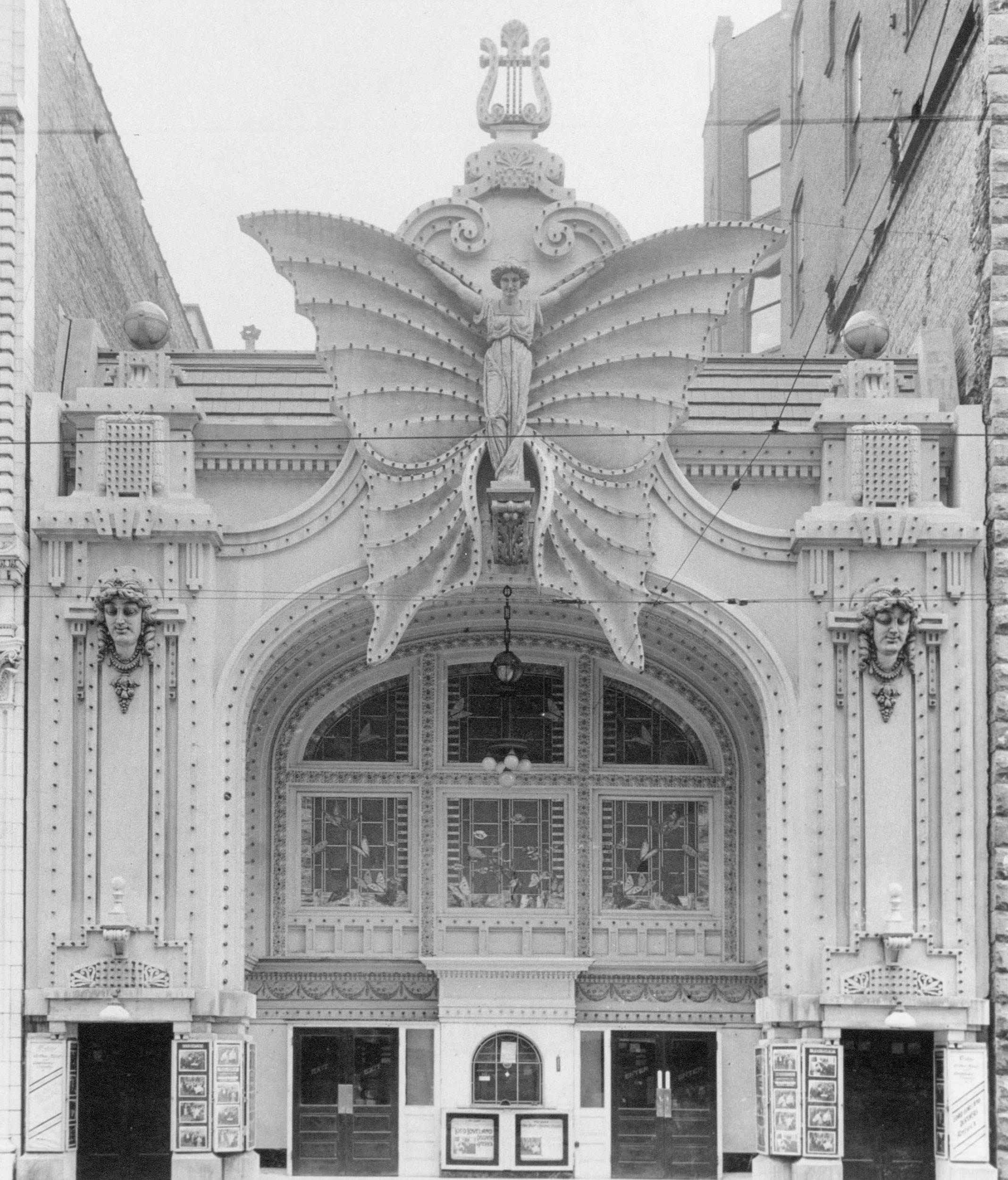
And new high-end competitors came quickly. In 1911, the Princess was topped by the 1,500-seat Butterfly Theater. With a 27-foot-wide terra cotta butterfly gracing the apex of the building, it was immediately the city’s most recognizable picture house – and unique among its peers nationwide as a house dedicated exclusively to motion pictures. Its programs were accompanied by a 10-piece orchestra and six-person choir while live canaries in gilded cages literally brought the lobby décor to life.
The Butterfly was conceived by Milwaukee amusement veterans Otto Meister and John Freuler. They had planned the house as a direct challenge to the Saxes’ Princess and boasted that the Butterfly would offer “a dollar show for a dime.” And if the Butterfly showed just how opulent a movie house could be, the cross-street Alhambra Theater was about to set a new standard for sheer size.
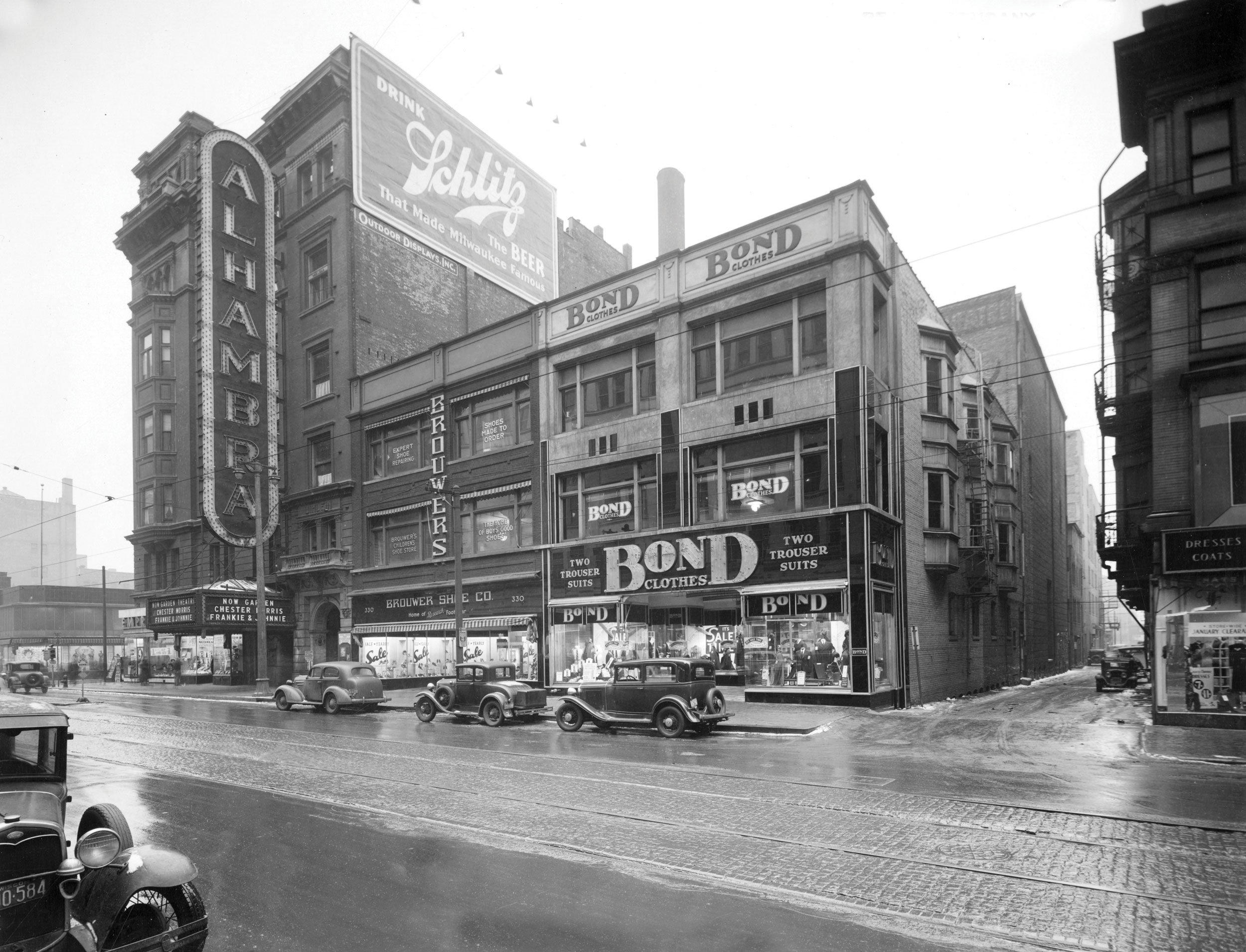
Commissioned in 1896 by the Schlitz Brewery as a vaudeville house, the Alhambra was completely made over in 1911 and converted into a full-time movie theater. With 2,500 seats, the Alhambra was briefly the nation’s biggest picture house. Wanting to counter the glowing new facade of the Butterfly, the Saxe brothers won the bid for the Alhambra’s lease and made it the centerpiece of their Downtown holdings.
In 1914, Miller Brewing added to its real estate holdings by financing a block-long, two-story structure at the corner of North Fifth and West Grand (now Wisconsin Avenue) that would be anchored by the 2,000-seat Strand Theater.
The Saxes won the lease on the theater and billed it as the most modern west of New York. With motion pictures by then proven to be legitimate entertainment, the features of the house sought to address the lingering worries about the physical safety of moviegoing.
The Strand’s ventilation system promised to eliminate the “fatigue and depression so often present in most public halls and places of amusement,” while the state-of-the-art projector put less strain on the eyes by reducing “flicker” on the screen.
Just five years removed from the typical Milwaukee movie house holding just a few hundred people in rustic conditions, the Alhambra, Princess, Butterfly and Strand – as well as Third Street’s New Star and American, all converted stage theaters that jumped into the movie trend – could collectively seat more than 9,000 people at a time, in relatively plush confines.
These houses were also now catering to a more movie-literate public. Short subjects of roughhouse comedy or content-light travelogues from exotic lands had fallen out of favor. The movie house “lecturer,” literally a man who stood by the screen and told audiences what they were looking at, had been put out of work. The novelty was gone, but the crowds remained.
By the early 1920s, the White House and Miller theaters had added 3,000 more seats to Downtown. Feature-length films were the standard for main attractions and even the most casual of film fans was able to rattle off a list of their favorite picture stars. And the Saxe brothers, who by now operated 27 theaters across Wisconsin and Minnesota, were once again looking to the future.
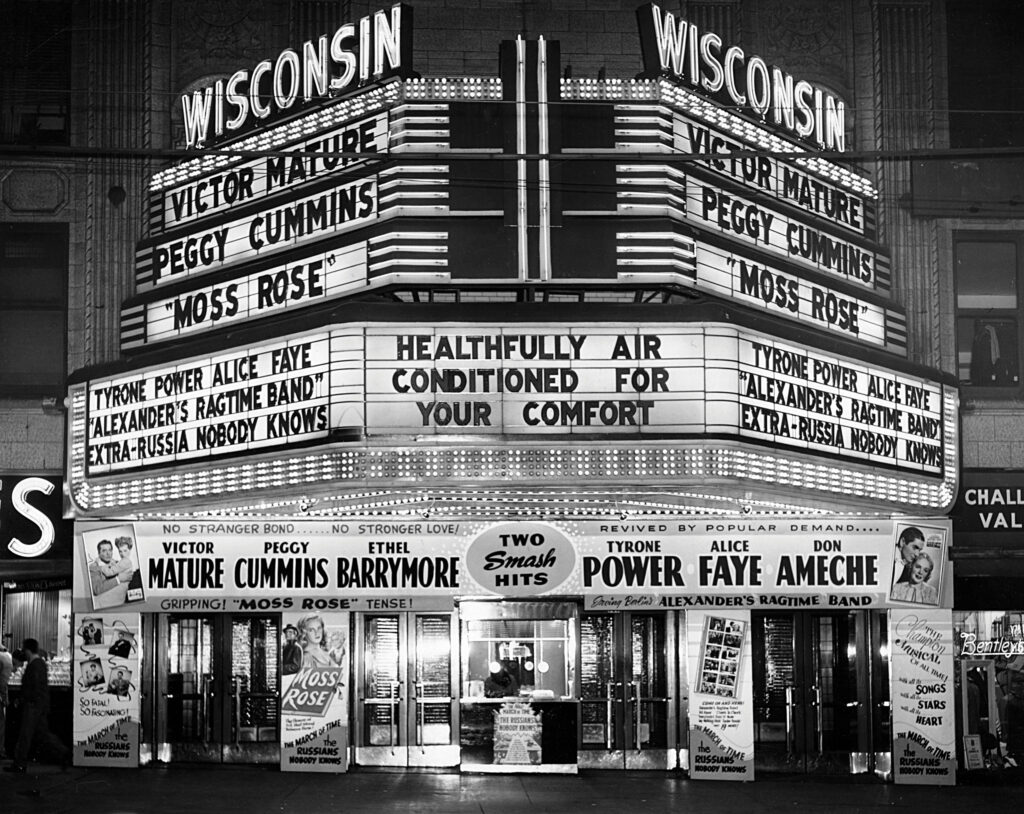
NOT EVEN THE STEAD FALL of frozen rain could extinguish the crowd’s beaming enthusiasm over Milwaukee’s newest and greatest picture palace. It was March 1924, and a throng of several thousand marched by torchlight down Grand Avenue, motivated by nothing more than the civic pride of being able to christen Downtown’s brand-new landmark: Saxe’s Wisconsin Theater.
Designed by the famed Rapp & Rapp architectural firm of Chicago, the Wisconsin was so richly appointed as to be considered Milwaukee’s first true movie palace. Three crystal globes hung over the opulent lobby. Blue and gold trimmings accented the soft creams of the color scheme. Hand-painted murals lined the walls. The Milwaukee Journal called the theater the city’s “newest monument to civic progress.”
Inside the 3,500-capacity auditorium, ergonomically designed seats were laid out in rows “scientifically” arranged both for comfort and the easiest view of the screen. At the far end of each of the house’s six aisles was an attendant stationed at an electronic relay board. Empty seats would be indicated with the push of a button, transmitting vacancies to the main board in the lobby, where ushers waited to lead guests to a guaranteed seat.
The size and grandeur of the Wisconsin was proof that the motion picture business was now one of Downtown’s most lucrative. There was really no secret about how to rule a city’s movie business: Get control of the biggest houses on the busiest transit lines, and you’d have your pick of the best bookings that could draw the largest crowds at the highest admission prices. That was how the Saxes, while operating just 11 of the city’s 80-plus theaters in 1927, accounted for two-thirds of Milwaukee’s movie income.
But out in Hollywood, the production side of the movie trade was now dominated by a handful of major studios, and these titans had aims on executing a similar takeover of the exhibition business on a national scale. With plenty of money to spend and the ability to deny noncompliant exhibitors their best pictures, the studios went on a theater-buying spree.
By the end of 1927, Fox had bought out the Saxes, giving it control of the Wisconsin and Strand. Paramount had already taken over the Alhambra. RKO had the Palace and Majestic, both former vaudeville houses converted for film, and opened the 2,500-seat Riverside in 1928.
In late 1929, Warner Brothers made an entry into Milwaukee by scooping up the Butterfly. But Warner was far more interested in the theater’s prime location on Wisconsin Avenue than the house itself. Like the Princess, the Butterfly had fallen victim to its own success. These theaters had proven that even the most straitlaced Milwaukeean would be willing to pay a dime or more for a picture show – but were now too small and too antique for anything but also-ran bookings.
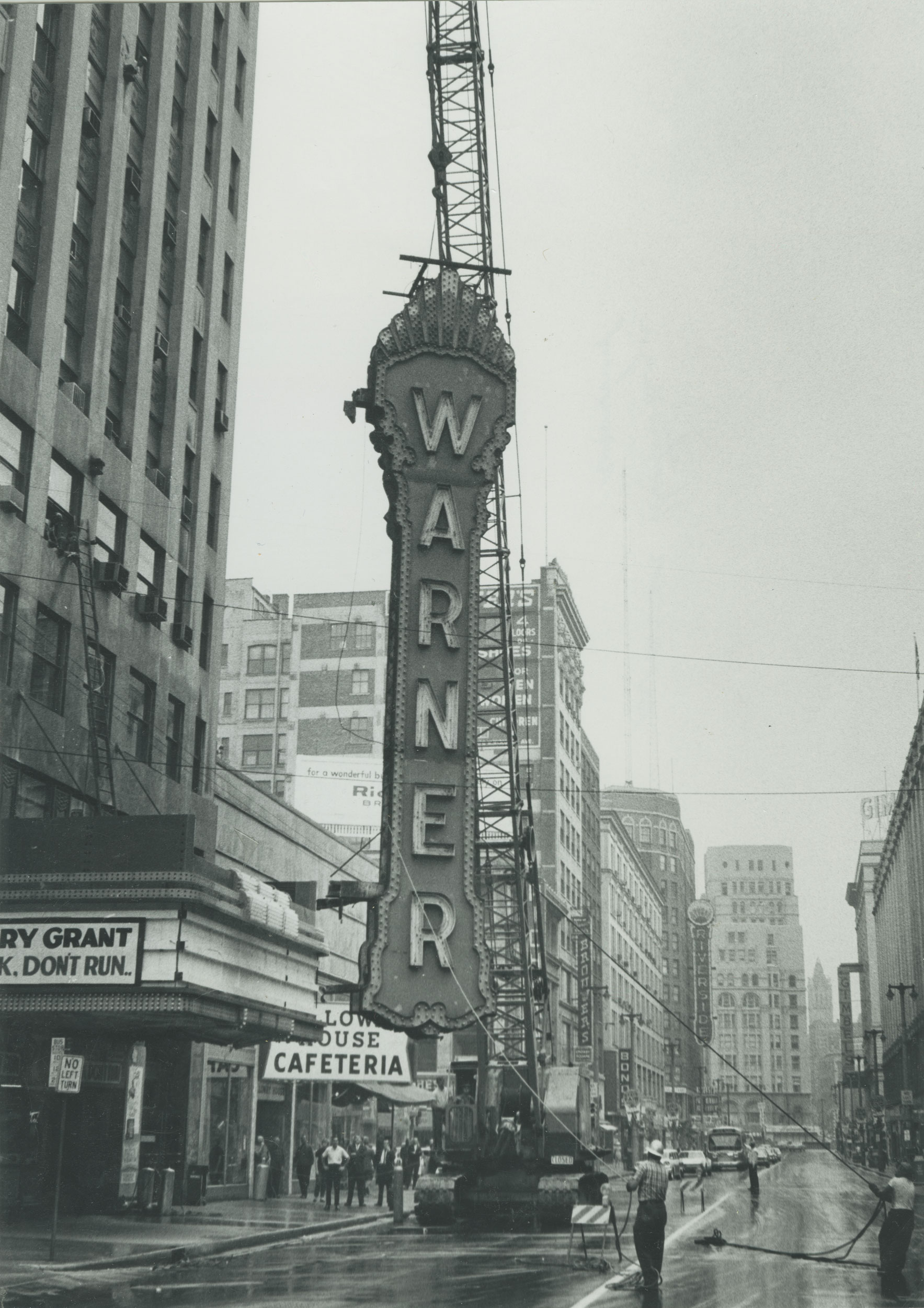
In January 1930, Warner razed the Butterfly, just 19 years after it debuted as the state’s most luxurious picture house. In its place, it began building a 12-story office tower that would house a $2.5 million, 2,500-seat masterpiece: the Warner Theater.
One of the first theaters to open in Milwaukee wired for sound films, the Warner featured an art deco lobby with twin chandeliers. A landing on the grand stairway to the balcony had an overlook designed for a baby grand piano and two violinists to serenade patrons.
Inside the auditorium, the style shifted to French Renaissance, with pastoral scenes lining the walls and heavy red and gold draperies framing every eye-catching detail. (Nearly all of these features were restored to their original splendor during the 2017-21 renovations of the theater, now home to the Milwaukee Symphony Orchestra.)
Already an outlier as a major construction project during the early years of the Great Depression, the Warner was the last new theater Downtown for 16 years. But despite the lack of new development, the Depression and subsequent war years were a surprisingly stable time for the Downtown movie business.
In 1946, the return to a peacetime economy led to an explosion in moviegoing, with about 4 billion tickets sold nationwide – an all-time record. But that crest would roll back with a vengeance.
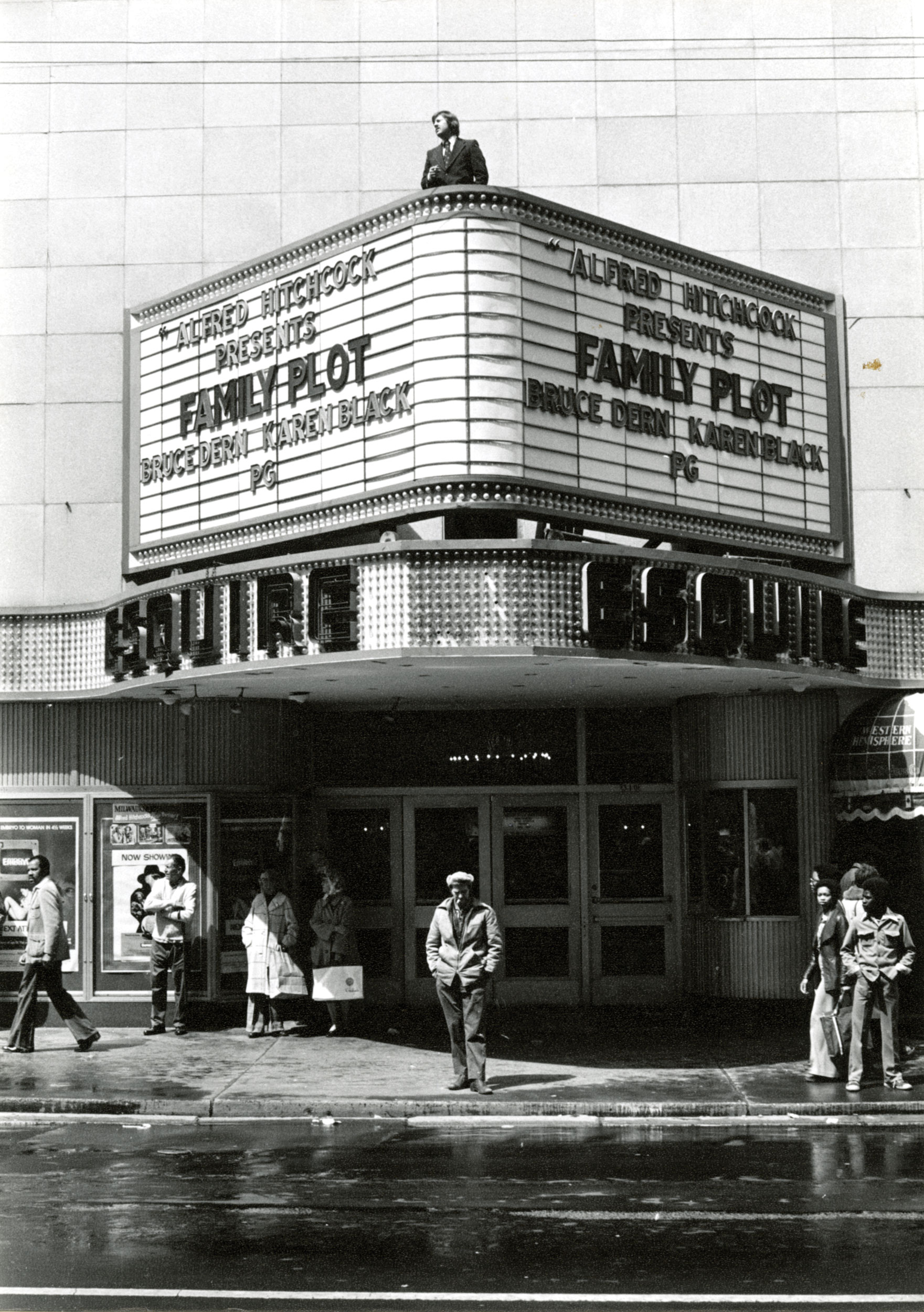
THE CROWD WAS PRETTY SMALL by Downtown standards, just a few hundred people gathering near the corner of West Wisconsin and North Third on a mild October evening in 1965. The theater – just rechristened as the Esquire – had always been fairly plain.
It opened in 1947 as the Telenews, where 33 cents bought an hour’s worth of newsreels and sports highlights. The facade was plain stone with a simple marquee that made no effort to match the majesty of the 70-foot vertical signs that had once dotted the Avenue.
There was no real pomp for the opening of the Esquire. Ads billed it as “Milwaukee’s most exciting and exclusive art theater” and noted that there was free parking nearby. And although no one made note of it at the time, that evening’s opening feature of Sidney Lumet’s The Pawnbroker was a milestone in Milwaukee movie history.
It would be the first film featuring nudity (a single, non-sexual depiction of female toplessness) to run in Milwaukee without the interference of the city’s film censor board, which had been enforcing its standards of cinematic decency since 1917. While The Pawnbroker was anything but an “adult film,” it was something that Milwaukeeans could not get at home.
By 1972, theater admissions would drop to just 20% of the high-water mark in 1946. A postwar boom in radio sales dented moviegoing before televisions came for the business more directly. But suburbanization was the death knell, putting distance between middle-class America and the movie houses they once frequented.
All the while, a U.S. Supreme Court ruling on the monopolistic practices of the big studios forced a divestiture of their movie theater holdings. Just as it was getting so much harder to fill them, all of Milwaukee’s old, studio-run houses were put up for sale.
Between 1954 and 1955, Downtown Milwaukee lost the White House, Garden, Empress and Davidson theaters – a foursome that had accounted for nearly a quarter of all Downtown movie seating. Another 2,500 seats were lost in August 1959, when the venerable Alhambra closed.
The Alhambra’s swan song – an “All-Shock Show” of The H-Man and The Woman Eater – was a sign of things to come for the Downtown circuit. In January 1960, the Princess shifted to an odd kind of purified adults-only programming – running pictures like Night of Love and The Louisiana Hussy that had been trimmed of any nudity by the censors. Technological advances – from gimmicky 3D horror pictures to sweeping epics filmed in the ultra-wide format of Cinemascope – kept interest alive in Downtown’s better-positioned houses.
But it was becoming clear that the old ways of business were no longer sustainable. In late 1963, the Wisconsin – which had shined for nearly 40 years as Milwaukee’s grandest movie palace – was “twinned.” The theater’s balcony and main floor were remodeled into separate theaters, while the operation was rebranded as “Cinemas 1 & 2.” Half of the newly divided seating was reserved for more adult-themed art or foreign films.
By the summer of 1967 – when Milwaukee’s central city was shaken by a night of rioting and over a week of curfews and occupation by the National Guard – the city’s Downtown retail base was already well into its shift toward the suburbs. The outlying shopping malls around the city now featured more retail floor space than all of Downtown combined.
The malls, civil unrest and the new inclination of Wisconsin Avenue retailers to cater to African American customers gave too many white shoppers all the reason they needed to write off Downtown. By the mid-’70s, nearly four times as much money was being spent at outlying retail outlets as in Downtown. “Everyone knows why people stay away from Downtown,” a Milwaukee theater man told the Journal in the midst of the slide. “They’re afraid. … I think the fear is a myth, but it’s hard to get that out of people’s minds.”
The city’s film censor board – which had kept nudity off Milwaukee’s movie screens for over a decade longer than it was commonplace in nearly every other major American city – was finally put to rest by a court order in 1970. The Princess went full-time into X-rated programming. The Miller – by then renamed the Towne – soon followed.
The Esquire and Palace became home to slashers, concert films, and so-called “Blaxploitation” movies while “Cinema 2” became a stop for imports like the “daringly erotic” Seduction of Inga. Even the prestigious Riverside and Warner played the occasional low-grade, nudity-laden romp. Only the Strand retained a family-friendly format.
In 1974, the Palace was razed to make way for an expansion to the Marc Plaza hotel (now the Hilton Milwaukee). The Strand was shuttered in 1976. The former Wisconsin was only still open because the lease with UA Theaters forbade it from sitting empty. The Riverside was doing decent business with films aimed at Black audiences, but it was not enough to turn a profit.
Facing the expiration of a discounted lease and a city order to raze the building, the Towne ended its 62-year run with a spree of nostalgia – playing tributes to Marilyn Monroe, Betty Grable and Bela Lugosi through the summer of 1979. Two years later, the entire block, along with the Esquire, was leveled to make way for the Henry Reuss Federal Building. The Riverside went dark the next year. It would reopen shortly after but would never show films again; in 1984, it began its current iteration as a live music hall.
That same year, after decades of battling the city over its programming, which by now was hardcore pornography, the Princess took a final bow. Just three weeks after it closed, the city unceremoniously bulldozed the building. Two years later, the former Wisconsin Theater fell with the rest of the Carpenter Building, clearing the way for a skyscraper project that never materialized. The land would remain vacant until the late 1990s, when it was developed for what is now the Baird Center.
The last holdout was the Warner, which had been twinned and renamed the Centre by 1972. It was rechristened again in 1982 as the “Grand Cinemas” to honor the new Grand Avenue shopping center across Wisconsin Avenue.
By the 1990s, the Grand was only drawing about 70,000 customers per year, and it was clear the end was near. The decision to close Downtown’s last movie theater came in June 1995, with no inkling that it could re-emerge at full opulence a quarter-century later. After a program of Tales from the Hood and Crimson Tide, the Grand bolted its doors, dropping the curtain on 90 years of motion picture exhibition in Downtown Milwaukee.
The Cast of Characters
Princess
738 N. Dr Martin Luther King Jr Dr.
1904-84
Adult film star Marylin Chambers and legendary skin flick director Russ Meyer both made personal appearances at the Princess during its X-rated days.
What’s There Now: Parking lot
Theatorium
184 W. Wisconsin Ave.
1906-23
The first films it showed were a simulated train car ride through various exotic locations, with customers seated in a fake passenger car and images projected onto sheets that hung outside the windows.
What’s There Now: Hampton Inn & Suites
Butterfly
212 W. Wisconsin Ave.
1911-30
John Freuler, part-owner of the Butterfly and nationally known film producer, met with Charlie Chaplin in the offices of the Butterfly after Chaplin performed at the nearby Empress to negotiate a contract that Chaplin signed in 1916 with Freuler’s Mutual Film Co.
What’s There Now: Bradley Symphony Center
Alhambra
334 W. Wisconsin Ave.
1896-1959
Famed New York theater operator Sam “Roxy” Rothafel, who would later open Radio City Music Hall and bring The Rockettes dance troupe to its stage, managed the Alhambra’s opening as a movie theater in 1911.
What’s There Now: 310W (formerly Reuss Federal Plaza)
Strand
510 W. Wisconsin Ave.
1914-78
The Strand ran The Sound of Music for a city-record 22 months, from April 1965 to January 1967, selling nearly a half-million tickets during its run.
What’s There Now: Baird Center
Wisconsin
530 W. Wisconsin Ave.
1924-86
The first film to show at the Wisconsin was Plastigrams, one of the earliest 3D films ever made.
What’s There Now: Baird Center
Warner
212 W. Wisconsin Ave.
1931-95
The theater briefly reopened in late 1995, months after it closed, to host a charity benefit screening of the Cindy Crawford/William Baldwin action-thriller Fair Game.
What’s There Now: Still standing as the Bradley Symphony Center
Riverside
116 W. Wisconsin ave.
1928-82
Early live-show programming at the Riverside included carnival-style acts of conjoined twins, bicycle-riding bears and an armless golfer.
What’s There Now: Still standing
Esquire
310 w. Wisconsin Ave.
1947-81
In the late 1970s, the Esquire flip-flopped between adult and mainstream programs, once following up a run of Deep Throat with a second-run James Bond film.
What’s There Now: 310W