
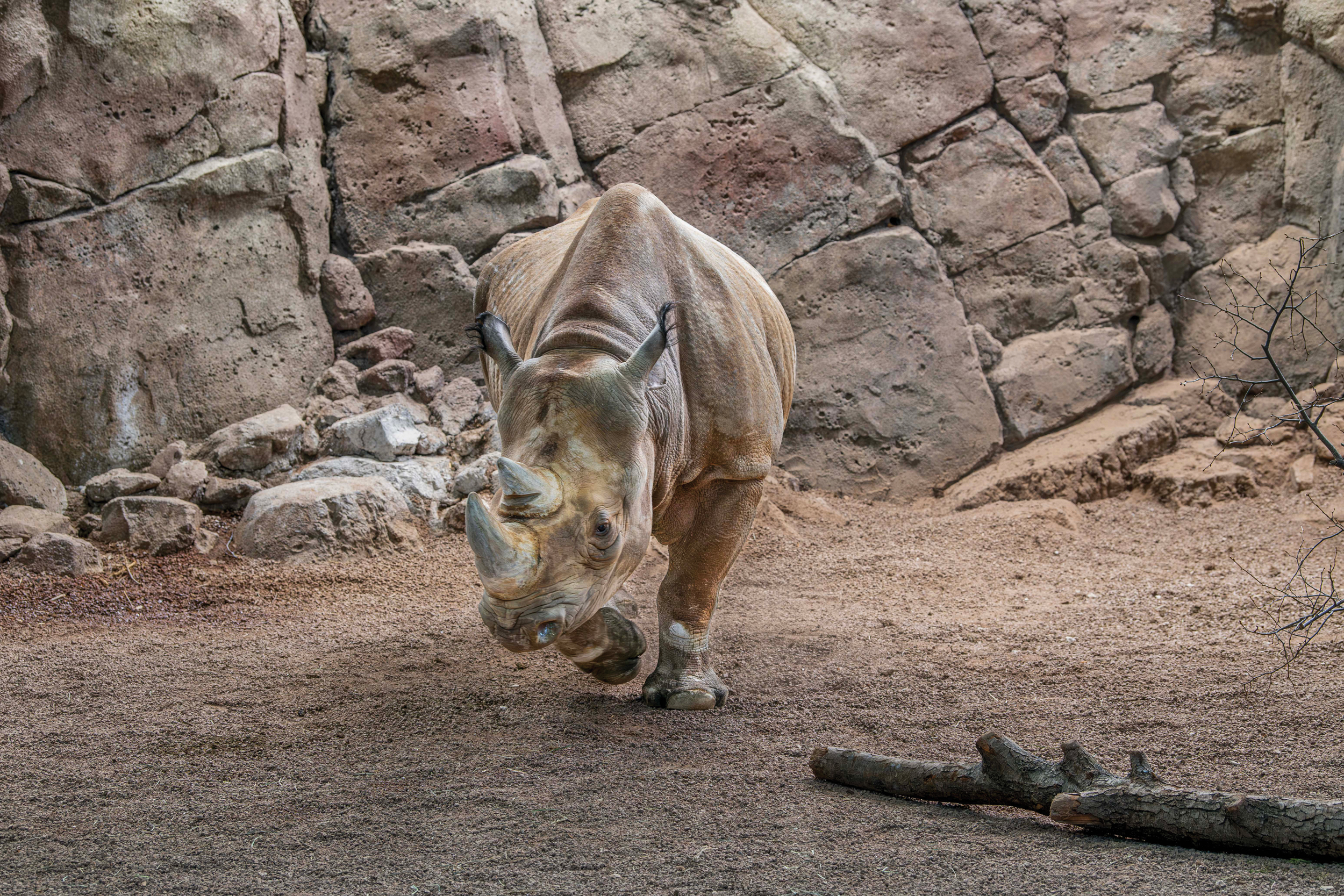
At the end of last year, the Milwaukee County Zoo made a big (literally) change. The Zoo welcomed Zuri and Kianga, two Eastern black rhinoceroses.
Walk into the Adventure Africa habitats – which just completed a major seven-year renovation process – and you might see Kianga meandering around the outdoor habitat with the peafowl who seem to enjoy his company. Or you could head indoors into the new, state-of-the-art Ladish Co. Foundation Rhino Care Center, where Zuri might be playfully rolling mud across her thick, gray hide.
Zuri is a 16-year-old female with a bit of teenage sass to her. She came to Milwaukee from the Cincinnati Zoo & Botanical Garden, where the zookeepers say she was “very opinionated” about her personal space, says Joan Stasica, a zookeeper who’s worked at the Milwaukee County Zoo for more than 20 years. At 22 years old, Kianga’s a bit more laid-back and reserved, although he is known to blow raspberries at visitors on occasion. He didn’t travel as far, moving up to Milwaukee from the Racine Zoo.
Planning a Zoo visit? At 1:30 p.m. every Tuesday, Thursday and Saturday through Labor Day, a zookeeper gives a presentation about Zuri and Kianga at their habitat.
The two were slowly introduced to each other over the first half of the year – initially just through scent from their nearby enclosures to become accustomed to the idea of another rhino, before eventually meeting face-to-face, hopefully by summer’s end.
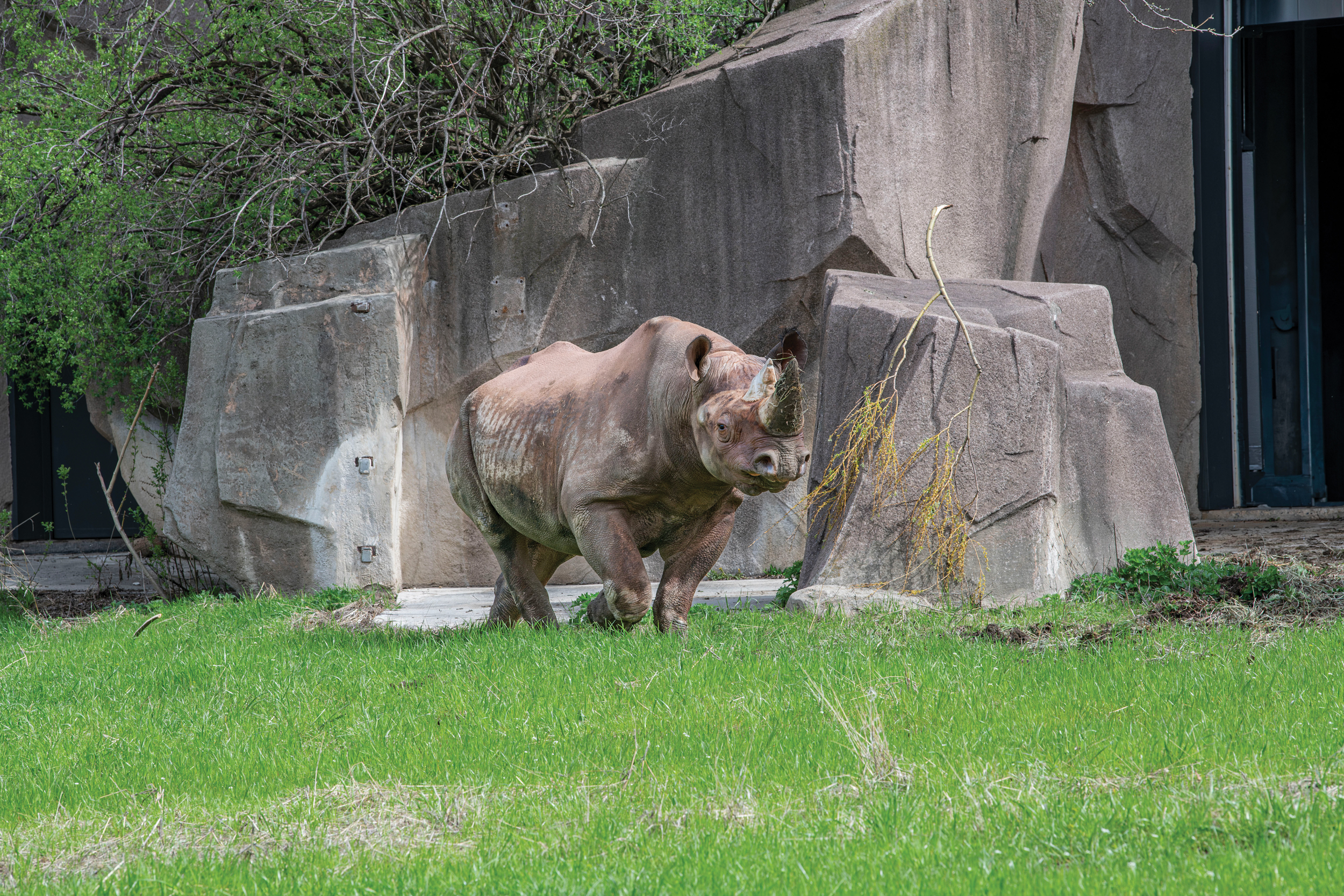
Now, the Zoo hopes Kianga and Zuri will breed and produce more of their critically endangered species. The Eastern black rhinoceros’s natural habitat is the savanna in eastern Africa, but increasing habitat loss and poaching mean many rhinos are now kept safe in zoos. As part of its conservation efforts, the Zoo followed a recommendation from the Eastern Black Rhino Species Survival Plan, which designated Zuri and Kianga as a compatible, healthy match.
“With the new indoor Care Center, visitors can see Zuri and Kianga all year round, which is a huge improvement,” says Stasica. “We have more opportunities for animal enrichment, more areas for training and a better space for our animals.”