
We put trust in the writers we read. But what does that look like in the age of AI? What did that look like before AI? And what if a longtime and popular author – a trusted, popular, best-selling, Nobel Prize-winning author at that – calls all of that trust into question. That’s what McNeal, by Milwaukee’s own Ayad Akhtar, asks us to consider.
The play, which premiered last year at the Lincoln Center with a sold-out run, is running at the Milwaukee Rep in its shiny new Herro-Franke Studio Theater through March 22. It follows Jacob McNeal (Peter Bradbury), a charming yet ruinous author whose life is both at its best and worst all at once. He’s just won a prestigious award and is putting out a groundbreaking new novel, but he’s also grappling with alcoholism and the effects of his own narcissism. What is the cost of his hubris? We see it all unravel.

Celebrate this year’s winners of the Betty Awards!
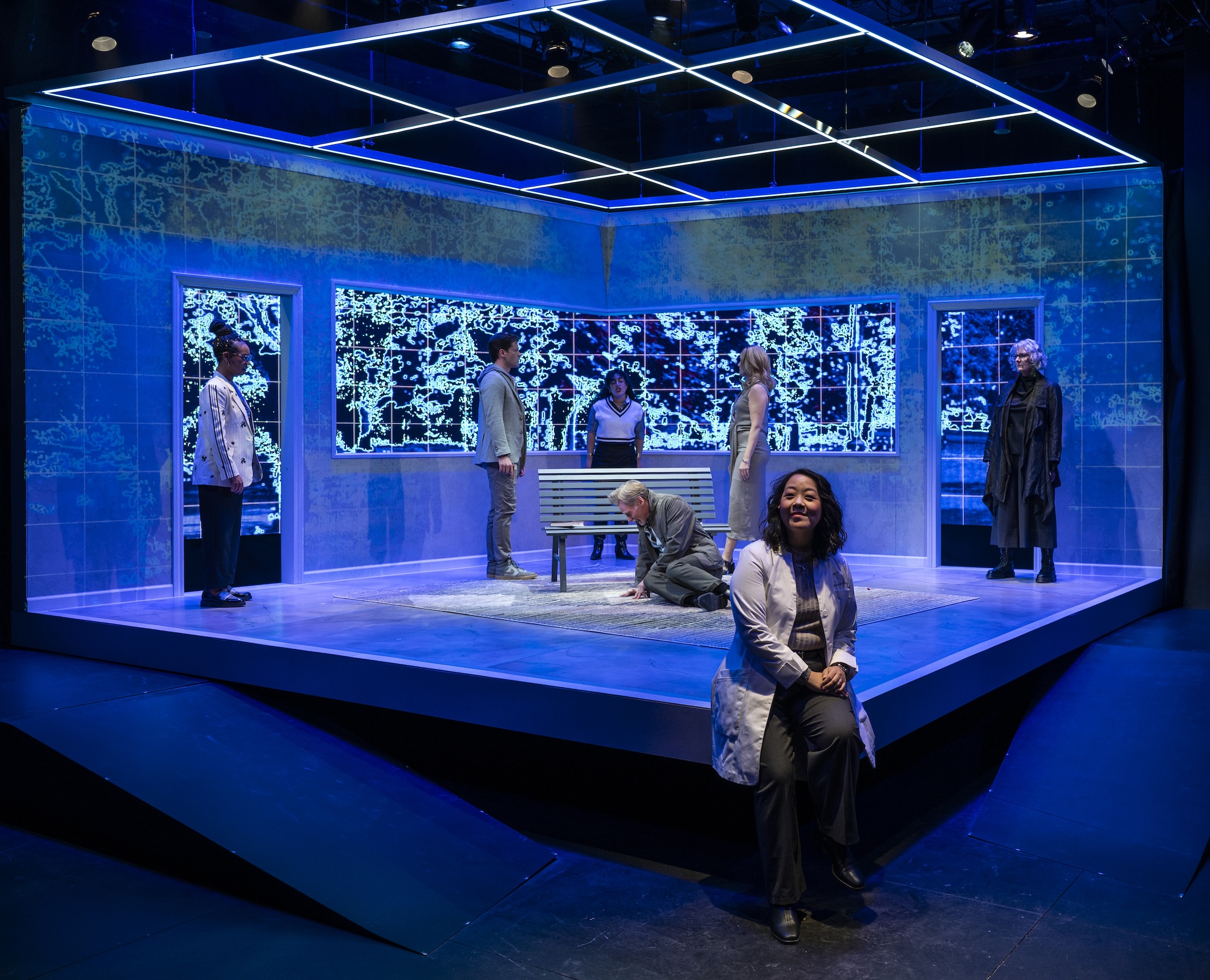
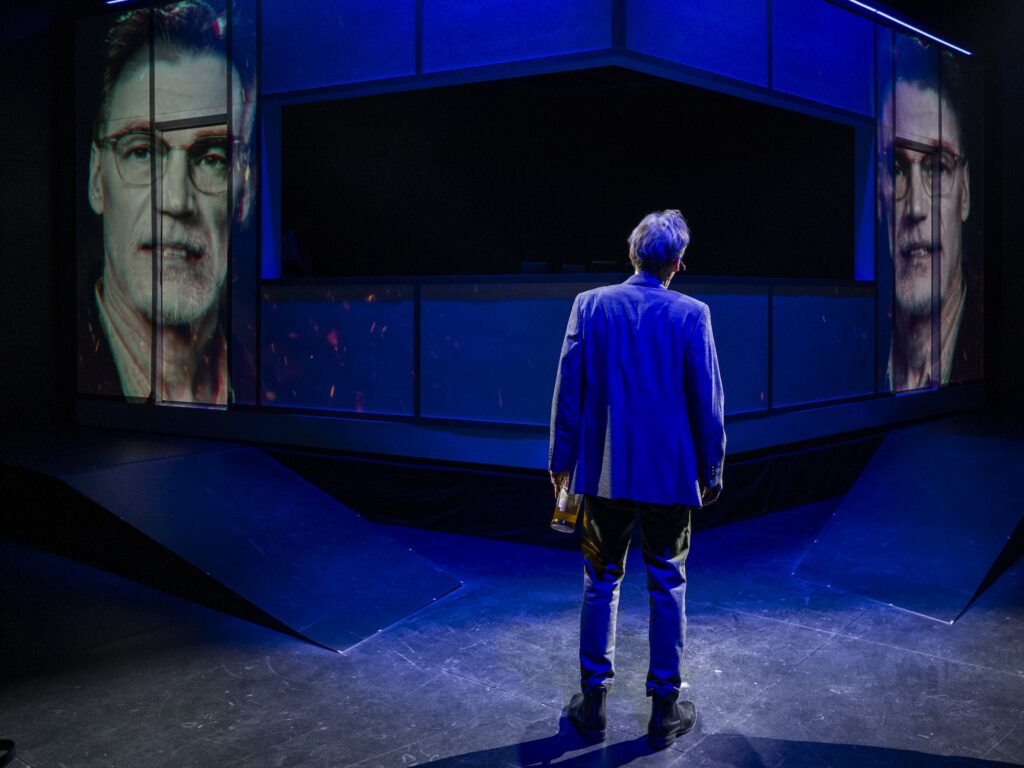
The pièce de résistance of this production was indisputably the special effects. A rotating stage and vivid projections – from the AI search bar to McNeal’s hallucinations – were essential to the story and brilliantly parallel the technological themes of the show. It was fun to see what the new theater could do; and the flashy technology worked so well.
As for the performance itself, the entire cast was fantastic. Bradbury brought the perfect balance of charm and madness to his embodiment of McNeal and played the complex character with ease. I couldn’t stand the character: His penchant for asking AI to “rewrite in the style of McNeal” and his narcissistic relationship with his son give you a pretty good idea why. Yet, somehow, I still was rooting for him to work everything out and redeem himself.

On the contrary, I adored McNeal’s quirky literary agent Stephie Banic (Jeanne Paulsen). Paulsen brought the character’s eccentricity and grit to life – a delight to watch even as she gets sucked further into McNeal’s scandal. The rest of the cast, too, brought energy, care and charisma to their characters, all of whom were complex and real.
Watching this performance, I found myself thinking about AI and how I hope it never comes to this “near future” reality of AI-written best-selling novels and stolen work. But I also found myself thinking about where the line is for “gleaning inspiration.” Without giving anything away, it’s clear that McNeal crosses this line – and many others – in many ways. But it didn’t start this way. He started by “borrowing” stories from friends, family members and strangers, and casting it as inspiration for the stories he tells. A writer myself, I’ve certainly used little anecdotes from friends in my fiction here and there.
But where is the line? And how do we make sure we don’t cross it as AI continues to grow? How do we make sure that the art of writing stays an art? And can what AI makes ever really be art if it doesn’t have a soul behind it?
McNeal suggests that perhaps not. Everything AI “creates” is a regurgitation of others’ lives. But it doesn’t know about living, dying and making sense of it all. So, what do we do with that? Watch the play and decide for yourself.