

John McGivern was pissed off. It was Jan. 5, 1990, and he’d just been “kidnapped.”
The 35-year-old actor had been on top of the world just weeks before. After years of on-and-off work, he’d landed a small part in Shear Madness, then the longest-running theater show in Chicago, and was soon promoted to the lead role. The show was going great – the character of a flamboyant hairdresser gave McGivern the chance to play up his comedic chops for sold-out audiences.
Then one afternoon, two of his brothers, Jim and Mike, drove down from Milwaukee. They wanted to grab a beer before McGivern’s show. With a few hours to spare, he got in the back of their car. He noticed that they were driving kind of far, past plenty of perfectly good bars. Why were they getting on the highway? That’s when his brothers announced that they were taking him back home for an intervention.

Celebrate this year’s winners of the Betty Awards!
What had begun as casual pot smoking had spiraled over the past decade. McGivern now admits that he was a “mess.” His heavy drinking and cocaine use was sabotaging his performances and ruining his relationships. He kept his addiction as hidden as he could from his family, but when he hadn’t bothered showing up for Thanksgiving or Christmas, his loved ones knew he was in trouble.
When they arrived in Milwaukee, the brothers dragged McGivern back in time 25 years. He found himself standing in the entrance to the small duplex on Bartlett Avenue where he’d grown up, surrounded by his family. There was his mother. His two sisters. His 93-year-old grandmother. His third brother, Tim, a therapist who’d flown out from Florida and had organized this entire thing.
One by one, every member of McGivern’s family read him a letter. When he remembers those letters now, he still chokes up. They were worried about him. They were angry with him. They loved him. There was even a letter from the producer of Shear Madness, who was at that moment about to stage the show without McGivern. The producer had worked with the family to organize the intervention; the letter told McGivern that he was out of the show – but if he got clean and sober, he was welcome back.
John’s grandmother was the last to read her letter. “I’m not a rich woman – my grandchildren are my jewels,” she wrote. “It’s up to you, if you will get treatment. But if you decide not to, I won’t see you again, and I will lose my jewel.”
After they’d all said their piece, his family said they were going to bring him to DePaul Hospital on Milwaukee’s South Side. “If you don’t want to spend 30 days there, you can leave right now,” they said. “But you won’t see us again.”
If you’re a fan of John McGivern, this story might be something of a shock. Now 71, McGivern is a certified Milwaukee celebrity – and a wholesome one, at that. Since 2012, he’s been the affable cornerstone of public television, known for his tours of Wisconsin’s cities, towns and neighborhoods on “Around the Corner with John McGivern” and “John McGivern’s Main Streets.” His screen presence is all cheer, quick wit and earnest Midwestern appreciation for small towns and local flavor. You don’t expect that carefree grin from an addict whose family was threatening to cut him off.
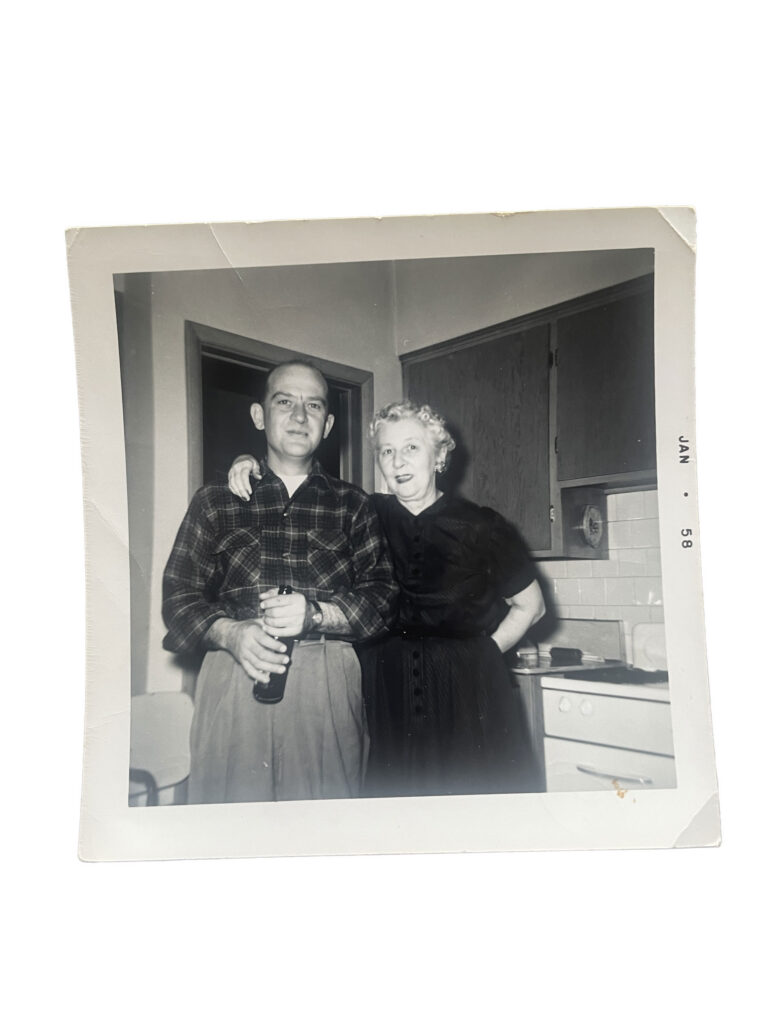
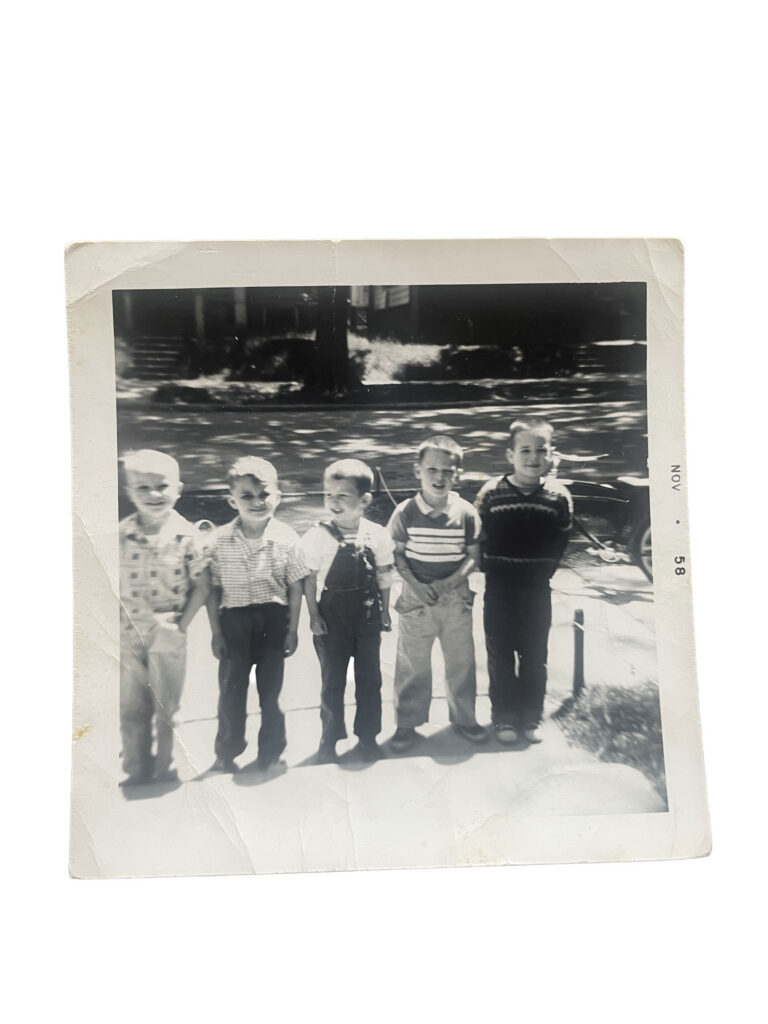
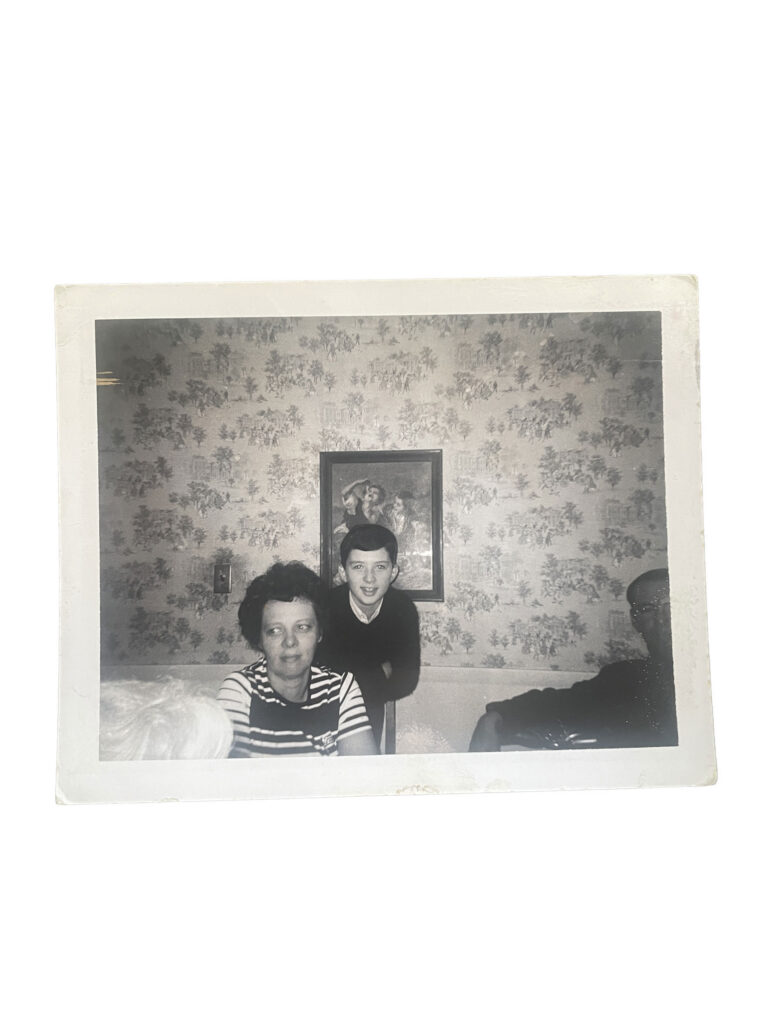
But that moment and the choice his family forced on him is critical to understanding who McGivern became. It’s the turning point that transformed a struggling actor searching for opportunities and squandering potential into the cheerful, enthusiastic, friendly figure who has shown off our state on television for the past 14 years – a run that hits a milestone this month with the final full-length episode of “Main Streets.” His story begins three decades earlier in the exact same place, with the exact same people: the McGivern family packed inside that East Side duplex.
JOHN MCIVERN WAS THE ODD KID OUT. His three brothers were all the “jockiest, sportiest boys in the world,” and he “couldn’t throw a ball,” he says. In an Irish Catholic family of eight, that meant the McGiverns thought they had a future priest on their hands.
“We would play church,” remembers his younger sister, Colleen Ashenden. “He was of course the priest. … We would make-believe Holy Communion with little candy discs.”
While McGivern’s brothers were competing on football fields and baseball diamonds, his mother would take him and Colleen to see musicals at The Melody Top, a seasonal tent venue on Good Hope Road that ran shows like West Side Story and The Music Man. “I remember the grease paint, the crowd, and I was just sitting there thinking, ‘Oh my God, this is so much better than baseball,’” McGivern recalls.
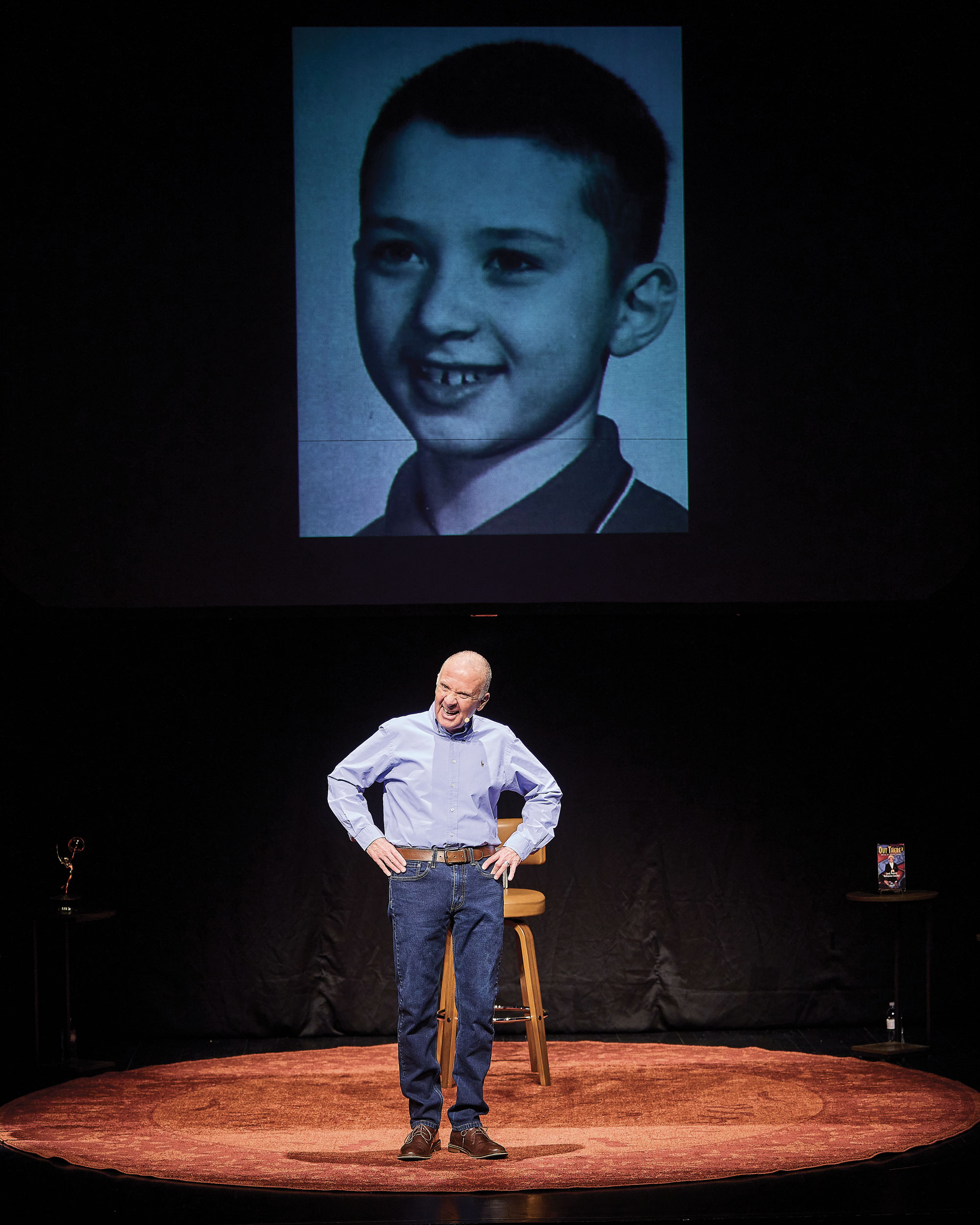
When he was 13, his parents suggested sending him to St. Lawrence Seminary in Mount Calvary for high school, and McGivern – who shared a bedroom with all three brothers and a bathroom with the entire family – jumped at the chance to leave home.
At St. Lawrence, he was drawn to debate, public speaking and theater, performing in the school’s production of My Fair Lady. The young man had a strong faith and believed he might have a vocation to the priesthood. But the seminary, he eventually learned, wasn’t quite the correct fit for him.
Junior year, he was thrown out for what he now describes as “a lot of stuff,” including “homosexual activity.” The last straw, he says, was a class skit he wrote and directed that mercilessly lampooned the Franciscan priests who taught them. He had the best mimics in class doing impressions of their teachers and a student spoofing Jesus Himself. “The kids loved it,” McGivern remembers. “The priests were pissed.”
At 16, McGivern’s sexuality was difficult for him to ignore, but he still thought he might be able to remain celibate and eventually become a priest. After finishing his last year of high school back in Milwaukee, he did a year of college at UW-Oshkosh, where he first smoked marijuana.
In search of direction, he returned to the church, this time joining a Franciscan formation house for future priests in Milwaukee. He stuck it out for years, but at the same time, he was nurturing a growing interest in theater. He was also growing disenchanted with many of the church’s teachings and more accepting of his sexuality.
He eventually came out to his family over several conversations as a young man in the mid-’70s, although he says it wasn’t exactly a revelation to them. “They knew before I did. … There’s never been any shaming or anything like that with them. My mother was like, ‘Oh, I just wish this didn’t have to be.’ She just thought it’d be real hard for me.” Ashenden remembers the phone call when her brother told her. “He said it, and I was like … so? Of course I know you’re gay.”
His family’s reaction was a relief, but it cast his own struggles with his sexuality into a sharper light. “There are still moments of shame around it, to be honest. … The fact that I was joyous over [my family’s] acceptance speaks to my sort of not accepting.”
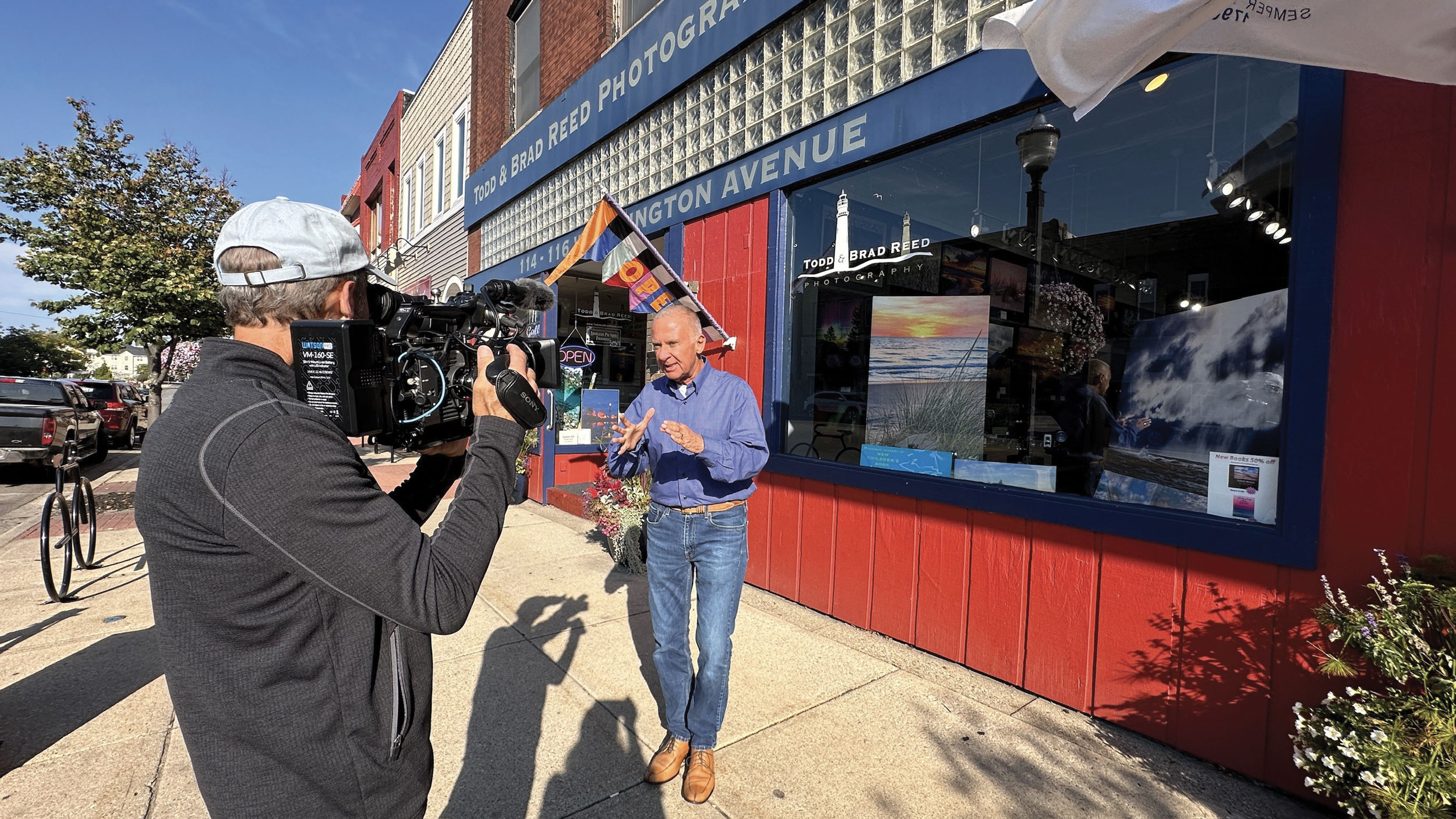
When he left the seminary at 24, his hope was to become an acting teacher. He moved to Tampa, Florida, where his brother Tim lived, and tried his hand at it, eventually landing an internship at The Academy Theatre in Atlanta. That sparked a few more opportunities, and instead of making a living teaching, he thought he might have a chance to survive on acting alone. “It was many years of waiting for somebody to hire me,” he says. Still, he strung together enough theater jobs to keep going. “He was making it, but barely,” Ashenden says. “It wasn’t glamorous, but he always seemed to manage, and he was happy.”
But his sister had no idea that McGivern – bouncing from stage to stage – was drinking more heavily than ever before. He returned to the Midwest in 1985, moving to Chicago. “I remember my mother said to me, ‘You’re smoking marijuana. You know that leads to other drugs,’” he says. “Little did she know that I had already started other drugs.”
WHEN I ASKED MCGIVERN if it was difficult coming out as gay to his family, he appeared to choke back tears. “They still don’t know,” he said – before bursting into laughter and actually answering the question.
That moment during our interview was characteristic of what it’s like to talk with McGivern. He has an undeniable gift for disarming people with humor and a comfortably familiar way of speaking with a stranger like they’ve known each other for years.
He’s a witty storyteller – the kind of performer who can sustain a one-man show for two hours – but he’s also a natural conversationalist, quick with questions and quicker with jokes. He’s used that ingratiating ability for over a decade to great success on “Around the Corner,” which ran from 2012-20, and “Main Streets,” which wraps its broadcast series this month after four years.

“People tell him things that they should not tell him, like right out of the gate,” says Lois Maurer, his longtime producer. “It’s because when people meet John, they automatically think he’s their best friend.”
Ashenden recalls trying to walk through the State Fair with her brother during the run of “Around the Corner” and getting sucked into a relentless tornado of conversations. “Folks recognize him all the time. He never, ever doesn’t stop to chat with people,” she says. “I assume that he knows these people. Then we walk away, and I’m like “Who was that?” He’s like, ‘I don’t know.’”
McGivern’s family and friends say he always had that skill, but what McGivern says he lacked for many years was the focus and reliability to consistently use it to build a career – all the way until his brothers kidnapped him.
AT HIS WORST, MCGIVERN WAS spending $600 a week on cocaine. “It was as much money as I could get ahold of,” he says. He had that money after landing the lead role in Shear Madness, a gig that meant both recognition and a reliable paycheck. But the drugs were putting that paycheck in jeopardy. His producer told him, “You were so inconsistent. There were moments of brilliance and moments of just, ‘What the hell is he doing?’” McGivern remembers.
After his family delivered their ultimatum, he agreed to check in to the hospital. After 30 days getting sober, he spent six months in outpatient treatment, moving back into his childhood bedroom. He got a job waiting tables at the Milwaukee Rep’s Stackner Cabaret. “Six months before I was a waiter, I had the starring role in the longest-running show in Chicago. It was humbling.”
Newly sober, McGivern returned to the producer of Shear Madness, who kept his promise and gave him back his lead role. “Those first few years, my sobriety was based on what my family wanted. I didn’t want them to disown me,” McGivern says. “It took me a while to come to terms with knowing I really should do it for myself. … By the grace of God, I’ve never relapsed.”

While McGivern was doing Shear Madness, the director approached him with the idea of “telling the stories that you’ve been telling backstage onstage.” That sparked a new idea: a one-man show of McGivern talking about growing up on the East Side of Milwaukee. The act, eventually titled Mid-West Side Story, found a venue in Chicago, and the second weekend he performed it, a producer from Comedy Central was in the audience. The network hired McGivern to do a stand-up set for “Out There 2,” a 1994 comedy special featuring gay performers shot in New York.
Half a country away, Dave Luczak happened to be sitting on the couch when the special aired. When the host introduced McGivern as “from Milwaukee,” the WKLH morning radio show host perked up. He got in touch with McGivern and invited him onto the program. “I remember some listeners felt a little uncomfortable, let’s say, about John because it wasn’t really common back in 1994 to have an openly gay man,” Luczak says. “I remember being very happy that we invited him in – and just how incredibly funny he was. I thought, ‘We have to get this guy back on as often as possible.’” That’s what Luczak did, having McGivern call in regularly.
McGivern’s new agent – another consequence of the Comedy Central special – persuaded him to move to Los Angeles. From there, he hit the road doing stand-up at comedy clubs – an experience that now makes him shudder. He continued acting, traveling around the country to perform in other shows, scoring a small part in 2001’s The Princess Diaries, and gradually building a Milwaukee audience on the side through his WKLH segments and one-man shows.
What brought him back from the West Coast in 2001 was the same show that boosted his theater career in Chicago: Shear Madness. He inquired about launching it in Milwaukee and arranged to perform it at the Marcus Center.
“I wasn’t sure I would stay here, to be honest,” he says. But the show was a hit – what was supposed to be a six-week run turned into nearly a six-month one. “After that, the Marcus Center was interested in what I wanted to do next, the Milwaukee Rep was interested in what I wanted to do next.”
On top of that, TMJ4 called McGivern and offered him a gig doing man-on-the-street interviews. Like that, he had enough of a base to keep performing in Milwaukee. “Looking back, I think, wow, how incredibly lucky I was to find my way home.”
“THIS IS WEST ALLIS, WISCONSIN!” McGivern says with an enthusiasm that could fool you into thinking he’d just said London or Paris. “Wisconsinites and most of our visitors know this community because it is home to Wisconsin State Fair … but locals know it for so much more.”
In one of the recent episodes of “Main Streets,” McGivern and his co-host Emmy Fink explore the nooks and crannies of Milwaukee’s most industrial suburb. It’s a prime example of the smiley local tourism approach McGivern has mastered over 116 episodes of “Around the Corner.”
He interviews the president of Blast Cleaning Technologies about the intricate machines he’s designed. (“You know, you make me feel kind of stupid, Carl.”)
He stands outside Liberace’s unassuming childhood home. (“Do you know who I’m talking about? Do you want a hint? Candelabra.”)
He greedily eats hot ham at Grebe’s Bakery. (“There’s a debate on who started that tradition. I don’t really care. I just love the fact that … Grebe’s continues that tradition.”)
It’s a bright, cheerful and entirely irony-free celebration of community and the people that make it up – one to make locals proud.
“What was the best part of West Allis?” Fink asks McGivern in the final shot.
“It was all the best,” he says. “That’s why I’m calling it Best Allis!”
LOIS MAURER WAS A NEWBIE PRODUCER AT Milwaukee PBS when she first met McGivern. It was 2009, and she had been assigned to cover the live broadcast of the city’s Great Circus Parade. PBS had hired McGivern to do man-on-the-street coverage based off the work he was doing at TMJ4.
The parade broadcast went well, and a few months later PBS approached McGivern about a one-off program. The idea was similar to his one-man shows, spinning yarns about growing up in Milwaukee. When McGivern said yes, the suits assigned Maurer to work with him again.
She had McGivern go out to his old duplex on the East Side, to Sts. Peter and Paul Elementary, to St. Lawrence Seminary to film his storytelling on location. The final product, The Early Stories of John McGivern, won them a Midwest Emmy.
After that win, the two hatched a plan to pitch PBS a running series. They started tossing out ideas. One early possibility was a show in which McGivern would tour viewers through places that are normally inaccessible to the public: factory floors, restaurant kitchens. McGivern, remembering it now, can’t stop laughing. “She wanted to call it, I swear to God, ‘In the Back Door with John McGivern.’ I said ‘Lois, we cannot call it that.’ She was so naive. She’s a Lutheran girl.”
They landed on “Around the Corner with John McGivern” – tours of Wisconsin cities, small towns and neighborhoods, with McGivern as the guide.
The show kicked off with an episode about Bay View in 2012. The ratings were strong enough for PBS to green-light a second season. The program settled into a familiar pattern: McGivern visiting businesses and factories and tourist attractions; his more athletically qualified brother Mike talking “sports for a minute”; a civic leader walking down a block, pitching the city to McGivern; and historian John Gurda sharing local lore.
The formula was a winner. By the third season, “Around the Corner” was the highest-rated Thursday night show of any PBS market in the country.
“AROUND THE CORNER” BECAME a locally beloved part of Milwaukee PBS at nine seasons and 116 episodes – which made the news in 2020 that it was getting canceled all the more surprising. “It wasn’t pretty,” McGivern remembers now, shaking his head. “I stay tight-lipped around it still, how that happened. It wasn’t right.” Says Ashenden: “My brother was very upset.”
PBS cited “economic realities stemming from the [COVID] pandemic and the substantial costs of the series” as reasons for the cancellation.
McGivern, 66 at the time, wasn’t sure what to do next. Maurer, still a producer at Milwaukee PBS, talked to her friend about his future. Could they do another show somehow? “I said to Lois, ‘What else can we do, with another concept?’” McGivern recalls and then laughs. “Well, it’s really the same concept.”
They came up with “Main Streets,” a show that would see McGivern traveling around the Midwest instead of exclusively Wisconsin. But while it might be similar to “Around the Corner,” it couldn’t be that similar – or they might have faced legal repercussions.
Maurer left PBS, and they teamed up with Plum Media, a Milwaukee-based production company, to get it made. A successful first season on commercial stations convinced multiple PBS networks to pick up the show, including Milwaukee PBS. “It was an easy decision to bring [McGivern’s] show back to the Milwaukee PBS schedule,” says Deborah Hamlett, who began as general manager in 2023.
“Main Streets” ran for five seasons, airing in 43 PBS markets, and McGivern says the latest and final season has been the highest-rated show on Milwaukee PBS.
This year, McGivern and Maurer decided to end the “Main Streets” TV show and launch a new format to offset rising production costs that they weren’t recouping. This spring, they launched “John McGivern’s Main Streets Shorts.” It’s the same concept as the show, hosted by McGivern and Fink and produced by Plum, but now McGivern’s making short-form videos for social media. Segments also will air on CBS 58.
Now into his 70s, McGivern continues his one-man shows at theaters across the region. And he’s turning his attention to writing a book – a collection of his stories dating all the way back to Mid-West Side Story, that first show that caught Comedy Central’s attention.
“I feel incredibly successful,” he says. “People say, ‘Are you retiring?’ I say, no, it just keeps going.”
NEAR THE END OF OUR INTERVIEW, I asked McGivern to share something that might surprise his fans. He raised his eyebrows, laughed, and then said, “The place I like to be most is home.”
Home for McGivern is Downtown Milwaukee, where he lives in a condo with his partner, Steve Brandt. The two met at the grocery store and have now been together for 24 years. Brandt has a very different approach to publicity than McGivern: He’s private and wants none of it. “We’ve created a great home,” McGivern says. “Since I’ve been sober, I’ve realized that what I do for a living isn’t exactly the spirit of the guy I am. The funny thing is I don’t go out much. All I really want to do is go home.”
In that home, he keeps a box. Inside it are the letters his family wrote him almost 40 years ago for his intervention. He doesn’t open the box often, but those letters are a constant reminder of one of the toughest days of his life, and, in retrospect, one of the best – the day he ended a downward spiral, the day he revived his career, and the day his grandmother didn’t lose one of her jewels.
This is Managing Editor Archer Parquette’s fifth feature profile for Milwaukee Magazine.

John McGivern’s Wisconsin Itinerary
Nicky Boy Charters
PORT WASHINGTON
Wake at the crack of dawn to fish salmon with this, the state’s only woman-owned fishing charter. McGivern still remembers his crew’s excitement when they came back with a big catch.
Driftless Books and Music
VIROQUA
This overflowing bookstore in Wisconsin’s hilly Driftless Region is a paradise for literature lovers. Grab an elite bite at nearby Driftless Café, helmed by James Beard Award semifinalist Luke Zahm.
Ice Caves
APOSTLE ISLANDS
Going this far north in the winter might seem counterintuitive, but McGivern says the striking – and rare – caverns covered top-to-bottom in ice can’t be missed. (Watch nps.gov to find out when they open.)
Wells Brothers Italian Restaurant
RACINE
The cornmeal-crust pizza at this spot is more than worth the drive, McGivern says. The retro ambiance of the 1921 spot is a bonus. He also advises a jaunt south to Somers to visit the Pritzker Military Museum and Library, whose glass-walled building is shaped like a massive tank.
Bemis Beth Shoppe and Boutique
SHEBOYGAN FALLS
McGivern knows that “an entire boutique of toilet seats” might sound ridiculous, but that’s the charm of this unique shop from a local manufacturer. Plus, this town has some of the best-kept Cream City brick buildings you’ll see in the entire state.
Peninsula Players
FISH CREEK
In the ’80s, McGivern spent two summers performing at Peninsula Players, the oldest outdoor theater in the country. He’s impressed by how little the destination has changed despite the influx of tourists.