

In 2019, Ty’rese West, an 18-year-old from Racine, was fatally shot and killed by a Mount Pleasant police officer. Charges were not filed against the officer. Wisconsin filmmakers Laura Dyan Kezman and William Howell teamed up to tell the story of the shooting and the subsequent lawsuit filed by West’s family against the city.
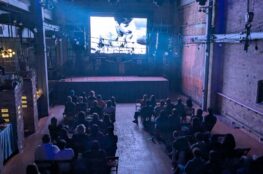
Now the documentary is premiering at the Oriental Theatre on Sunday, May 4 at 1:45 p.m. as part of the Milwaukee Film Festival. It will screen again at the Downer Theatre on Tuesday, May 6 at 3:45 p.m. and Wednesday, May 7 at 3 p.m.
We spoke to Howell and Kezman about the documentary, the case and more.
How did you both get involved in Ty’rese West’s case?
William Howell: I was raised with the parents of Ty’rese West. When [the killing] initially happened and I saw it on my timeline, it was just like looking at his father, like when we were kids. I think that’s what initially engaged me to get involved. At the time, I was doing a lot of rap videos and stuff like that, nothing serious like documentary work. I started to reach out to people, just praying and hoping that I could find somebody who knew about documentary-making. My friend told me that he knew somebody who’s a filmmaker, and he connected me with Laura.
Laura Dyan Kezman: When we met in November of 2019, it had only been a couple months after the district attorney in Racine had decided not to file charges against the officer. At the time, the [West] family was filing their own civil lawsuit against the Mount Pleasant police department. My meeting with Will turned into a three-hour conversation, and within a few weeks, we were filming. Things moved very quickly.
What drew you to Ty’rese West’s story?
Kezman: Initially it was a reaction to the unbelievable nature of how something this gruesome and tragic could happen under the radar. Months later, people in Milwaukee barely even knew who Ty’rese West was. Starting out, we were going to do this film about Ty’rese and honor his life and set his story straight. But then the pandemic hit, and then the uprising of 2020 after the death of George Floyd. Will and I were some of the first people on the ground in Minneapolis shortly after George Floyd was killed. And that experience over those few days, watching Minneapolis burn and how that triggered protests around the world – we knew that the story that we were telling was something much bigger.
Howell: I think a significant thing was [the Ty’rese West shooting] happening on Juneteenth Day – not only it happening on Juneteenth Day, but them being very cognizant of it happening on Juneteenth Day and hiding the fact that it happened from the community.
To me, I think the most pulverizing part of Ty’rese’s story is how young he was. Every time you see him speak or you see his vibrant soul on the screen, it’s nothing like he’s portrayed in the papers.
CYCLE includes footage from the deposition of the Mount Pleasant police officer. Could you explain a bit about the significance of that?
Kezman: I think [that deposition] is a really captivating element of the film that will be unique to anybody watching. The audience gets a front row seat to an officer deposition that is typically not video recorded. This one came up because of the civil lawsuit filed by the family against the Mount Pleasant Police Department. The deposition for that civil suit was taken in the spring of 2021, and at that point, we had been independently investigating this case ourselves and we were working in tandem with the lawyers that Monique [West, Ty’rese West’s mother] and the family had retained to prosecute the case. They hired a court videographer, and then we were able to use that footage in the film. The officer gets to tell his own story himself under oath.
You’ve been working on this documentary since 2019. What surprised you during the process?
Howell: What surprised me the most is how much we really don’t understand each other’s cultures. There’s so much room for understanding. When we gain a better perspective of each other, I think that’s when we’ll start to gain more understanding. We are very blind to the things that make us different. And I think that’s dangerous.
Kezman: I would echo that. I don’t think we’re aware even of the things that divide us culturally and how that really impacts the way that we perceive.
What do you hope people take away from your film?
Howell: I hope people leave with understanding. This is a film of love and peace in the end, and that’s what we are hoping that everybody leaves with – more understanding of how these things can occur and ways for us all to understand each other so they don’t happen as often.
Kezman: The film spotlights how these incidents happen in small towns like Racine. One big takeaway I’m hoping people extract is, No. 1, think twice when you read a press release issued by a police department. Do your best to contextualize how that information is being framed in the media. And then, secondly, I think another really important point to highlight is how important our local elections are. One thing that’s pointed out in the film is that in the two election cycles since Ty’rese was killed in 2019, the district attorney of Racine County has run unopposed. It’s really important to highlight how important those local elections are, how much they play in and influence the outcomes of cases like this.
A film like this is about deeply rooted, calcified, systemic issues that realistically are very difficult to change. And so the best we can hope for is that this sparks change within every individual person who sees this, and that energy is then used as a catalyst for them in their own life to do something that helps break the cycle. And so that is really what we’re hoping, especially in the room the day of the premiere. We’re hoping that people take the energy that they’re left with after watching the film and then put it back out into the world in a constructive, healing way.
Tickets for CYCLE’s upcoming three screenings are available here.