|
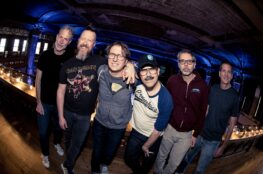
| Band photo courtesy of takingbacksunday.com. |
Paying health insurance. Standing up in a friend’s wedding. The sudden realization that Adam Sandler isn’t actually funny. These are all milestones in the life of a person in his or her mid-20s that serve as reminders of dwindling youth and personal growth.
Feel free to file “seeing Taking Back Sunday at The Rave in 2011” in that category, too.
The Long Island quintet first gained widespread underground appeal on the weight of 2002 standout Tell All Your Friends. The band is credited to be one of the more definitive bands of emo’s third wave, which enjoyed an all-too-brief heyday at the outset of the century. Unlike the band’s innumerable menagerie of screamo contemporaries now heaped high on the causeway of modern music relevance, Taking Back Sunday has trudged on for more than a decade, has seen its genre lose favor, has lost and re-gained members, yet has managed to come out unscathed and, somehow, more popular than ever. After seeing them live, it became a little easier for a jaded 26-year-old — hell bent on writing something snarky — to understand why.
After The Maine played a solid, when not pandering, set to a building crowd of fresh-faced youths, a looping air raid siren signaled the beginning of what would be an energetic night of unearthed nostalgia.
As the sirens continued, TBS took the stage and set the tone for the evening with a rousing rendition of Taking Back Sunday opening track “El Paso.” Requisite new song intro enacted, the band wasn’t shy about getting back to its roots (much to the pleasure of the now-packed Rave) with a spot-on playing of Tell All Your Friends opener “You Know How I Do.” At that point, those who hadn’t been matching every pitch-perfect syllable uttered by (now-puffy) frontman Adam Lazzara joined in, singing what was to become a greatest hits showcase of sorts. “Bike Scene,” also off … All Your Friends, followed shortly after, and came complete with a lengthy stop during the bridge in which Lazzara introduced each member personally before the band shot into the song’s conclusion. In all, just under half of TBS’s 18-song set came from that album.
Much of the performance hinged on the sturdy voice and lively stage antics of Lazzara. Although road softened at 30 years of age, the bandleader brashly gallivanted throughout the stage, swinging the mic with reckless abandon (at times coming within inches of braining band mates and event security) and aptly replicating every subtle nuance of the band’s recorded material as his Milwaukee tumor spilled unabashedly out of his denim vest.
He took temporary second billing at the midway point to allow since-returned guitarist/second vocalist John Nolan (who, with bassist Shaun Cooper, left the band in 2003 to form Straylight Run before both returning last year) an opportunity to lead a TBS rendition of Straylight Run ballad “Existentialism On Prom Night.”
The cool downshift into cover band mode didn’t last long before they reverted to familiar form with the spastic “What’s It Feel Like To Be A Ghost?” off the appropriately titled live album Louder Now. The mic swinging and subsequent adolescent girl knee-weakening continued as Taking Back Sunday’s bottom heavy set neared completion. Before closing the curtain, though, the band made sure to play singles “A Decade Under The Influence” and mainstream radio hit “MakeDamnSure” along with and fan favorites of yore, “Timberwolves At New Jersey” and, of course, “Cute Without The ‘E’ (Cut From The Team).”
After a feigned goodnight and halfhearted exit, the band returned to the stage — which actually surprised a ton of people who were herding toward the exits… Pssh, kids! — to finish the night with the classic “There’s No ‘I’ In Team.” As Nolan bellowed his last guttural “Best friends mean you pull the trigger!/Best friends mean you get what you deserve!” with the support of a couple hundred background vocalist volunteers, a band this reviewer was so prepared (if not eager) to write off as past prime effectively dished up a reminder (with a sizable side of crow) to why it held a place on so many CD racks of young adults in 2002, and why it still does today.