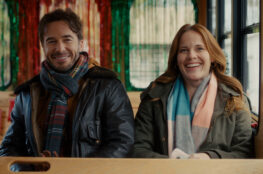

 When news broke last fall that Summit Entertainment had indefinitely pushed back the release date of the Jodie Foster-directed film, The Beaver, in light of star Mel Gibson finding himself at the center of another high-profile scandal – this time, a domestic abuse case with incriminating audio – it raised some interesting questions.
Would the film ever see the light of day?
Considering it’s directed by Jodie Foster, a respected, two-time Oscar-winning actress (The Accused and The Silence of the Lambs), who also appears in the film as Mel Gibson’s long-suffering wife, it was a given that it would get some sort of theatrical release. It also helps that the film’s script, written by Kyle Killen, was once the toast of Hollywood and topped the Blacklist, an annual ranking of the best unproduced film scripts as determined by Hollywood movers and shakers.
Foster and Gibson’s first film collaboration, the big screen version of the western television series “Maverick” that ran in the late-1950s into the early-1960s, grossed $101 million at the domestic box office in the summer of 1994. Both were big, bankable Hollywood stars at the time, and the prospect of seeing them act opposite each other for the first time proved an enticing draw for moviegoers. And unlike their latest collaboration, Maverick had a built-in audience that was familiar with the old western series that starred James Garner (who also co-starred in the film).
But that was 17 years ago, and neither Foster nor Gibson can realistically be called bankable anymore; certainly not in the same way they were considered at that time. When The Beaver opened in limited release May 6th (two weeks before its Milwaukee bow this past weekend), it didn’t fare all that well; it bombed, in fact. The film’s disappointing showing played a significant role in its distributor opting to change course by giving the film a “limited art-house run” instead of a general wide release as was originally planned.
Funny considering that The Beaver was never designed to be a mass appeal film. It epitomizes those two trendy indie film terms “high concept” and “quirky.” How many films about clinically depressed, suicidal businessmen who communicate through animal-shaped hand puppets have you seen, ever?
While you’re pondering that, ponder this as well: Can you remember the first time you were interested in seeing a film that was released amid controversy or scandal or both?
 My first was Wild Orchid back in 1990. I had just become a teenager, was new to the city, and like many of my brethren in the throes of puberty, was endlessly fascinated by this thing called sex. And once I heard that there was plenty of sex (some purportedly real, hence the controversy surrounding the film) and nudity on display in Wild Orchid, I was determined to see that film come hell or high water. Eventually, I got around to seeing it on the big screen at the old northside budget. I tricked my mom into buying me a ticket; she was too busy taking care of my then-infant brother to know what I was seeing at the movies. She probably thought it was a film about a gardener or something and was happy I had found a safe place to hang out. I can remember feeling like I had really accomplished something great while watching the film in that dark theater with about 30 or so other people, mostly curious teenagers like myself who had weaseled their way in, too. It was like we were a motley crew of hipsters who would one day be able to tell the world we were among the few and the proud who saw Wild Orchid on the big screen.
Several other controversial and scandal-ridden films have followed in the years since then, some piqued people’s interest, some not so much.
What devotee of Woody Allen can ever forget the scandal that preceded the release of his 1992 film, Husbands and Wives? For those of you not in the know, here’s a quick recap: Allen’s then-longtime girlfriend and frequent co-star, Mia Farrow, discovered that he was having an affair with her then-21-year-old adopted daughter, Soon-Yi Previn, whom he ostensibly helped Farrow raise since she was a child. There was a lot of back and forth about when the affair started and how long it had been going on for, not to mention the moral implications of a parental figure having sexual relations with a child they helped raise.
At the time, there were numerous reports questioning if the scandal would kill Allen’s career or not. Nearly 20 years and 21 films later, Allen’s career most definitely survived. As a matter of fact, while still coping with all the fallout surrounding the affair being made public, Allen received Oscar and Writer’s Guild Award nominations for the film’s script and won the British Academy Award (the BAFTA) for best original screenplay.
Other films affected by sex-related controversies and scandals include the box office hit Mr. and Mrs. Smith (Brad Pitt leaves wife Jennifer Aniston for MILF Angelina Jolie); the box office underachiever Proof of Life (Meg Ryan cheats on husband Dennis Quaid with co-star Russell Crowe); the Anne Heche double feature of Volcano and Six Days, Seven Nights (can one-half of Hollywood’s “It” lesbian super-couple be a movie star and convincingly play straight?); actor-director Vincent Gallo’s The Brown Bunny (Gallo receives on-camera fellatio from co-star Chloe Sevigny, an ex-girlfriend of his); director David Cronenberg’s Crash (sadomasochism and staged auto accidents); Basic Instinct (was Sharon Stone, playing a bisexual and suspected serial killer, really misled about how graphic that infamous crotch shot would be?); Monster’s Ball (the surprisingly explicit love scene between Halle Berry and Billy Bob Thornton); and director Larry Clarke’s Kids (an HIV-positive teenager seeks to infect as many virgins as possible through unprotected sex).
 Then there are the films that arouse controversy or are shrouded in scandal for a host of other reasons. Remember when Tom Cruise was cast as the vampire Lestat in director Neil Jordan’s big screen adaptation of author Anne Rice’s novel “Interview With The Vampire?” Rice minced no words regarding her dissatisfaction with his casting. After seeing the film, she later offered a mea culpa for the ages by saying that not only was she wrong about Cruise’s lack of qualifications for the role, but that he, in fact, was Lestat.
Speaking of Jordan, his previous film, The Crying Game, was derided by some international journalists as a pro-Irish Republican Army (IRA) film because the film’s main protagonist, a young IRA recruit (played by Stephen Rea), was sympathetically drawn. The same criticism was slapped on director Jim Sheridan’s 1993 film, In the Name of the Father starring Daniel Day-Lewis as a real-life petty thief who’s falsely implicated (with his father and others) in the IRA-connected bombing of a London pub that killed several people. Stateside, the controversy surrounding The Crying Game concerned keeping the film’s major plot twist under wraps as to not ruin it for interested moviegoers who had not yet seen the film. I saw it the weekend it opened in Milwaukee to prevent anyone from ruining it for me. And, as was the case then, I won’t reveal the twist here.
 There are two topics you are never supposed to bring up at social gatherings: religion and politics. Both are bound to ignite a war of words if broached. The same can be said about films where religion and politics are central themes. Spike Lee had to fight tooth and nail to get Malcolm X, his biopic about the slain civil rights leader, to the big screen after the film’s distributor (Warner Bros.) pulled the plug during post-production when the money ran out and they balked at ponying up more. Lee, who had already forfeited his fee to keep editing the film, solicited donations from the likes of Bill Cosby, Oprah Winfrey, Michael Jordan and Magic Johnson, among others, to finish the film. The film was criticized by the Nation of Islam because they took offense to how their group and the Nation’s deceased, longtime leader, the Honorable Elijah Mohammed, were depicted. However, critics and audiences responded favorably to the film, especially in regards to Denzel Washington’s Oscar-nominated performance in the title role.
 Director Martin Scorsese had long wanted to make a film version of Nikos Kazantzakis’ “The Last Temptation of Christ” after having been given a copy of the book by actress Barbara Hershey while they were shooting Boxcar Bertha (1972). The novel’s central thesis is that even though Christ was free from sin, he still fell victim to temptation since he was human, a viewpoint that differs wildly from the more commonly-accepted Biblical representation of Christ. Scorsese nearly made the film for Paramount Pictures in 1983, but the studio got cold feet regarding the film’s escalating budget, and matters weren’t helped following mounting pressure Paramount received from outraged religious organizations who threatened to protest all future films the studio produced. Scorsese finally got to make the film four years later for Universal Pictures at a fraction of the cost and to the outrage of the same groups. The $7 million film grossed nearly $8 million at the domestic box office. Twenty-three years after the film’s 1988 release, the film remains controversial and is not readily available for purchase. Criterion issued it on DVD back in 2000 (it’s now out of print), and old VHS copies can be found for auction at Amazon.com. However, the film is available for free viewing via Netflix and Hulu.
 Sixteen years after Temptation, Mel Gibson’s controversial film about Christ’s crucifixion, The Passion of the Christ (2004), was released. Despite accusations of anti-Semitism being slapped on the film from factions within the Jewish community and elsewhere, Gibson’s film was championed by numerous religious groups and organizations. The $30 million film, which was self-financed by Gibson, went onto gross over $600 million worldwide and is the most successful non-English language film and religious-themed film of all-time.
Gibson’s got another film scheduled for release this year called How I Spent My Summer Vacation, which is about a career criminal thrown into a tough Mexican prison who learns how to survive with help from an unlikely ally. It’ll be interesting to see if it’s met with the same audience disinterest that The Beaver has been.
What a difference seven years and two high-profile scandals can make.