

With winter sliding our way, drivers once again need to get a grip on how not to slip. But if you’re new here, you need to know that in Wisconsin, only rubber meets the road. The state outlaws metal-studded tires, except for emergency vehicles, school buses and mail delivery. Out-of-state drivers get a pass if they’re just passing through.

If someone has inspired you through their service, leadership or dedication, the Unity Awards are your opportunity to recognize them!
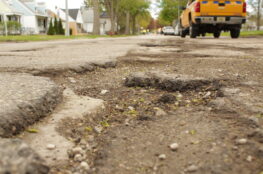
Studded tires feature small metal spikes to improve traction and control on snow and ice. But on the down side, “It is widely accepted that studded tires cause significant damage to … pavements,” state highway maintenance director Rebecca Szymkowski wrote in an email. They create ruts that not only reduce pavement life but can fill with ice and make roads more slippery, Szymkowski said. Pavement markings also suffer, she wrote.
Besides, Szymkowski wrote, state highways are always supposed to be plowed clear, so you shouldn’t need studded tires there. Finally, she added, “recent advancement in snow tire technology” has upgraded the performance of snow tires without metal studs.

Most states permit studded tires in winter, but several of our neighbors have tighter restrictions. For example, Michigan law allows them only “for the extreme winter snow and ice conditions of the Upper Peninsula and the northern Lower Peninsula,” as well as for emergency vehicles and rural letter carriers statewide.
Illinois and Minnesota also exclude rural letter carriers from their bans, and Illinois has a special exemption for disabled veterans living in rural areas. Iowa is among the 35 states, plus the District of Columbia, that permit studded tires by season, weather or region. Six mountainous states (Colorado, Kentucky, New Hampshire, North Carolina, Vermont and Wyoming) allow them year-round, while five sunny states (Florida, Louisiana, Mississippi, South Carolina and Texas) prohibit them entirely.