Timing can be everything in business. But sometimes you get thrown a curveball and take your swing anyway.
That’s the case with Milwaukee’s Lakefront Brewery, which has faced a hurdle or two in its nearly four decades in business. The brewery recently launched a new THC-infused lemonade, High Jinx, despite a looming federal ban on THC and other hemp-derived products that would go into effect in November 2026. Wisconsin lawmakers are considering their own ban as well.
Lakefront spent two years testing, retooling and perfecting the drink, which uses hemp-derived Delta-9 THC to bring its buzz.
“We had everything ready for the release, labels, four-packs, ingredients and promotional materials that were already paid for, so we would like to get some of it sold to make back some of our money invested in the product,” says Lakefront Brewery President Russ Klisch. “We called up our distributors after the ban was announced and of our seven Wisconsin distributors, five still wanted the product. We had several retail accounts that were looking forward to buying High Jinx and they said they would still buy it. The accounts felt that they could sell through the product in a year, so we figured we’d go ahead with it.”
Demand for High Jinx has been strong enough that Lakefront has made a second batch to fill orders, according to Klisch.

Nominate Somebody Now!
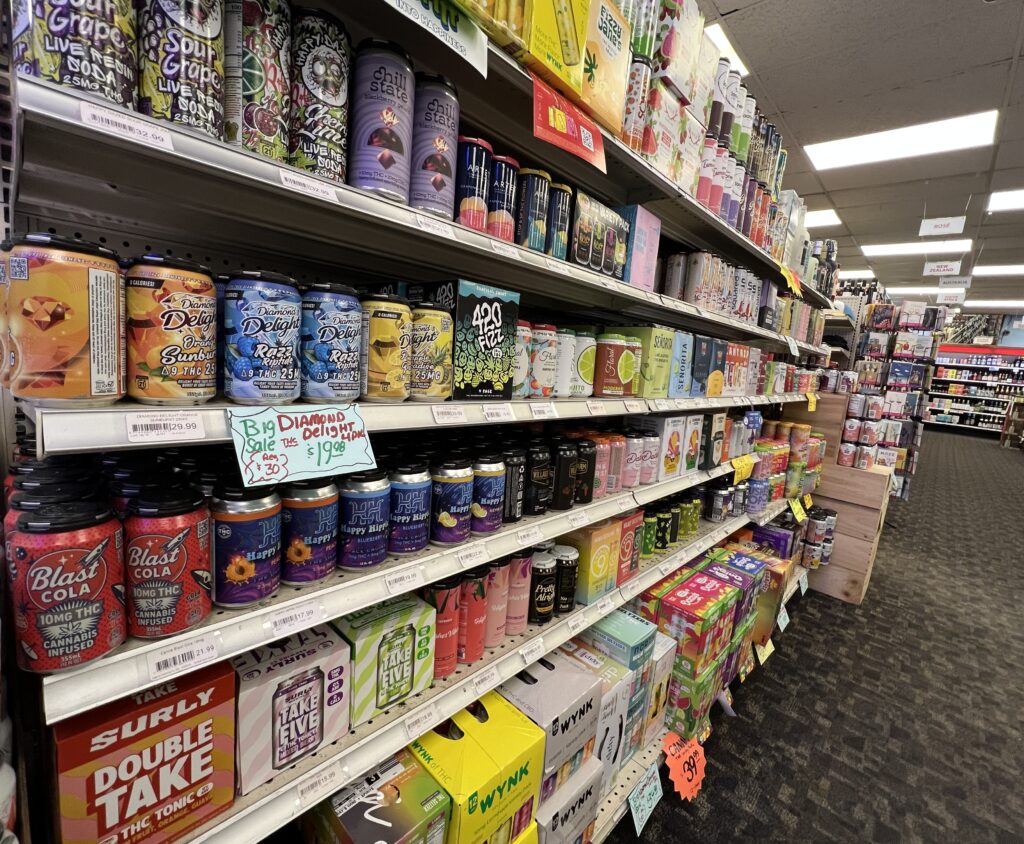
In Wisconsin, medical and recreational marijuana are illegal, but a federal loophole created by the 2018 federal Farm Bill removed hemp from the list of controlled substances. As a result, products containing some of the psychoactive compound THC are legal in Wisconsin, as long as they are derived from hemp despite delivering a high very similar to traditional cannabis. The loophole allowed the spread of beverages from Lakefront, Sugar Maple and many other producers, as well as vapes, gummies and oils.
However, last month, the U.S. Senate approved a bill that would essentially ban the sale of intoxicating hemp products nationally. It was part of a funding bill that ended that longest federal government shutdown.
Undeterred by the pending ban, Klisch says Lakefront is still planning on developing and coming out with another flavor of its THC beverage, though it depends on if they can manage to get it done in the next three months.

The decision to bring High Jinx to market, despite the looming ban, has offered some advantages for Lakefront.
“Everyone is talking about it now, which has given our product a lot of publicity,” Klisch adds. “Our sales have been strong the first few weeks, so the ban hasn’t slowed anything down.”
Still, Klisch was caught off guard by the ban.
“I was surprised that it was included in the bill that ended the government shutdown,” he says. “There’s so much infrastructure and people involved in the THC industry … I didn’t think that there would be an outright ban that would threaten to close the industry down.”
THC Drinks in Milwaukee Don’t Have the Customers You’d Expect
Gathering Place Brewing, which operates a brewery in Riverwest and a taproom in Wauwatosa, introduced its THC-infused sparkling water, Blossom, early this year. The THC situation in Wisconsin is “up in the air,” says Joe Yeado, founder and president of Gathering Place, which also owns Sahale Ale Works in Grafton.
“If there is a federal ban that goes in, that greatly impacts things. If it doesn’t, then I think it’s status quo,” Yeado says. “From a business planning standpoint, we’re not planning to invest too much more beyond what we’re already doing. It’s definitely kind of pumping the brakes on what for us is a very popular product that sells very well.”
Gathering Place sells Blossom primarily as a to-go product through its three taproom locations, with minor outside distribution through select accounts. This keeps them from having to deal with issues around on-site consumption. Blossom comes in cans with 5 mg or 10 mg of THC. “I know there are breweries out there with much higher doses. We have chosen to stay on the approachable side of things,” Yeado says.
“Most of the customers who try our product are first-time users of a cannabis-based product. Whatever you may picture as the typical consumer of Blossom, it’s probably not accurate,” he points out. “It tends to be a lot of people in their 40s, 50s and 60s. I know some people substitute it in place of having a glass of wine or a cocktail. It’s a long way from the Cheech & Chong stereotypes.”
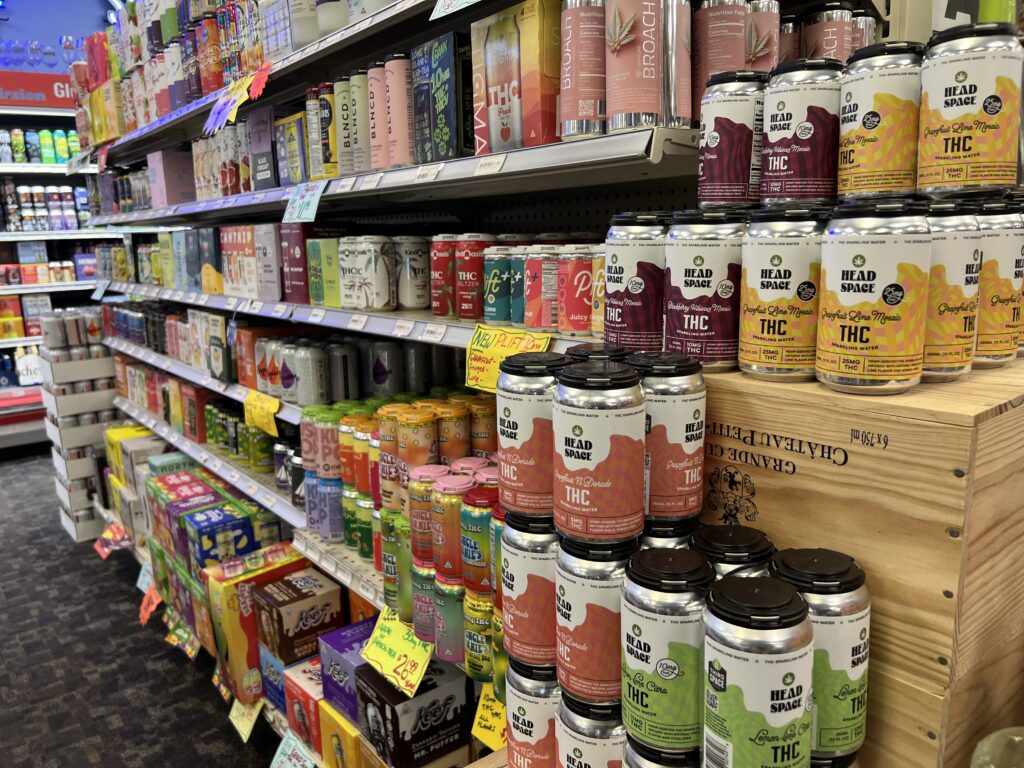
Cannabis-infused beverages also tend to come with a higher price than alcoholic beverages, he notes.
“It’s a very different kind of customer. There’s an argument to be made that people of those ages have some disposable income,” Yeado says. “The sky has not fallen since these products have been in the state and as they have become more prevalent, people have become curious about trying them, but that’s not to say from that point on that they’re only going to be consuming THC beverages. I’ve been pleasantly surprised at the reception.”
Although acknowledging that THC-infused products make up a very meaningful percentage of business for some brewers, Yeado says Blossom accounts for about 5% of Gathering Place’s revenue.
“It’s not a main driver, but it is something that has been growing, and our customers enjoy it,” he says. “As consumer preferences have shifted away from beer and toward other products, this was a way that we as breweries could meet that consumer demand. I certainly hope the market doesn’t go away entirely.”
THC Drinks Are Inviting Activity at the State Level, Too
Wisconsin lawmakers have proposed bills that could potentially supersede the federal ban on hemp products set to go into effect in November 2026. One of the bills, proposed by a group of Wisconsin Republican lawmakers, would effectively ban intoxicating hemp-derived THC products in the state by redefining hemp under state statute. Two other bills, drafted by Republican lawmakers, would allow hemp-derived products but with regulations.
Yeado says he’s hopeful that legislators, either at the federal or state level, can come to consensus about regulating rather than banning THC-infused products.
“We would welcome some regulation and rules of the road. Right now, it’s kind of the Wild West,” he explains. “We hold ourselves to high industry standards about labeling and getting the product tested, and we produce it in a licensed food production facility. But there are companies out there that don’t.”
Yeado also notes that breweries pay excise taxes on the alcoholic products they produce, but not on THC-infused offerings. “The state is potentially missing out on excise tax revenue. There’s no shortage of things we could use some public dollars for,” he says.
Whether states could supersede a federal ban with their own legislation creates a “legal gray area.”
“As a business owner who’s just trying to allocate resources for investment, I’d prefer not to have gray areas,” he says. “I’d like to know what the rules are and we’ll play by those rules.”
That’s exactly what one of the Wisconsin bills proposes to do.
Assembly Bill 606 proposes regulating hemp-derived cannabinoid products the same way Wisconsin regulates alcohol, through a three-tier system separating manufacturers, distributors and retailers. Its sponsor, Rep. Rob Swearingen (R-Rhinelander), says the structure ensures accountability, prevents monopolies and has been the safest, most transparent framework for managing intoxicating products for nearly a century. The bill also includes several key provisions to ensure product safety and accountability.
To implement this model, the bill creates a new Division of Intoxicating Products within the Department of Revenue, bringing alcohol and hemp-derived THC products under one regulatory umbrella that will license, regulate and enforce compliance across all tiers, ensure consistent standards statewide and provide clear rules for businesses and verified safety for consumers.
The state previously codified the so-called Farm Bill loophole, Swearingen notes. “The loophole that allows these products to be manufactured is, in essence, the Wisconsin state law,” he says. “Since then, this industry, through some great entrepreneurs, has really exploded, but unfortunately, with no rules and regulations.”
Under the bill drafted by Swearingen, consumers would have to be at least 21 years old to purchase THC-infused products. The bill would also prohibit online sales of such products.
“We modeled this after the three-tier alcohol system,” Swearingen explains. “That’s got some of the people who been involved since the beginning kind of upset because they have vertically integrated and do all of it themselves, but that’s the risk they took. They all knew this day might be coming.”
Swearingen said he also wants to make sure that businesses selling THC-infused products are properly licensed.
“We want to make sure that the jar of gummies is exactly what’s on the label. Same thing with the drinks,” he says. “They may say they are capped at 20 mg or 30 mg, but you don’t know that because there’s no law that says they have to do that. In this bill, there’s truth in labeling.”