
You might say the Milwaukee Ballet is known for its big, over-the-top fairy tale ballets, but a pair of programs sandwiched between The Nutcracker and May’s season closer, ALICE (in Wonderland), demonstrates the company’s continued ability to shape-shift into contemporary themes and styles.
The biennial “Genesis” competition, which ran March 13-15 at the Pabst Theater, is designed to introduce the Milwaukee Ballet and its audiences to new choreographers, with audience members voting on their favorite of three pieces. A panel of judges also selects a winner, whose primary prize is a return in a future season to make another work for the company.

Check It Out!
This certainly isn’t the only ballet company to invent a platform for emerging and early career choreographers, but a unique aspect of the “Genesis” platform is its randomness. Casting is chosen from a hat, splitting the company into three cohorts. And the show order is shuffled for each performance – I suppose to prevent recency bias among voters across the entire weekend. Despite the Ballet fashioning the project somewhat like a reality show, “Genesis” programs past and present have added seriously good dances to the company’s repertoire. They can and do return to these pieces from time to time.
On Saturday afternoon, Romantiques went first, a suite by Sacramento Ballet dancer Julia Feldman, who for a decade has also helped run a dancer-led collective called Capital Dance Project. Feldman has been maximizing her time in the Midwest, simultaneously creating a piece for the Joffrey Ballet’s “Winning Works” competition in Chicago.
For Romantiques, Feldman plucked five movements from music composed by 19th-century women. The piece traverses the Romantic period – hence the name. The first and last sections are set to the finale of Emilie Mayer’s Symphony No. 6and a scherzo from Louise Farrenc’s third and final symphony, with a more introspective middle featuring a serpentine duet for Garrett Glassman and Lizzie Tripp-Molina, plus Eric Figueredo in a breezy solo. The latter, performed to French composer Mel Bonis’ solo piano piece called Mélisande, is named after a character from Maurice Maeterlinck’s play about a woman lost in the woods who, once discovered, becomes embroiled in a love triangle. She would later be the subject of Claude Debussy’s only opera – and Mel Bonis’ flittering, flowing piano lines could certainly be mistaken for sounding like Debussy, her contemporary.
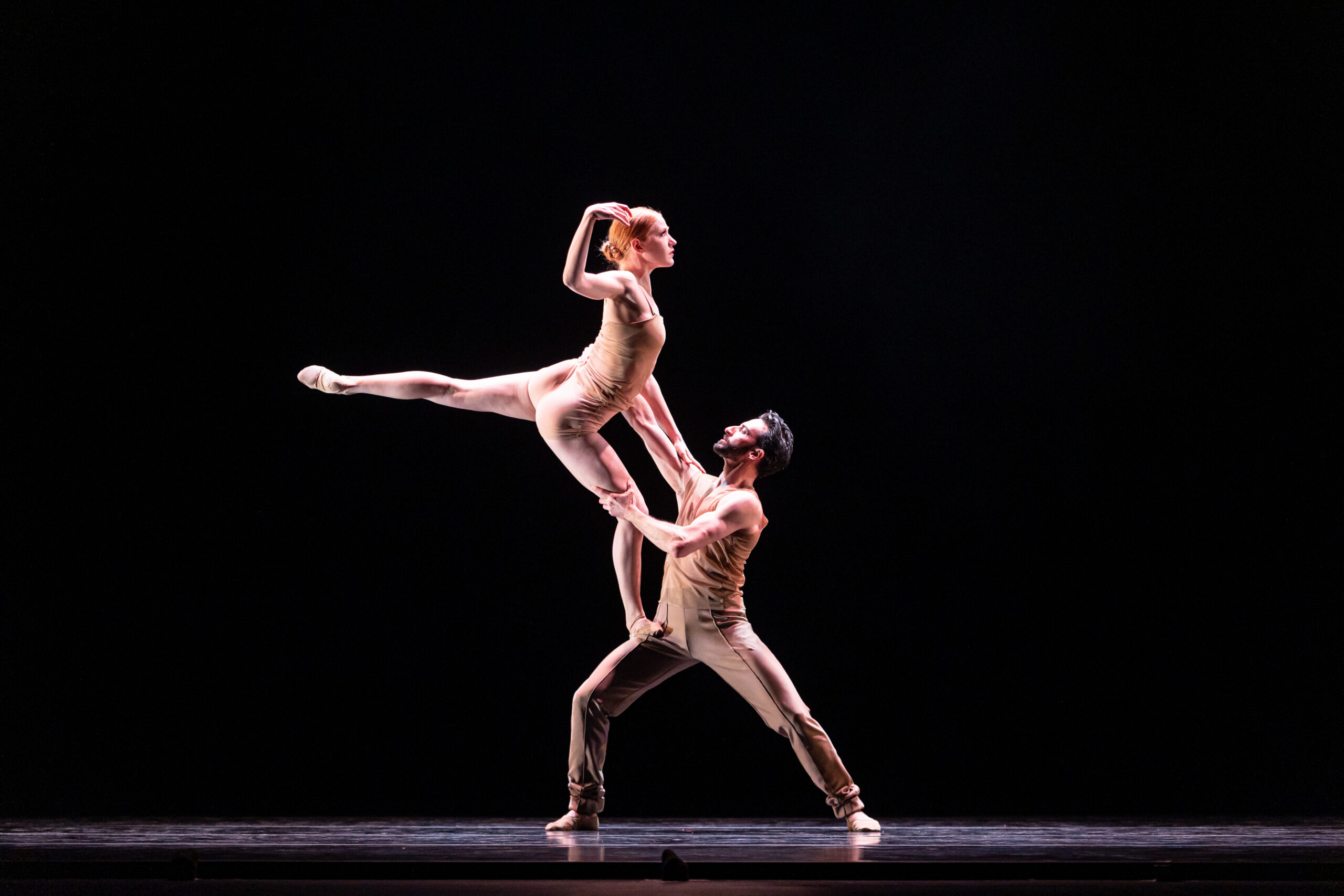
Feldman doesn’t appear to refer directly to any of that, though, approaching her assignment as a more purely musical exercise. The dancers are dressed in wispy, calf-length coats covering flesh-toned separates, emulating the frothy, long tutus employed in Romantic period ballets (which, strangely enough, doesn’t quite match up time wise with its musical counterpart). But the way these costume pieces flow with and around the dancers, combined with a more sculptural movement vocabulary and geography about the stage, make for a stunning painting – the full picture appearing at once pointillistic and impressionistic. Even the duet, for which Glassman and Tripp-Molina have their coats removed, is, perhaps ironically, decidedly unromantic. The two appear not as lovers but notes on the page occasionally melding together to make chords.
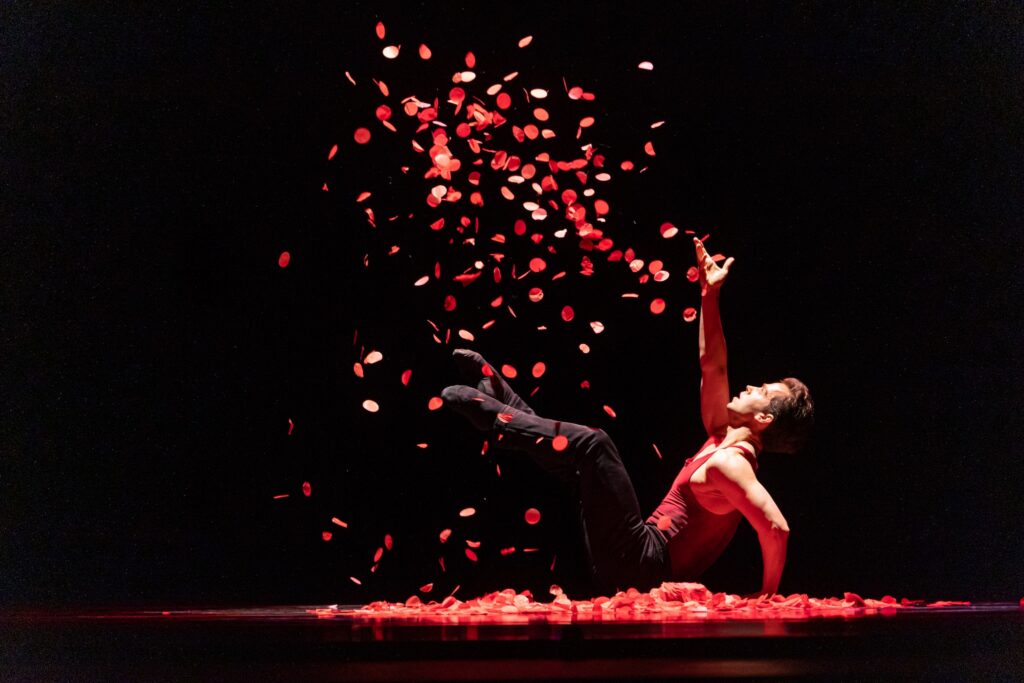
Romantiques is pretty much the opposite of Loughlan Prior’s Tear the Petals, which dials the passion up to 11. The Kiwi choreographer, who spent a decade performing with Royal New Zealand Ballet, is now one of three resident choreographers there and was picked as one of last year’s “25 to Watch” by Dance Magazine. Tear the Petals, Prior writes in a program note, forges a metaphor between flowers in bloom and performers on stage, each at their most beautiful when they’re on the verge of falling apart. The same could probably be said about this stage of his career; Prior has been globetrotting for several years, navigating the traveling troubadour life of a choreographer on the rise – an exhausting and often lonely existence requiring artistic excellence and creative inspiration on demand. Anyone who’s embarked on an artistic endeavor knows it doesn’t always work like that.
Nonetheless, Prior pulled out all the stops here, employing hundreds (perhaps thousands) of garnet red flower petals strewn across the stage, the dancers, dressed in simple but striking leotards and tights, thrusting fistfuls of petals skyward to create little of bursts of red. That firework-like quality is echoed in Prior’s movement vocabulary, which is thrilling but leaves little space to register Tear the Petals’ full impact.
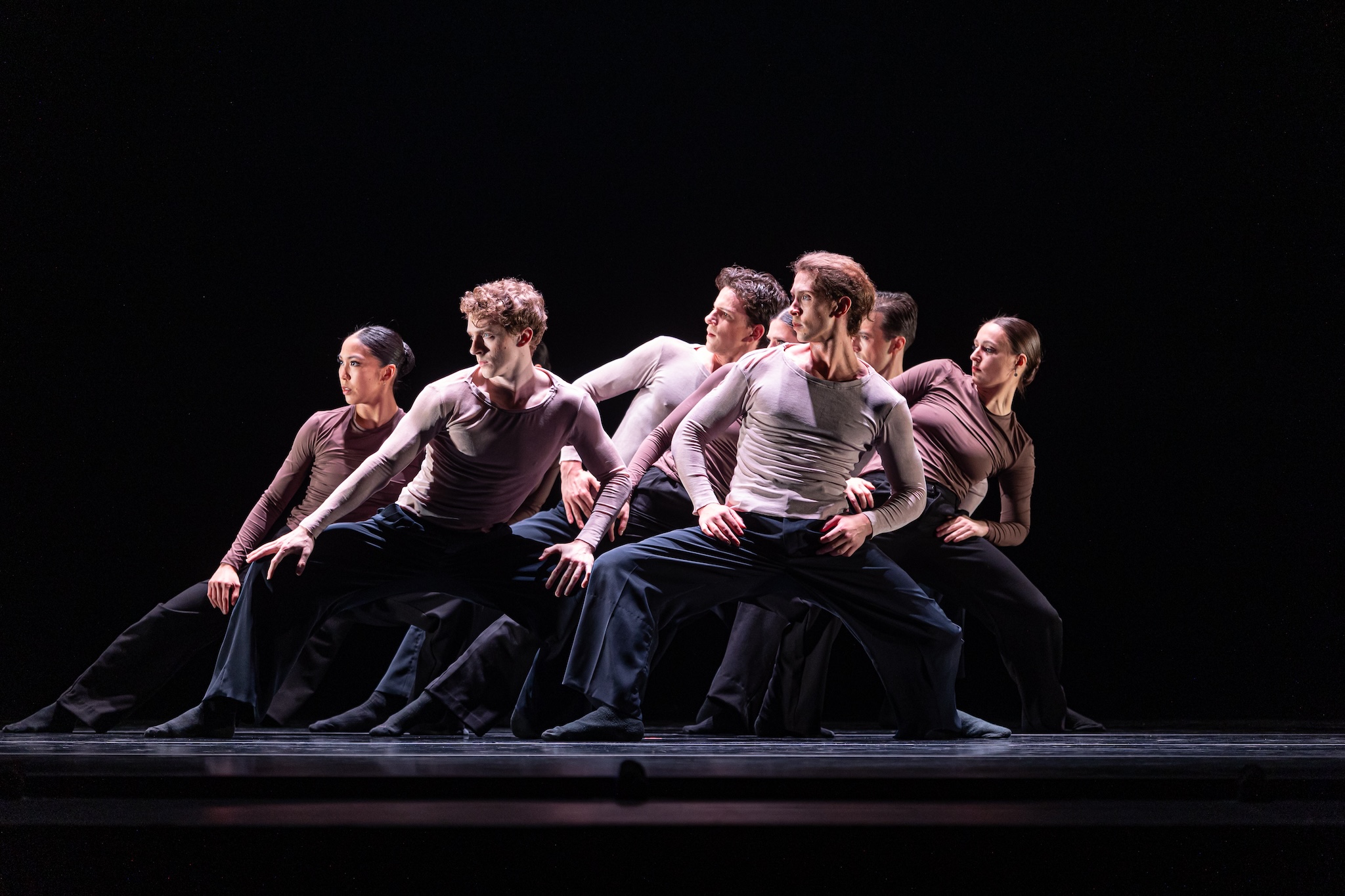
Tear the Petals evokes an inner dialogue, one both exuberant and heartbreaking. In a way, Lauren Flower’s Inner Symphony does the same, though with a much different approach. From the luck of the draw, Flower’s piece was the finale to Saturday’s matinee, giving the afternoon a kind of emotional and aesthetic bell curve.
Flower, who grew up in the dessert and now lives in soggy Portland, has found an artistic home dancing at Oregon Ballet Theatre while forging a dual career in choreography. Those dualities appear all over Inner Symphony, which Flower says explores a complex layering of memory, emotion and inner chatter that make us, well, us.
Unlike Tear the Petals, though, this inner dialogue feels like a more peaceful prospect, marked by pointed, poignant gestures peppered between legato phrase work. Beginning with Kristen Marshall alone on stage, dancers tap in for a time then depart, creating a dichotomous continuity as the players cycle in and out. A muted color palette of simple tops and trousers dial up Inner Symphony’s pedestrian look and feel. But despite its more apathetic mood, Inner Symphony does manage to sing, most notably is its third section, set to Michael Wall’s terrifically triplet-free, deconstructed version of Beethoven’s Moonlight Sonata.