
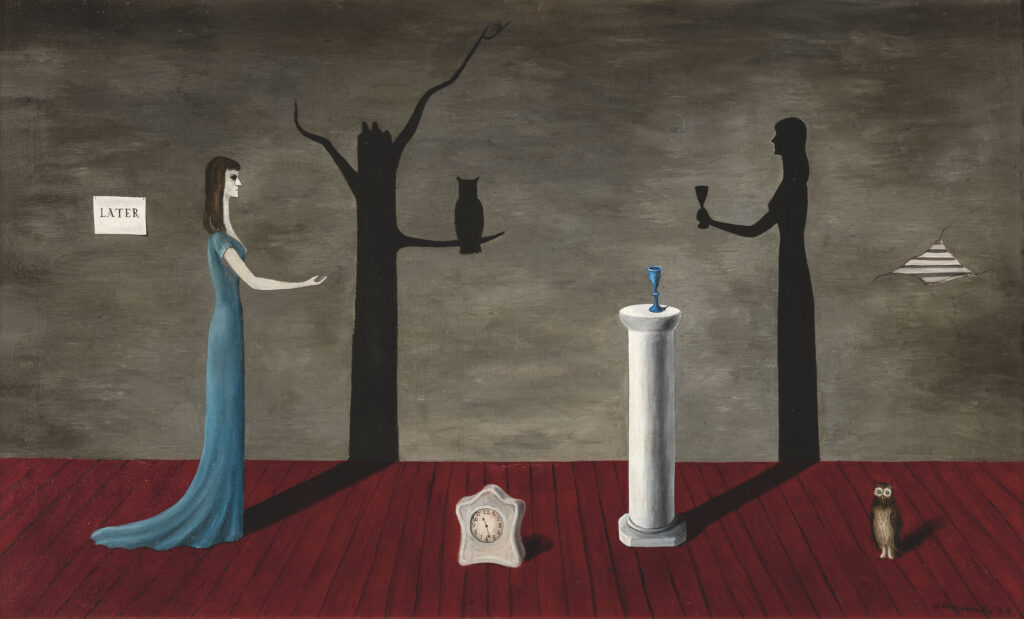
Something about Gertrude Abercrombie’s paintings feels off. Many of the late Chicago artist’s repeating motifs – trees, seashells, the moon – aren’t truly outlandish. Even a scene of two lions playing chess carries an air of the ordinary. But much like a dream, these unrelated objects seem loaded with meaning that’s tough to decipher. Puzzling out the mystery is the pleasure in her work.
“She always thought the artist was a sort of mediator between their own imagination, the world of dreams and the real world,” says Milwaukee Art Museum curator Thomas Busciglio-Ritter. Abercrombie herself said it plainly: She painted “simple things that are a little strange.”

Check It Out!
“Gertrude Abercrombie: The Whole World Is a Mystery,” a comprehensive touring exhibition featuring 81 of her works, arrives at MAM on March 27 for its only stop in the Midwest, staying through July 19. It’s somewhat of a homecoming; Abercrombie spent most of her life in the region, which influenced her flat landscapes.
Two local art galleries are meeting the surreal moment with exhibitions of their own. “A catalog of inquiries,” at the Portrait Society Gallery (207 E. Buffalo St., Ste. 526) through April 18, surveys strange and fantastical ideas explored in the wake of Surrealism through the works of 11 contemporary women artists, including Meg Lionel Murphy, Diane Levesque and Jean Roberts-Guequierre. And at the Tory Folliard Gallery (233 N. Milwaukee St.) starting March 27 through June 27, “The Magical Realism of John Wilde” presents a precise selection of paintings and drawings from the late master of American Surrealism – a native Milwaukeean and close friend of Abercrombie.
Born in 1909, Abercrombie made her start in commercial art before charting her own surrealistic path. “She was very unconventional,” says Busciglio-Ritter.
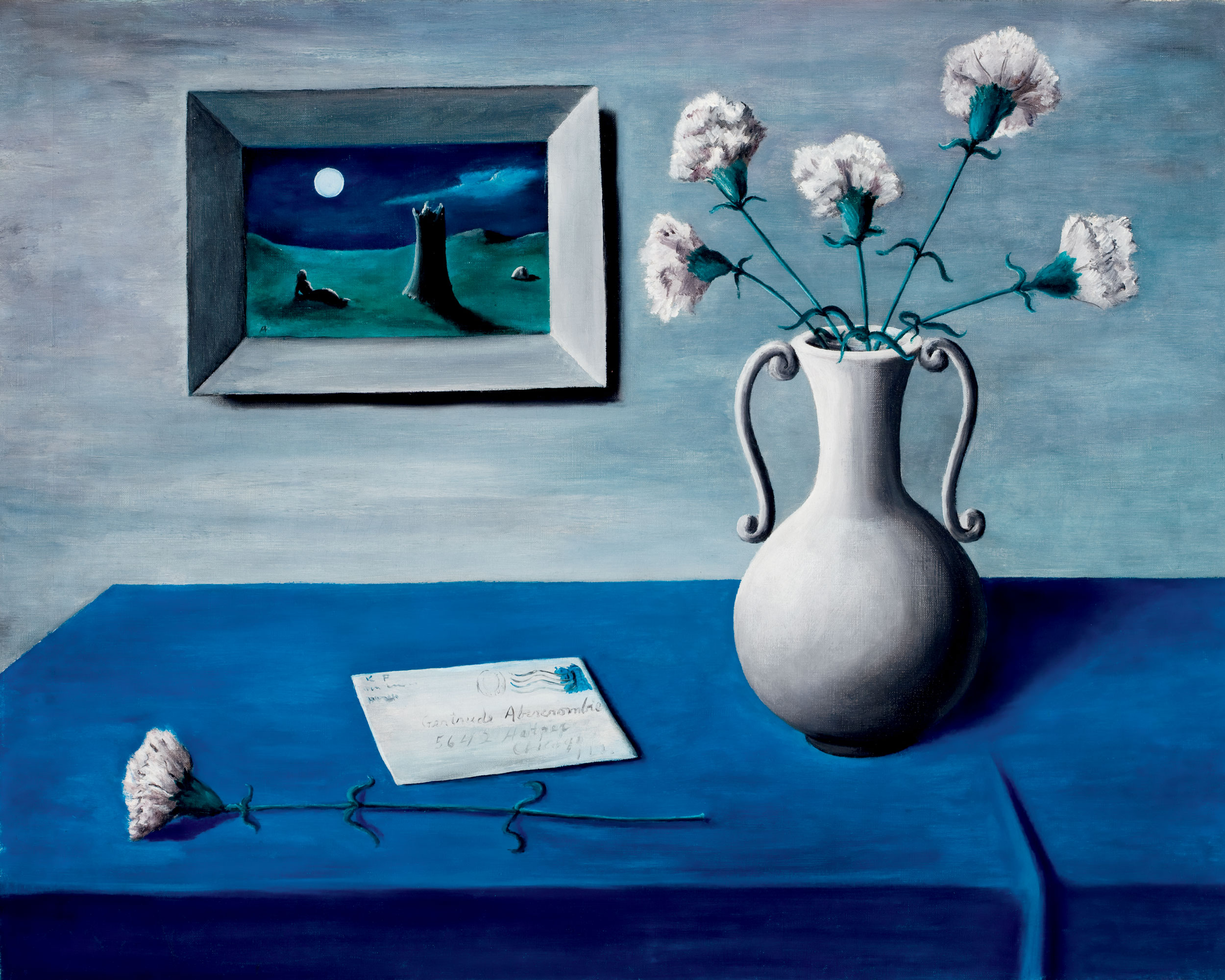
Abercrombie never labeled her work, but she found a creative home with the Wisconsin Magic Realists. She was close with Milwaukee artists such as Karl Priebe and John Wilde, who painted from wistful memory a portrait of the group with an unnamed nude woman. It’s shown in a concurrent exhibition titled “Gertrude & Friends.” The artists shared a sense of humor, Busciglio-Ritter says, playfully unsettling viewers while staying grounded in reality.