
Residents in communities along Lake Michigan used to shiver at forecasts of lake-effect snow. While “cooler by the lake” was pure bliss during summer, high snow totals meant back-breaking shoveling even as neighbors farther inland got just a dusting.
With climate change contributing to warmer winters, snowstorms are fewer and farther between. But when it does snow, these days there’s as good of a chance (or even better) to build a snowman inland as along Lake Michigan. Has the lake effect – long a buzzword in Wisconsin – lost its bite?

Celebrate this year’s winners of the Betty Awards!
First of all, local meteorologists say, it’s important to know that lake effect has a sibling: lake enhancement. It’s more common than true lake-effect snow, so it’s likely you’ve been conflating the two.
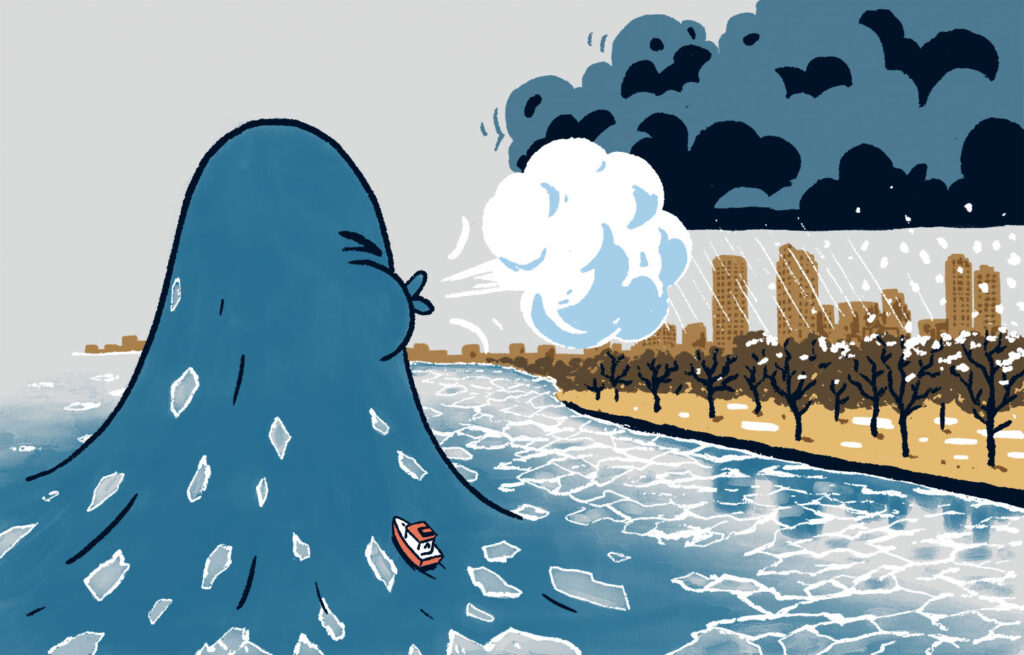
What’s the difference? When an overland storm system’s bearing down on Milwaukee from the west, where most of our weather comes from, Lake Michigan’s relatively warm, wet air fuels precipitation in a zone that stretches far inland. That’s a lake-enhanced event. With lake-effect storms, cold air moves onto land from over warm, open water – here, typically from the northeast – and inhales moisture, turning it into snow. But that’s less common than snow blowing in from the west.
“It’s not necessarily lake effect” that usually contributes to snowfall inland, says Brendan Johnson of WTMJ’s Storm Team 4. “It’s lake enhancement.”
Two weather patterns are becoming more common with Milwaukee’s warmer winters: rain, which is sometimes freezing, and snow squall warnings. The latter, which the National Weather Service began issuing in 2018, are akin to a severe thunderstorm warning but for snow. These can drop a few inches of snow in a short period of time, causing total whiteouts – and a strong reason to stay home for a snow day.
A warmer Lake Michigan plays a role here by also warming the air, which can limit snow right along the lakefront. “If the lake temperature is warm, or warmer than average,” says Mark Baden of WISN 12, “lakeshore communities can end up with cold rain, whereas a bit inland, especially towards the Kettle Moraine, can be a few degrees colder and you get a mix of rain and snow.”
One antidote to lake-effect or -enhanced snow is ice, and Drew Burgoyne of CBS 58 notes that Lake Michigan’s average ice coverage is declining by about 5% each decade since the 1970s.
A few meteorologists cited a January 2024 storm in which the West Bend area and Waukesha County saw a lot of lake enhancement, causing tree branches to break under the snow. “That storm had the potential to produce a foot of snow,” says Brian Niznansky of Storm Team 4, “but the lake enhancement upped it to 18 inches.”
Baden always watches the lake’s temperature closely when putting together his winter forecasts. “The lake is the big player. It makes me lose my hair every winter,” he says. “You can go even a couple of blocks inland and you start to see a bunch of accumulation.”