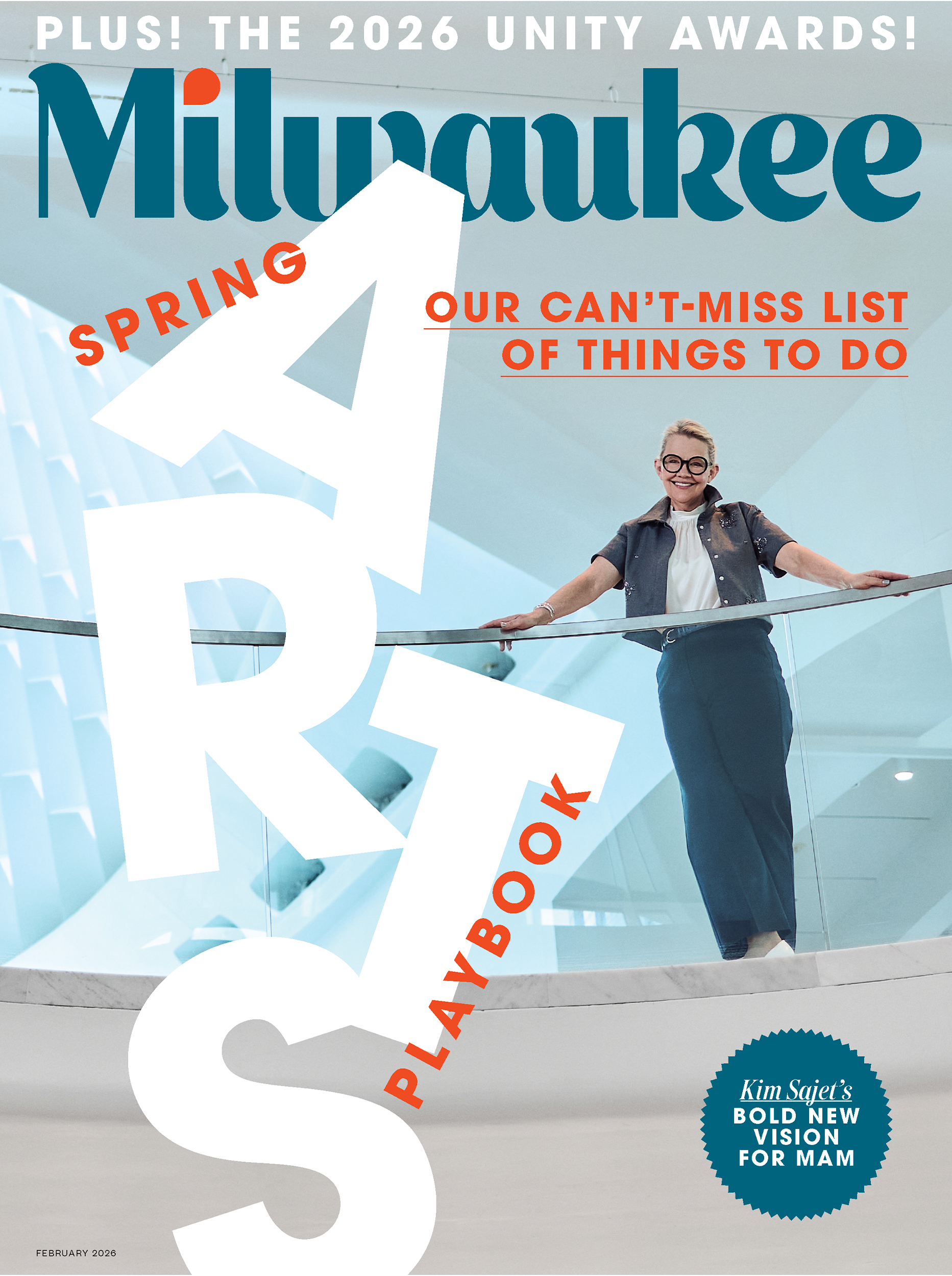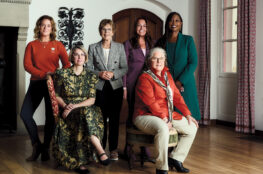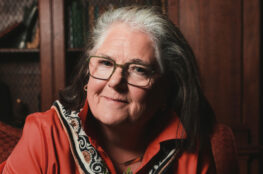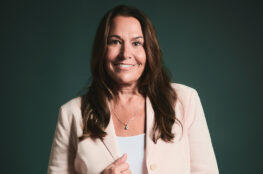

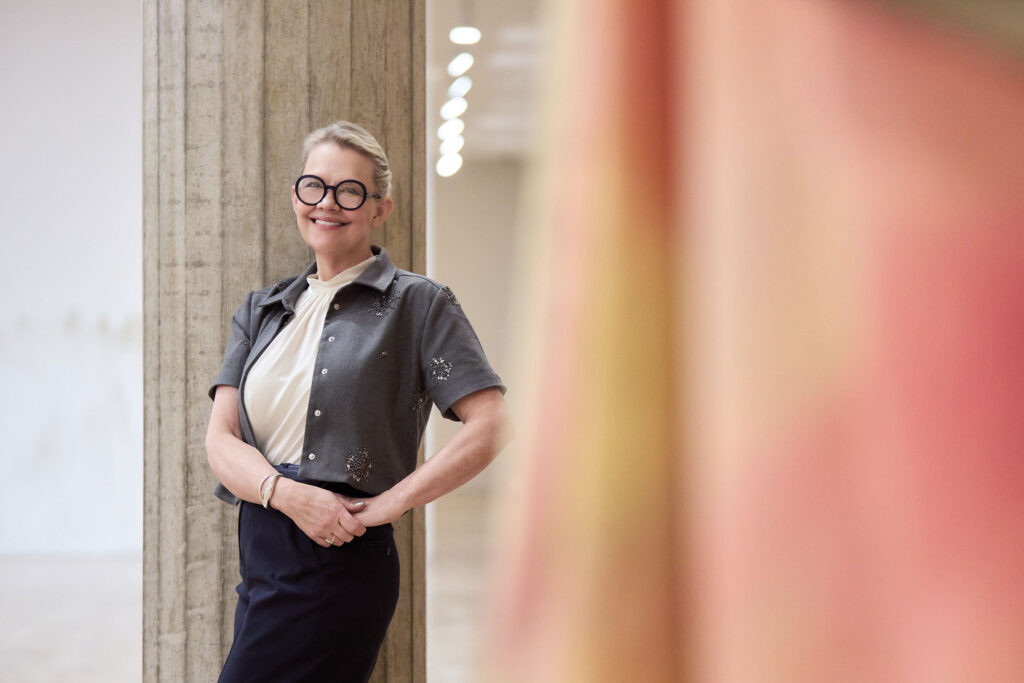
If you’re interested in culture here in Milwaukee and haven’t met Kim Sajet yet, then you probably have not tried very hard.
Sajet, who commenced her role as the Donna and Donald Baumgartner Director of the Milwaukee Art Museum in September of last year, has been out and about since day one, speaking at a TEMPO luncheon for women leaders, meeting with the city’s stakeholders (cultural and otherwise), cheering for the Brewers at American Family Field, and showing up for MAM events large and small. To say that she is accessible is an understatement.

Celebrate this year’s winners of the Betty Awards!
This enthusiastic outreach comes naturally to Sajet as a self-proclaimed extrovert. She arrived here following her highly publicized resignation as the director of the Smithsonian National Portrait Gallery.
RELATED READS: MILWAUKEE ART MUSEUM NAMES KIM SAJET AS NEW DIRECTOR
The search for a replacement for Marcelle Polednik, who served as director of MAM from 2016 to 2025, was already underway when Sajet (pronounced SAY-et) came to the committee’s attention. Having held executive positions at the Historical Society of Pennsylvania, the Pennsylvanian Academy of the Fine Arts and the Philadelphia Museum of Art prior to taking the role at the Smithsonian, Sajet was immediately the front-runner.
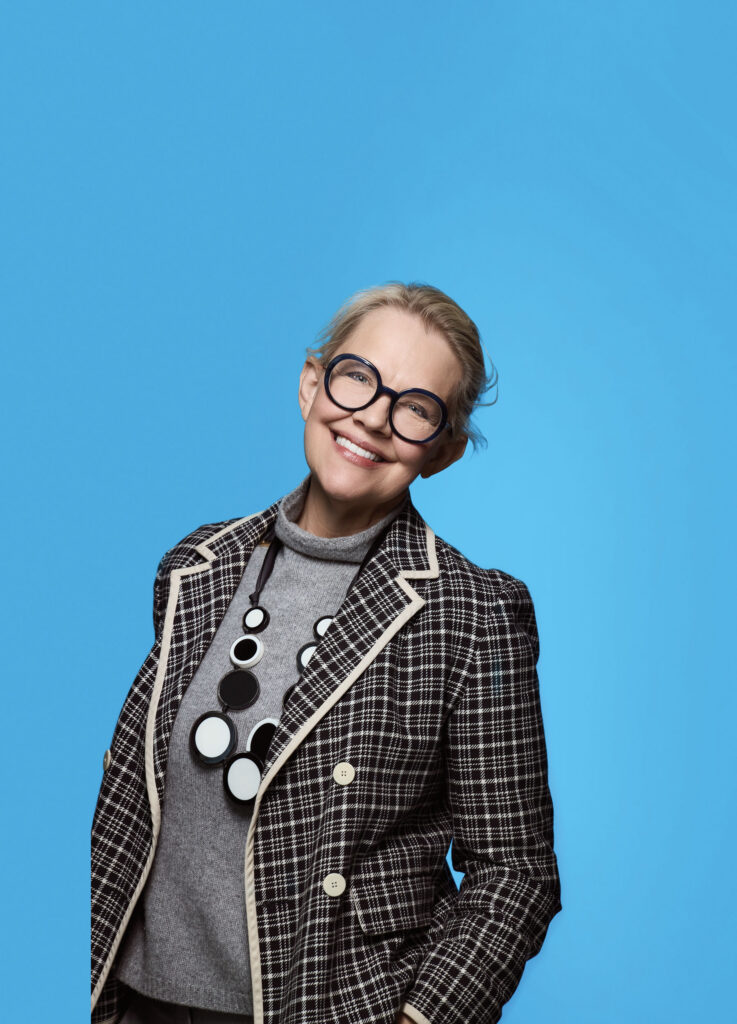
“When we heard Kim was available and might be interested, our search committee was thrilled,” says Andy Nunemaker, chairman of the MAM board. “When we met with Kim, we immediately knew she was our top candidate by a long shot. Kim is an advocate for accessibility and makes it a personal mission to ensure everyone in the community feels welcome and at home while enjoying the art museum experience. While her academic and career experiences make her a top candidate, what really impressed us all was her ability to instantly connect with people.”
MAM faces numerous challenges at present: the museum cut staff last July, attendance has not rebounded since the pandemic, costs are rising and the competition for private funding is fierce. But Sajet – born in Nigeria, raised in Australia and a citizen of the Netherlands – seems up for the challenge. During our conversation, she came across as warm, curious and eager to get to know this city and its people.
CN: There’s a lot of buzz around your appointment, and the feeling I get is that the community is very excited to have someone of your stature leading MAM. I’m sure you had many offers. Why did you choose to come here?
KS: I had some choices. I went into what my husband and I affectionately call my strategic planning phase. I was like, I’ve got to take a minute to sort of step back and think, what do I really want to do for the next decade? A number of organizations reached out. Some were museums in the United States but also outside of the country. And then there were some non-museums, which was also interesting. But at the end of the day, I was like, no, I really do like running a museum. I think that I’m good at it.
I wanted to have an international collection, because I think a lot of it starts with the collection. [The Milwaukee Art Museum] has a really extraordinary collection. I think of it as a collection of collections. We have a sarcophagus from Egypt, we have Roman statuary. One of the real strengths is the modern contemporary collection.
There’s all of the amazing German traditions of clocks and beer steins. And then we have a Haitian collection. It’s the largest Haitian collection in the country.
So I was walking around thinking, could I make an impact here? Is this somewhere I think I can contribute positively to this institution? I was like, wow, this is kind of amazing.
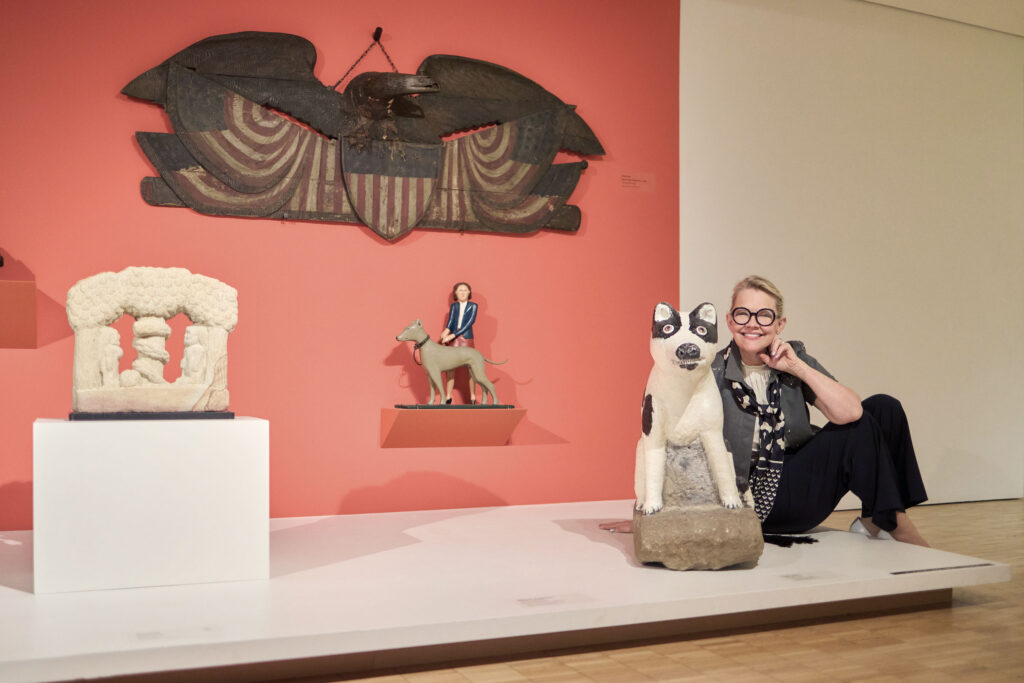
I also had a real sense that this felt very familiar, because I grew up in Melbourne, Australia, and Melbourne has Port Phillip Bay. I did a walk through the museum and then I went and sat out on a bench in the park and rang my husband and said, “This feels just like home, but instead of the bay, it’s a lake.”
What is the boldest move we might expect from you in the next few seasons?
My interest is to think of the museum less as an art museum with things on the wall and installed in the galleries, and more as a center of creativity and innovation … somewhere people feel that you can have an interesting encounter with creativity in some form.
So it might be a great work of art, it might be a great lecture. Or it might be a really good cup of coffee, might be some music. The very foundation of art is innovation and curiosity and bringing all of that to bear. The Calatrava1 is obviously gorgeous and everyone’s very proud of it, but I suspect a lot more people know it from the outside than what’s inside. And so how do we say, this is your museum. You’re welcome here. Everyone is welcome.
How do you see the role of MAM interacting with the community?
The museum should not be an island. It is part of this wonderful city. One of the things I’m interested in is, how do we partner together? When Summerfest is going on, what can we be doing at the same time? How can we be partnering so all boats will rise together?
For example, the city of Los Angeles does Pacific Standard Time2, and the whole city gets behind a theme, and it cuts across all of the different parts of the creative economy to celebrate a theme. I think the theme they did last time was the connection between art and science, which I thought was super interesting. I can see a role for us doing that here in Milwaukee. And I have been told summer is pretty tapped out, but what can we lean into in winter?
I understand that there are some new directors at the other institutions3. So this is a chance for the whole load of newbies coming in to think about doing things a little bit differently.
Segregation and economic inequity are two of our city’s biggest challenges. Do you see the museum having a role in trying to address and remedy those problems?
This is a segregated city, and it is one of the things that people have told me many times. We do not have a particularly diverse board or staff, or, from what I can tell, even our audience. So one of the things I particularly want is to not only reduce the barriers to entry but put out the welcome that this is your institution as well.
I’ve heard anecdotally that there are people living in Milwaukee who never or very rarely go to the waterfront. I don’t know what the solutions are, but I want to be part of [solving] that challenge.
I’ve been having these conversations with the curatorial team – how do we communicate that the collection is representative of people from different backgrounds and different ideas, without virtue signaling, without saying, this is a Black artist and a woman artist and a Jewish artist and a Palestinian artist and whatever, right?
That is going to be part of a larger conversation that includes making our labels easy to read, making the language understandable and not too academic. Not that it’s not substantive, but sometimes academics can hide behind syntax.
How do you continue to further efforts towards diversity and representation in the current political climate?
I just see it as being smart about it. I think we all agree that the more people from different backgrounds who come to be part of the project that is the United States of America just leads to better outcomes and better ideas. The more people that we let into the tent, the smarter we can become as a nation, as a city, as a state and certainly as an institution. Good ideas are good ideas, no matter where they come from, but you have to allow everyone the opportunity to be heard.
Shifting to some of the new directions you might take MAM in, I’ve heard anecdotally that you are less interested in doing the big packaged shows that we’ve seen in the past.
I think the model of the blockbuster is deeply problematic. It’s very expensive to install. It’s up for a short period of time. I’d like to have our shows, if they go up in the big spaces, to be up longer, because it takes that long for people to even realize that it’s there and to come and see it … and to make them truly worth the amount of effort and money and insurance.
I’d also like to really lean into having a dialogue, taking the art of the past and saying, is there new knowledge that we can bring to bear? Is there maybe a contemporary artist that can put something that we have in the collection into a context that helps us understand our world better?
And also, really supporting artists who are a little less known, or artists who deserve to be better known, because artists are the ones who really need support and have always needed support. I see them as the canaries in the coal mine, right? They’re the ones who are taking the temperature of what they see around them and interpreting it, often before we’ve even thought about it.
We have some wonderful spaces here, and I can imagine just saying to an artist, here’s a budget, do what you want and do something remarkable that people will want to see.
Do you have any thoughts on how to attract younger visitors?
I think it is really breaking down those barriers. I do think that millennials and Gen Z, contrary to some opinion, really don’t want to be on their devices all the time. What they’re craving is original experiences. And I do think the museum is one of those places that can offer an option.
So again, I think we can break down those barriers a little bit more and make it fun. When you leave, you go, “Oh, I didn’t know about that. That was super interesting.”
Going back to the circumstances that led you to resign from your former position – were you taken by surprise when President Donald Trump threatened to fire you on social media?
Honestly, looking back, probably not so much. When you are director of a Smithsonian, you’re just always in the public eye, so there’s always something happening, you’re always being scrutinized. So I don’t think I was so much surprised. I was more immediately worried about my team. I remember when the person came in to tell me what [Trump had] just said on Truth Social4, I was more like, what’s happening now? Because ever since COVID, every day was a winding road. So we already knew that, because of the first administration, this administration was certainly, you know, untraditional, let’s say. I wasn’t so much surprised. It was more like, “OK, another day in the office.”
How did you make the decision to resign?
The president does not have the authority to fire a director of a Smithsonian5. But by that stage, the spotlight had been squarely put on not just me but my team at the Portrait Gallery and then on the Smithsonian writ large. And [the story was] just growing and growing. And I thought to myself, the institution is not about one person. It seemed better to me to take the focus away from me, and my hope was that it would then also shift the focus away from this institution that I dearly love6. And I believe it did.
What would you say is your takeaway from that experience? Is there something you would do differently?
No. I had a lot of support from a lot of people, so I don’t think I would do anything differently. It all was happening very quickly. Just put one foot in front of the other.
During the interview process at MAM, did you detect any hesitation due to the Trump ordeal? One would presume that there were both Republicans and Democrats on the search committee.
No. And they knew what they were getting into, because when I got the call, I’d already left the Smithsonian. So they knew the reasons, and to their credit, it just never came up. I assume that if it was [an issue], I wouldn’t be sitting in this chair today.
I have to put in the context of the Smithsonian. From the day you walk in the door, it is drummed into you that we are a nonpartisan institution. The Smithsonian continues to be extraordinarily proud of the fact that it’s in partnership with Congress – all parts of Congress – and we went to great lengths to make friends on both sides of the aisle. It was all about increasing the diffusion of knowledge for the benefit of the people of the United States.
Somebody reading a label shouldn’t guess what the opinion of the curator is. The strength of this country has been multiple perspectives, right? When I grew up in Australia, I was watching “I Love Lucy” and singing American pop songs and
watching American films the same as anybody else. So I think sometimes we have to remind ourselves, there are more things that we share than divide us.
I’m curious what mandate you’ve received from the MAM board.
They wanted somebody who would get involved in the community. They really wanted somebody who was a partner. They very much wanted someone with a big vision, including making the institution better known, attracting more people from Milwaukee, the Greater Milwaukee region; but also, is it possible to put us more on the national, if not the international, map? I think we can. So that was what they were very interested in.
If you haven’t guessed already, I’m a bit of an extrovert, so they wanted somebody who was going to be engaged. Andy Nunemaker is the new chair. He’s like, we’re gonna have fun7. And I think we will have fun.
Who are your favorite artists?
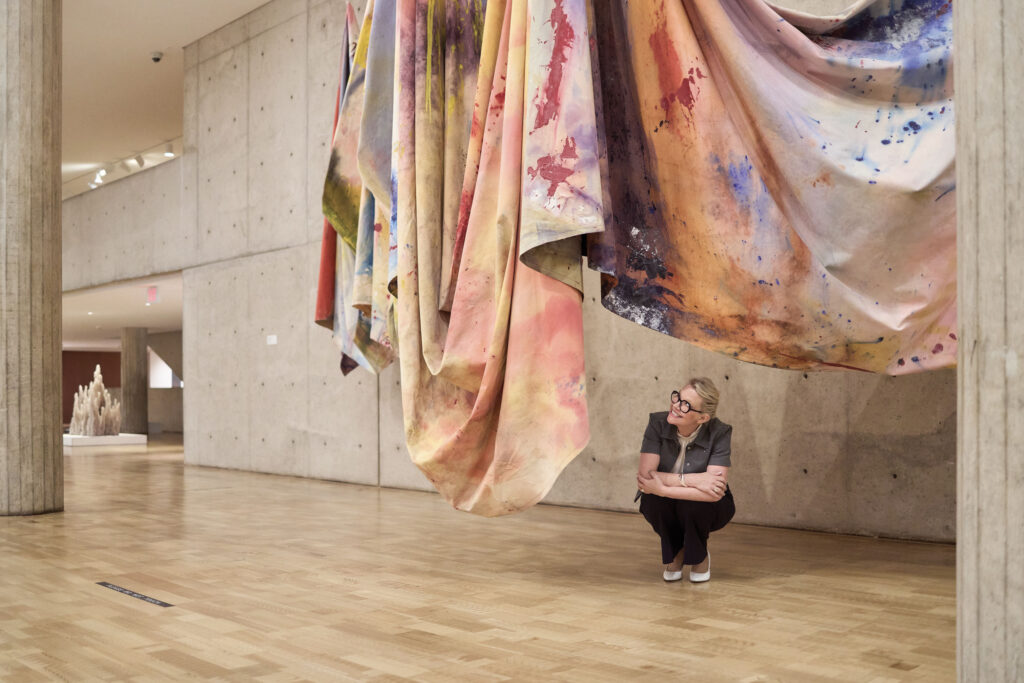
It depends on what time of the day you’re asking! So in the collection, obviously, Georgia O’Keeffe is wonderful. I’m a big fan of Sam Gilliam because I knew Sam when he was alive in Washington, D.C. I love the concept of taking the canvas off the frame. Certainly Anselm Kiefer, because you look at a Kiefer and you know that the world can be hard. We’re so blessed with the Peg Bradley gift8. It’s truly extraordinary to be able to go through there and realize we have a fantastic [Helen] Frankenthaler, a large Morris Louis.
There are so many aspects of your job. Which parts do you think are your forte?
I’m a people person, and I like building teams. I think I’m an innovative thinker. I feel like there’s a really good team here – we’ve got a great operations and financial officer and a great chief of staff. I like being with people and having ideas. That’s a strength and a weakness. The strength is I have a lot of ideas. The weakness is I have a lot of ideas. And people can be a bit like, “Not one more idea, or I’m just going to run screaming from the building.”
What is one thing you would change about Wisconsin to make it even better?
Provide more funding to the arts. Wisconsin’s state funding for the arts ranks last in the nation, with recent per capita spending at approximately 18 cents.
What professional advice are you glad to ignore?
Good things come to those who wait.” No! You have to be proactive and go after the things you want. I’ve learned that opportunities rarely just appear. You create them through energy, curiosity and persistence.
Footnotes
1 The Quadracci Pavillion of the museum was designed by Spanish-Swiss architect Santiago Calatrava and completed in 2001. This year marks its 25th anniversary.
2Now known as PST ART, Pacific Standard Time has been called the largest art event in the United States. The most recent iteration took place in 2024-25 and involved more than 70 cultural institutions, offering exhibitions and programs over a six-month period.
3 New leadership in arts organizations in this region include John McKinnon at Marquette’s Haggerty Museum of Art (2024); Robb Woulfe at the Racine Art Museum (2025); Paul Baker Prindle at the Madison Museum of Contemporary Art (2024); and Ra Joy at the Bronzeville Center for the Arts (2025).
4 Trump posted the following on Truth Social on May 30: “Upon the request and recommendation of many people, I am herby [sic] terminating the employment of Kim Sajet as Director of the National Portrait Gallery. She is a highly partisan person, and a strong supporter of DEI, which is totally inappropriate for her position. Her replacement will be named shortly. Thank you for your attention to this matter!”
5 Only the Smithsonian’s secretary (who is its chief executive), with the oversight of its Board of Regents, can terminate a Smithsonian director.
6 Sajet was the director of the Portrait Gallery for 12 years. She was the first female director and was celebrated for raising more than $85 million for the gallery’s operations and endowment.
7 When asked what type of “fun” the two have engaged in, Nunemaker responded, “This will sound very nerdy, but we both have fun when we see the potential of our beloved museum fulfilled.” Pressed for something less “nerdy,” he said, “Stay tuned. The fun has just begun.”
8 Margaret “Peg” Bradley donated nearly 400 works of art to the Milwaukee Art Museum in 1975. The pieces span a period from the late 19th century through the ’70s, and include works by Pablo Picasso, Mark Rothko, Georgia O’Keeffe and Andy Warhol, among many other highly regarded artists.