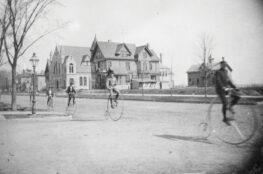


From the day City Hall was dedicated on Dec. 23, 1895, Milwaukeeans knew they had a special building in their midst. The new seat of municipal government combined beauty and function in a package of monumental proportions. To say that City Hall towered over its surroundings would have been a gross understatement, as this 1902 photograph demonstrates. Stretching 350 feet from the sidewalk to the base of its flagpole, the structure rose like a sequoia in a forest of saplings. The only taller buildings in America at the time were the Washington Monument and Philadelphia’s City Hall.

Celebrate this year’s winners of the Betty Awards!
The landmark’s grandeur was all the more impressive considering its early difficulties. The site, for starters, was challenging: a wedge of former swampland that required a bed of 25,000 wooden pilings before construction could begin. Lawsuits loomed when local architect Henry Koch received the contract after a Chicago firm had been declared winner of the design contest. The Panic of 1893, a nationwide economic depression, cast a financial pall over the project, and simply choosing the Wells Street location reignited old rivalries between the east and west sides of the river.
The problems were all forgotten when City Hall opened its doors to the public. Milwaukee’s first million-dollar building was not only one of the tallest edifices in America, but it was also one of the largest masonry structures in the world, incorporating a grand total of 8 million bricks. At a time when most Milwaukeeans claimed German heritage, its stepped gables and baroque ornamentation also gave the building a comfortably European ambience. But City Hall worked most effectively as a statement of civic pride. In 1895, our ancestors raised up a towering affirmation of Milwaukee’s place as an American metropolis. Nearly 130 years later, after a top-to-bottom renovation, that statement still stands tall.
TAKE A CLOSER LOOK:
- The Pabst Theater – another landmark completed in 1895 – was a nationally recognized center of German drama and music.
- Blatz was the city’s third-largest brewery in the late 1800s, trailing only Pabst and Schlitz.
- City Hall’s tower features an 11-ton bell named for Solomon Juneau, Milwaukee’s first mayor.
- The German-English Academy was a forerunner of today’s University School.
- Owned by Pabst Brewing, the St. Charles Hotel was one of Milwaukee’s finest places to spend the night.
- This statue honored Henry Bergh, founder of the Wisconsin Humane Society. At its base was a watering trough for thirsty horses.
IN COLLABORATION WITH MILWAUKEE COUNTY HISTORICAL SOCIETY