

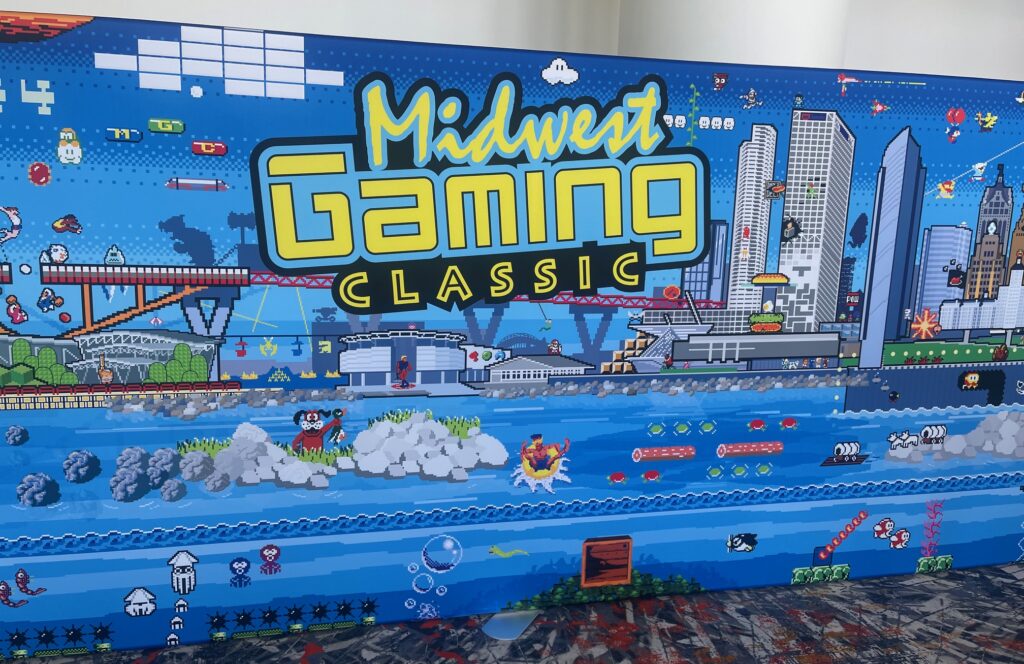
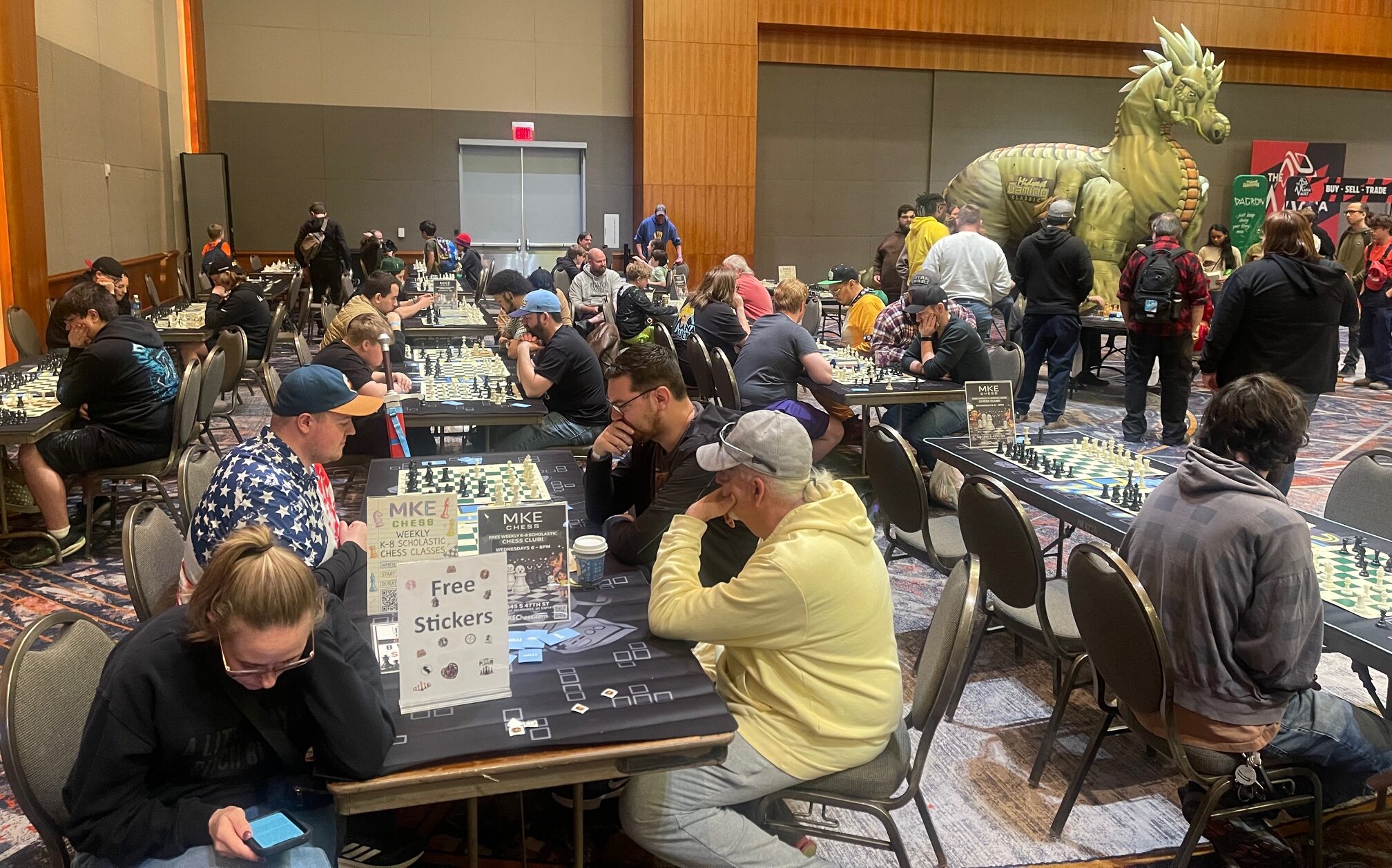
Riding up the escalator of the Baird Center on Saturday morning, there was palpable enthusiasm in the air. Gamers young and old were eager to get off the stairs and step into video gaming paradise. This was the 25th anniversary of the Midwest Gaming Classic, a convention that started as a small group of Atari enthusiasts, but now includes almost every type of gaming you can imagine – I walked by air hockey and Tetris tournaments and tables as far as the eye could see of people playing chess, tabletop role-playing games, and jigsaw puzzles.
There was an entire ballroom dedicated to vendors selling art, costumes, and vintage games and toys. Stages were tucked away in corners of the ballrooms and in the halls, hosting panel discussions and presentations. I walked by an empty wrestling ring with an audience eagerly awaiting a showdown. There was even a dimly lit dance club room, where a DJ was playing a bumped-up version of “Korobeiniki” aka the Tetris theme song.

Celebrate this year’s winners of the Betty Awards!
But I didn’t really stop for any of this – I wanted to head to the heart of the convention, the massive pinball and video game floor. Walking in, my senses were overwhelmed by hundreds of machines with flashing lights, all making bleeping and blooping sounds, punctuated occasionally by gamers shouting out in joy or defeat. The games, all available to play for free with admission, included everything from antique pinball machines to Apple II computers, classic Nintendo and Sega systems, as well as brand new games and everything in between.
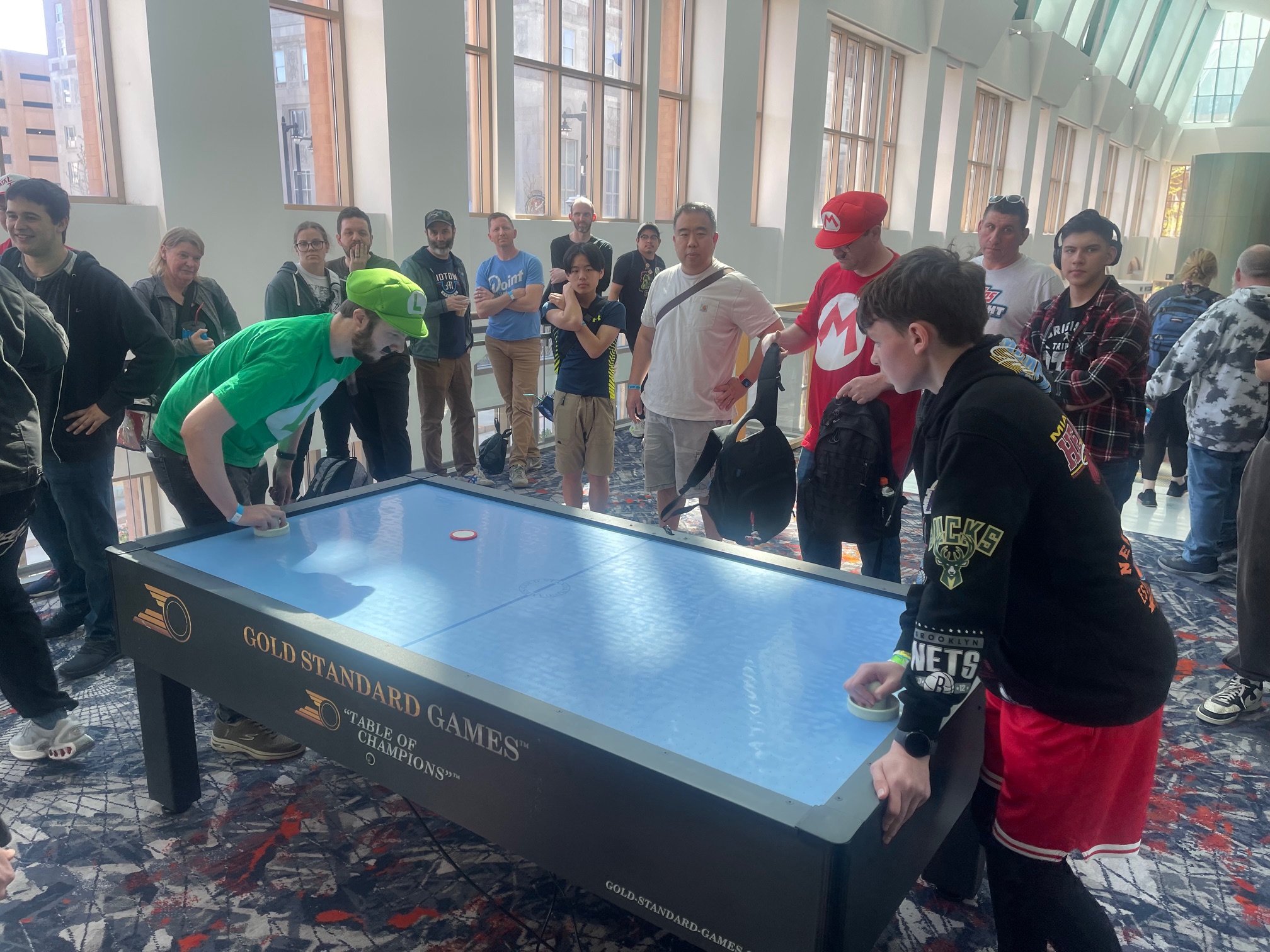
I worked my way into the thick of it. Although the convention had only been open for about half an hour, the floor was crowded, but everyone seemed to be happy and having a great time. The event has a huge nostalgia factor – I played games from my youth, like Pac-Man and Duck Hunt, and favorite pinball machines I’ve encountered barhopping, like Monster Bash.
There’s also a sort of second-hand nostalgia – gamers too young to experience these titles in the wild but curious to try them out and have an arcade experience, which is much different from tapping on a screen in your bedroom. In an arcade, you make instant allies and rivals and attract spectators as you play. It’s a more social experience.
That second-hand nostalgia filters to game creators. There are still people making classic-style video games for old gaming systems. I stopped to play a demo of a game called Bio Creeps that was recently created but feels like Classic Nintendo, reminiscent of games like Bubble Bobble (which was released in 1986).
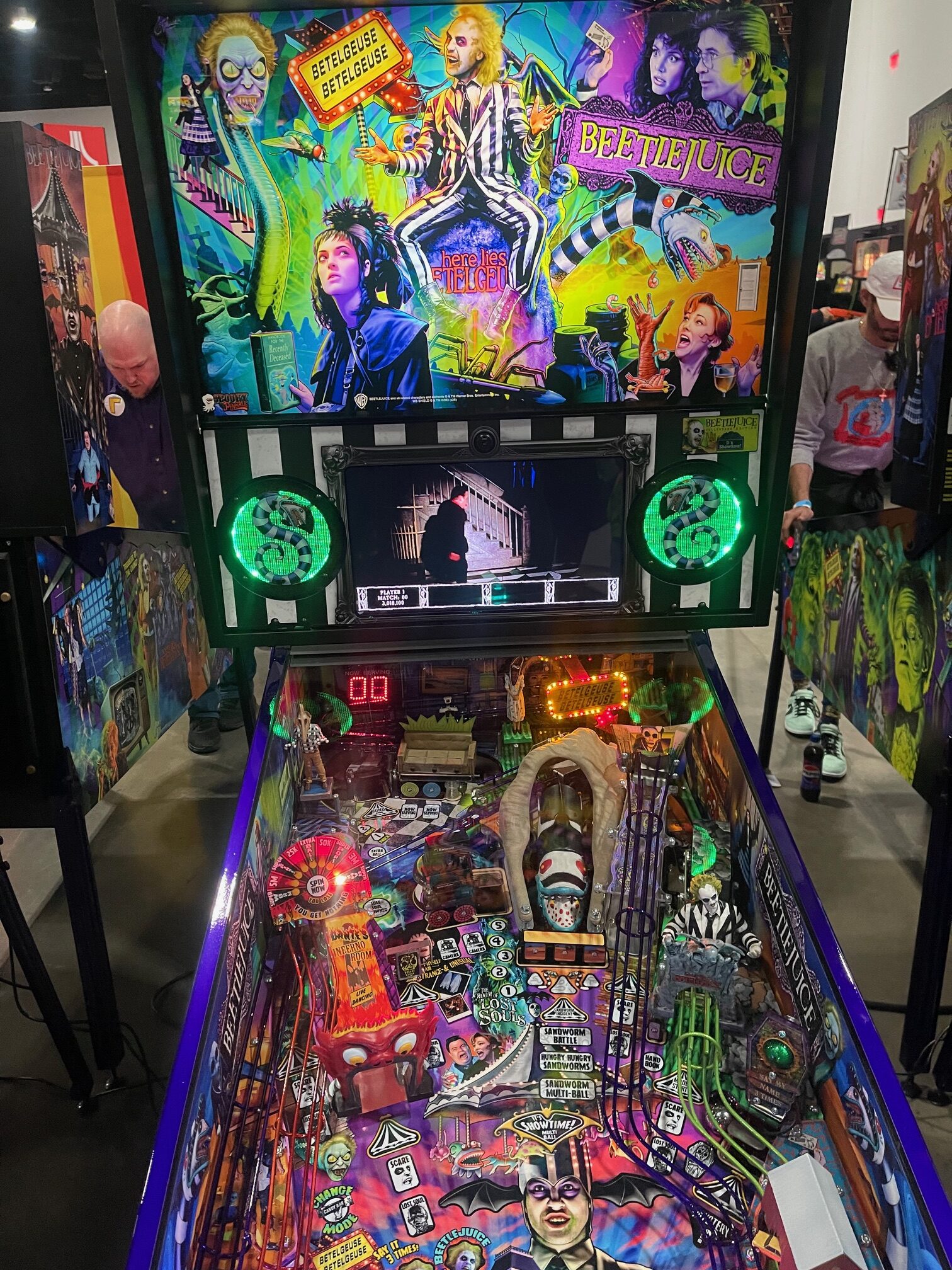
Spooky Pinball, a company in Benton, Wisconsin, was hyping their new game based on Beetlejuice and had a bank of about 10 of the games set up, with a line of people waiting to play. The patience was worth it – the action-packed game featured a moving sandworm, vibrant video screens, and captured the fun chaos of the title character. Other new pinballs that were drawing a crowd included an impressive Houdini game memorializing the 100th anniversary of the magician’s death and a popular Pokémon machine.
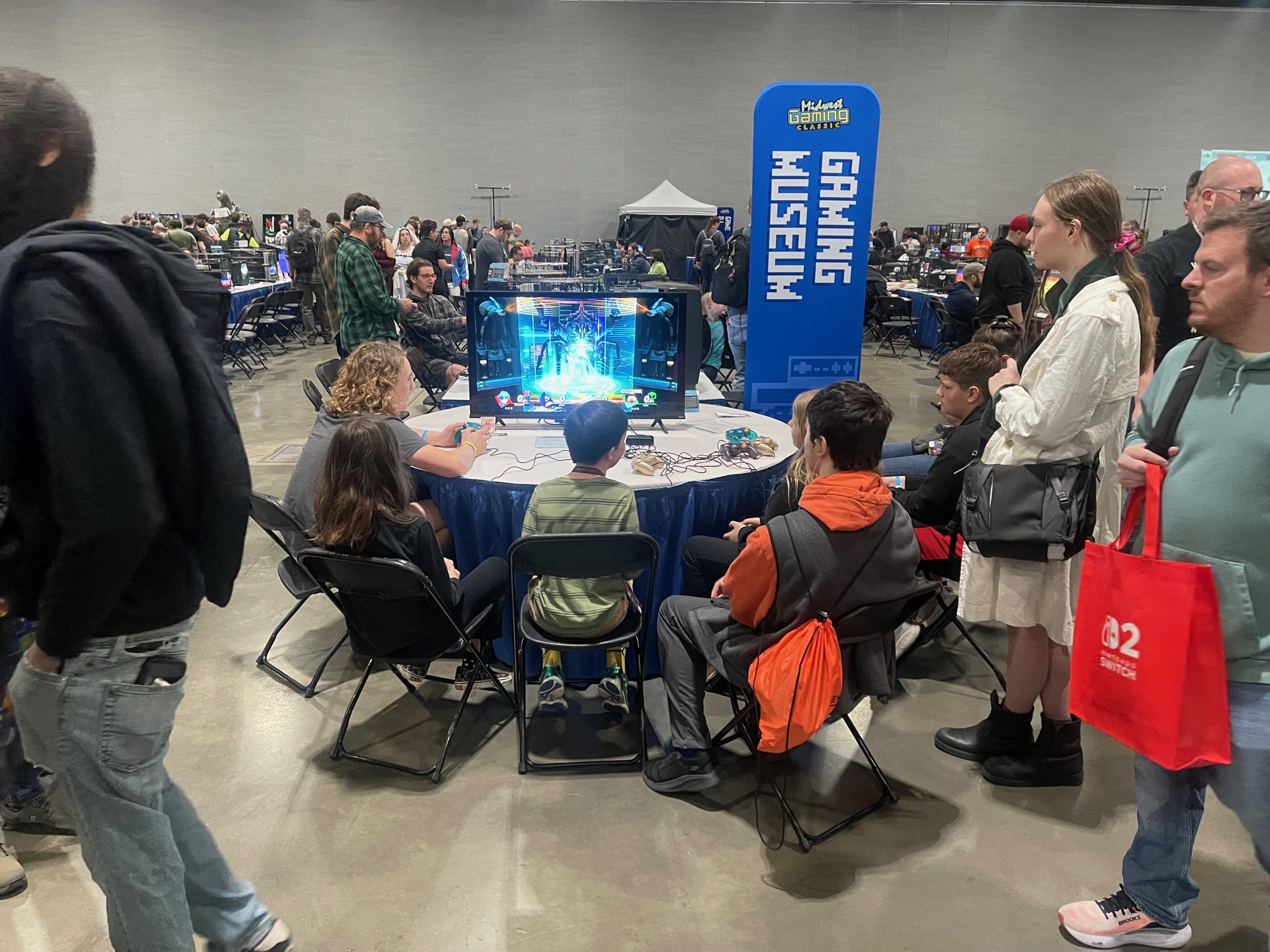
With such a span of games, it was interesting to see the evolution spread before your eyes. The old machines had comparatively less dazzle than Beetlejuice, with pinballs lazily floating from one subdued ding to the next, the number of points increasing over the decades from hundreds to thousands, and then millions of points. Likewise, video games featured in the playable “Gaming Museum” ranged from simple classics like Pong to the blocky adventures of Mario and Luigi to a popular table dedicated to Rock Band and the latest 3-D immersive games.
Time flies when you’re having fun – I looked at my phone to see that five hours had quickly slipped by while I was in a gaming frenzy. I tried to play as many as I could, which ended up being 53 games. I took a picture of my score after each game, as low as 16 for an aggressive basketball video game called Punk Shot to over 16 million on a Jurassic Park pinball machine, for a total of 123,165,067 points. (Check out my full tally below – It might seem like a lot but, frankly it’s amateur numbers).
I had barely scratched the surface of the convention, but it was time for me to go. Walking out of the Baird Center, I blinked in the spring sun. Another wave of nostalgia hit me, a feeling that reminded me of seeing a great movie matinee or going to a birthday party at Chuck E. Cheese and leaving, the sunlight in your face announcing that you’ve re-entered the grind of the real world. It’s a slightly sad feeling that it’s over, but the experience was so good, it overrides that dip.
After all, there will be more time next year – the Milwaukee Gaming Classic returns to the Baird Center April 23-25, 2027.
Tea’s Scoreboard
Pinball:
- Jaws: 21,143,290
- Jurassic Park: 16,399,230
- Rocket III: 1,403
- Black Knight: 60,630
- Metallica: 5,497,140
- Delta Queen: 11,860
- Millionaire: 76,090
- Hot Shots: 92,250
- Galactic Tank Force: 7,846,990
- Beetlejuice: 3,018,100
- Stranger Things: 12,083,060
- Big Deal: 397
- Ultraman: Kaiju Battle: 5,216,000
- Dragonfist: 60
- Cuphead: 2,680
- Monster Bash: 8,650,870
- Super Orbit: 312,580
- Pokémon: 19,484,600
- Houdini: 47,613
- The Addams Family: 14,442,000
- High Speed: 93,280
- Avatar: 1,824,200
- Rollergames: 900,000
- Star Wars: 71,820
- Strange World: 21,670
- Total Nuclear Annihilation: 25,470
- Kings & Queens: 529
- Funhouse: 1,307,370
- The Rolling Stones: 4,024,990
- Oktoberfest: 44,336
- Lost World: 30,120
- Subhumans: 232,500
Arcade and Video Games:
- Pop-A-Shot: 20
- Double Dragon: 5,400
- Teenage Mutant Ninja Turtles IV: Turtles in Time: 70
- Millipede: 92
- Confidential Mission: 57,530
- Pac-Man: 8,980
- Bio Creeps: 600
- Big Buck Hunter: 2,731
- Aliens of Destruction: 20,400
- Killer Comet: 24
- Perfect Pour: 36
- Super Mario Bros.: 4,900
- Duck Hunt: 57, 600
- Donkey Kong: 4,700
- Space Invaders: 2,760
- Punk Shot: 16
- Saurian Front: 10,280
- Satan’s Hollow: 5,050
- Dig Dug: 3,130
- Ms. Pac-Man: 16,820
- Sunset Riders: 800
Grand Total: 123,165,067