Milwaukee has seen its fair share of some truly brutal winters. According to the Wisconsin State Climatology Office, an average Milwaukee winter has about 47.8 inches of snow.
But how bad can it get?
We looked through climate data for the highest snow totals, snow depths and notable snowstorms, and these are our six picks for the worst winters Cream City has weathered.

If someone has inspired you through their service, leadership or dedication, the Unity Awards are your opportunity to recognize them!
1885-86
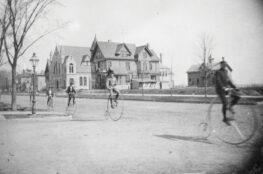
Persistent snow pelted Milwaukee from early December 1885 to April 1886. This winter dropped a whopping 109.8 inches of snow on Milwaukeeans. Luckily, Milwaukee was already experienced with the snowplow – it was the first city to use the early horse-drawn versions of the street-cleaner as early as 1862. Despite the monumental snowfall, this winter lacked the frigid cold so common to Wisconsin winters – the average temperature was a balmy 21 degrees.
1917-18
In the midst of the Great War, Milwaukee, like the rest of the country, suffered a severe winter. January had four days with over 6 inches of snow. January 6, 1918, saw 15.7 inches fall in Milwaukee. That month, the snow was 26 inches deep, the fourth highest in city history. By the time winter had ended, the city had been hit with 81.5 inches of snow, the tenth highest in city history.
1978-79
A massive mid-January snowstorm led to the highest snow depth in Milwaukee’s history – 33 inches. This snowstorm came less than two weeks after New Year’s Eve 1978 dumped nearly a foot of snow on the city. Sidewalks remained unplowed because removal crews ran out of places to put the mounting snow. That winter ended with 82.9 inches of total snow, with the last snowfall being a 5-inch dusting in late March (of course).
2000-01
After a series of winter lulls, Milwaukee was hit with a major snowstorm right around the holidays this season. December’s total snowfall was 49.5 inches, 22 over the previous record, 27.9 inches. Wind flow over Lake Michigan enhanced the storm’s impact. Lake effect snow happens when there’s a difference of the air and water over 10 degrees. If a northeast wind sweeps over the lake, then “we have the treat of lake effect snow because the water is sufficiently warm enough,” says Brian Niznansky, chief meteorologist at TMJ-4. The depth mounted to 32 inches, tied for the second highest in city history.
2007-08
On February 2, 2008, Punxsutawney Phil saw his shadow on Groundhog Day, predicting six more weeks of winter. Days later, Milwaukee was hit with one of the most severe storms in the city’s history. Coincidence? A major snowstorm rocked the city from Feb. 5-6. Over 12 inches of snow fell, closing I-90, as strong bitter winds gusting over 35 mph carried the snow over the highway. Milwaukee stacked 99.1 inches of total snow that season, second only to 1885-1886.
2010-11
Our most recent pick for this list is another Groundhog Day storm special. Niznansky recalls the 2011 Groundhog Day blizzard as “one of the biggest snowstorms to affect southeastern Wisconsin.” Part of Milwaukee received over two feet of snow, and winds ripped through at over “50-60 miles per hour … it was our last truly, knock-‘em-out blizzard [in Milwaukee],” Niznansky says. From Jan. 31 to Feb. 2, 19.8 inches of snow landed on Milwaukee. This blizzard holds the record for highest snowfall on Feb. 2, with 9.1 inches.
So how does this winter stack up?
Well, we’re still running below average snowfall-wise, with the current total at 22.6 inches.
According to Niznansky, the “biggest indicator” of winters is a cloud formation on the Pacific, west of South America. There are two options: an el nino, or a warmer, drier winter, or an la nina, or a colder, wetter winter. This year, it is currently in an el nino formation, meaning less snowfall.
For people who think winter is already over, Niznansky has bad news. “Most people forget we’ve just kicked off February, which can give us some pretty cold and brutal snow.”
Winter season has shifted over the past decade. While “there’s no denying that the earth is currently in a warming pattern.” Locally, Niznanski has studied “a shift in our season our weather getting necessarily warmer,” with “less… winter before Christmas or New Years, [but] some pretty brutal Marches and Aprils … we’ve had some really snowy Aprils recently.” Niznansky expects average winter temperatures with a couple snow showers, much calmer than any of the winters on this list. “There’s something to be said about a grandpa saying, ‘In my day we had this many feet of snow and winters were this cold … there definitely has been a trend recently [of] not that cold winters.’”