

You don’t need numbers to know Amazon is one of the largest companies in the world, but they put things in perspective: The tech giant reported $143.3 billion in revenue for the first three months of 2024 – an average of $1.6 billion a day.
Amazon Labor Union, an independent grassroots group created in 2021 to organize Amazon workers in a Staten Island warehouse, is run by current and former employees volunteering their time and sustained only by crowdfunding and dogged determination.
In front of the ALU is a seemingly Sisyphsian task – gathering enough signatures to force a vote for a union in a warehouse that rapidly cycles through employees.

If someone has inspired you through their service, leadership or dedication, the Unity Awards are your opportunity to recognize them!
The 2024 documentary Union covers this uphill battle over a year through the eyes of the organizers. It’s captured by Zoom meetings, parking lot cookouts and infiltrated cameras into the warehouse. The David and Goliath narrative is undeniable and enjoyable, but the film is at its most compelling when it shows just how tough it is to be David.
ALU co-founder Chris Smalls started the union effort in April 2021, nearly a year after walking out in protest of Amazon’s allegedly negligent COVID safety protocols and being fired the same day. (Amazon says his termination was due to violating social distancing policies, although others argue the timeline doesn’t match up.)
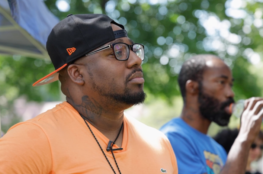
Directors Brett Story and Stephen Maing follow Smalls’ daily efforts canvassing outside the warehouse. We see his charisma and compassion as he listens to other people’s poor treatment on the job. He’s not afraid to call out security over filming their campaign, or even to budge when police threaten to arrest him.
He’s surrounded by a core of organizers, who come from different backgrounds but hold a familial bond, as one of them notes. They bounce ideas off one another, they collectively crash Amazon seminars, and they celebrate hard-earned victories together. These moments in the film feel outsized importance because the group isn’t affiliated with a national organization. (When they visit with one, they feel condescended to and disrespected.) Their growth is solely built on these bonds.
But these bonds get tested. Disagreements over strategy arise when a batch of signatures are tossed out because the employees no longer worked there. (Some of these employees were suspiciously fired before counting.) The stakes are different: some members are young college graduates, while others have families to support or live out of cars. And several people no longer feel heard by Smalls, and we see him defend himself as others question his leadership.
In the end, battles are won, and the prize is more war. ALU achieved an historic breakthrough in successfully establishing Amazon’s first union, but its future in the film is left uncertain.
But the ending doesn’t feel hopeless, because Union isn’t concerned over the correct ways for workers to organize. Instead, it argues what matters more is that the fight is still being fought. The film ends with another Amazon warehouse, across the country in California, starting to organize. It suggests that a ripple has turned into a wave, and ALU’s legacy is skipping the first stone.