
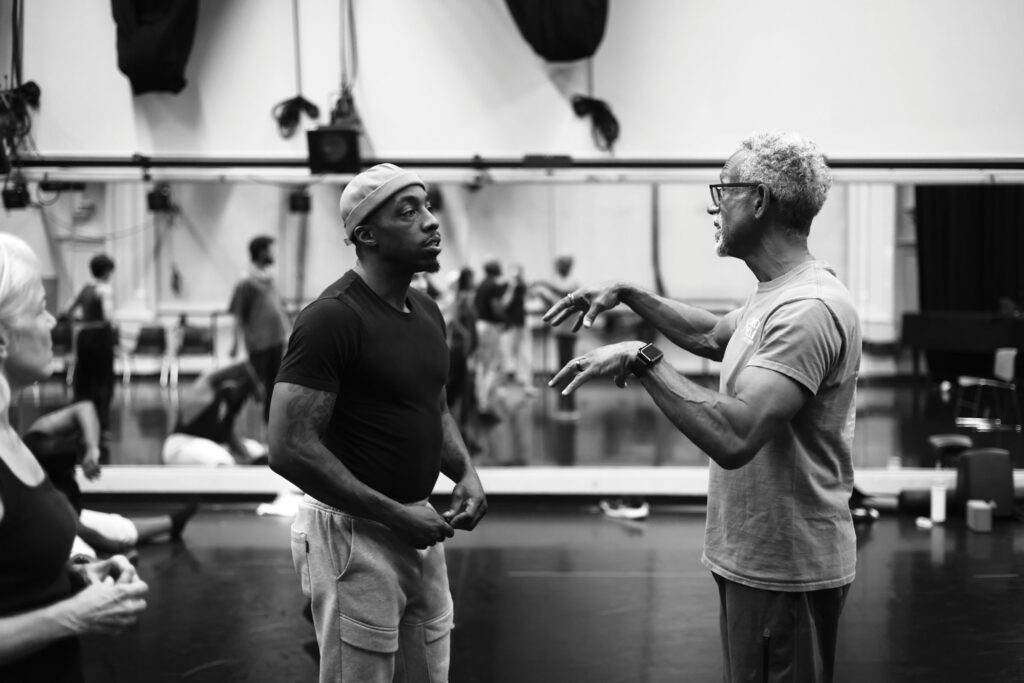
Los Angeles-based dancer and choreographer David Roussève waited 40 years to learn how to vogue – a form of stylized dancing drawn from fashion runways that’s part of queer ballroom culture. An invitation from UW-Milwaukee provided that chance, culminating in an upcoming concert blending contemporary dance and vogue.
“I may be Black and gay, but that doesn’t make me a member of the ballroom community,” Roussève says. “I’m an outsider.”

Check It Out!
UWM dance faculty member Maria Gillespie laid the groundwork for the project, forging connections with the local LGBTQ+ nonprofit Diverse & Resilient and Milwaukee’s premier vogue dancers.
“I really admired the way the ballroom community, very often led by the trans community, has come to redefine the way that communities under assault care for each other,” says Roussève. “We decided to make a piece about exactly that.”
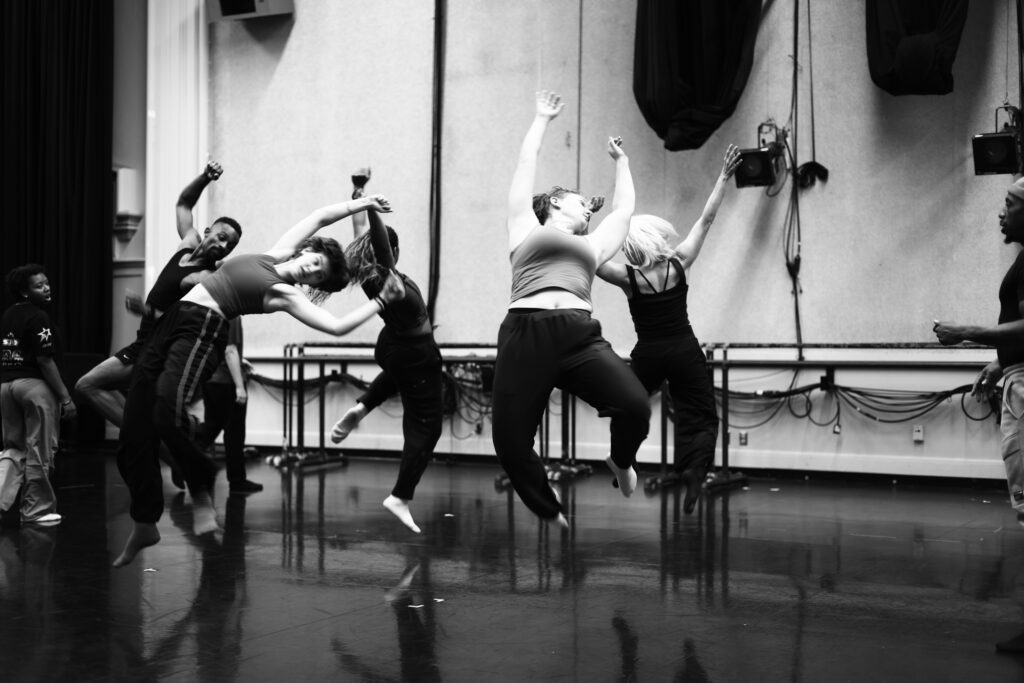
Roussève interviewed LGBTQ+ health workers, community organizers and members of the vogue and ballroom scenes. Workshops connected students and community members. The final product of the collaboration, called Care: Illuminating Milwaukee’s Queer and Trans Community, will be featured in UWM’s annual Winterdances. Gillespie and voguers Richard “Buda” Brasfield, Jacques Infiniti-Hall and DaCosta Martín will perform alongside 12 UWM students.
In his conversations for the project, Roussève explored geographic and generational tensions that have subdivided the queer community. Many LGBTQ+ young people aren’t fully aware of queer history, for example – in part because so many of their would-be mentors died during the HIV-AIDS epidemic. Conversely, surviving elders can be dismissive of current challenges within the community, characterizing them as trivial by comparison.
“Access and issues of healthcare continue for many gay communities,” says Roussève. “I realized that while the issues may be different, the sense of fighting for your life and your existence is still very present for the ballroom community.”
There was also the issue of care and respect for the form. Roussève says the three voguers were cautious at first, wanting to ensure students approached the genre as a technique as rigorous and specific as their ballet and modern classes.
“It was kinetic,” Roussève says. “Everyone came from different worlds, including myself. It was an amalgam of what America can be.”
Care: Illuminating Milwaukee’s Queer and Trans Community: Feb. 5-8 at UW-Milwaukee’s Arts Center Theatre Building.