
Drive down a state highway, back road or side street in rural Wisconsin, and you just may find yourself staring down a 50-foot-tall scrap metal spaceship or a sculpture park filled with hundreds of concrete figurines.
READ MORE FROM OUR “WEIRD WISCONSIN” FEATURE HERE.
For more than a century, the Dairy State has proven particularly fertile ground for self-taught artists interested in transforming their homes, yards and communities into art environments – immersive, site-specific installations built to exist beyond the bounds of traditional art organizations like museums and galleries.

Check out the MilMag Mini!
Laura Bickford, a curator at the John Michael Kohler Arts Center in Sheboygan, believes that Wisconsin’s long, cold winters (lots of time to fill) and history of manufacturing (jobs that taught people how to use potentially creative tools like chisels and soldering irons) may have dovetailed to fuel the popularity of these art environments throughout the state. The fact that the artform’s heyday, from the early through mid-1900s, coincides with the state’s peak manufacturing years, also lends credence to this belief.
“I hope more people realize how special it is that we have all these sites,” Bickford says. “Visiting them is a wonderful way to get to know your community, and I can’t urge people to do it enough.”
Thinking about embarking on your own arty road trip? Consider adding these six destinations to your itinerary. All of them are free to enter, but check for approved visiting hours in advance.
Dickeyville Grotto
305 W. MAIN ST., DICKEYVILLE,
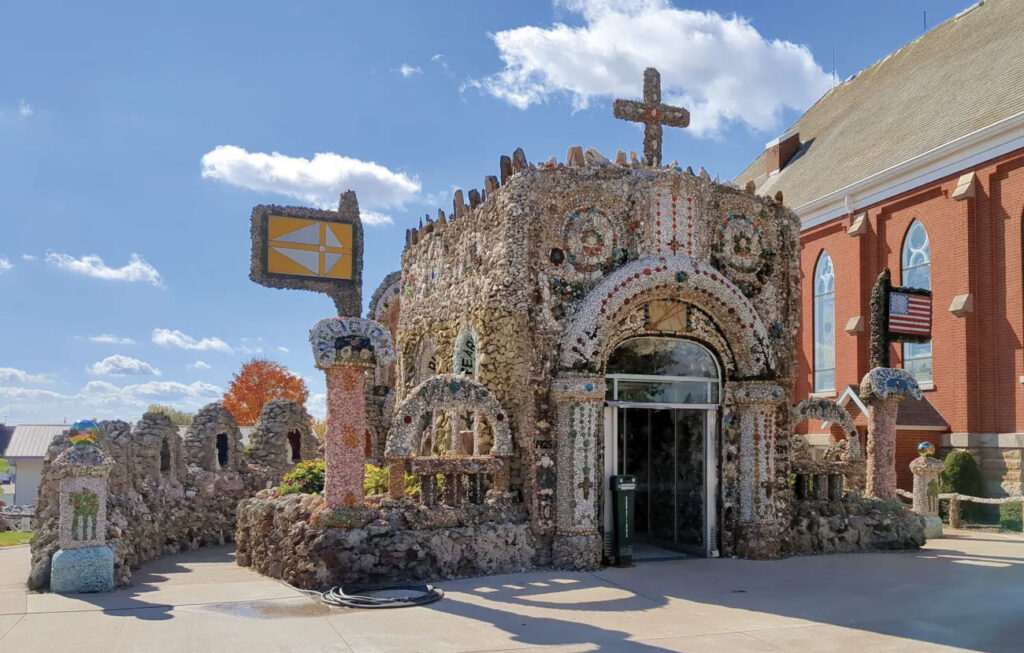
The art environment that launched a thousand imitators, the Dickeyville Grotto was created in the 1920s by Father Mathias Wernerus, a German American who conceived of the immersive sculptural site as a devotional project. Using stones, seashells, marbles and broken glass, he built shrines that honor both religious and patriotic figures (at the time of the site’s creation, anti-Catholic and anti-German sentiment were common, and Wernerus wanted to demonstrate that the people of his parish were as American as anyone else). The heavily ornamented surfaces of the sculptures glitter in the sun, beckoning travelers who spot the Grotto from the road.
Jurustic Park
112021 OLD SUGARBUSH LN., MARSHFIELD
In the 1990s, amateur paleontologist Clyde Wynia began transforming this rural property into Jurustic Park, a growing menagerie of mostly fantastical creatures that might have lived in the area during the Iron Age. Playfully rendered dinosaurs, dragons and hybrid beasts welded together from discarded machine parts rise from the grass (and some even move, thanks to clever articulated joints). Clyde and his wife, Nancy, live on-site and are happy to receive visitors and even show you around their workshop, but they prefer to receive notice first.
Fred Smith’s Wisconsin Concrete Park
N8236 STATE HWY. 13, PHILLIPS
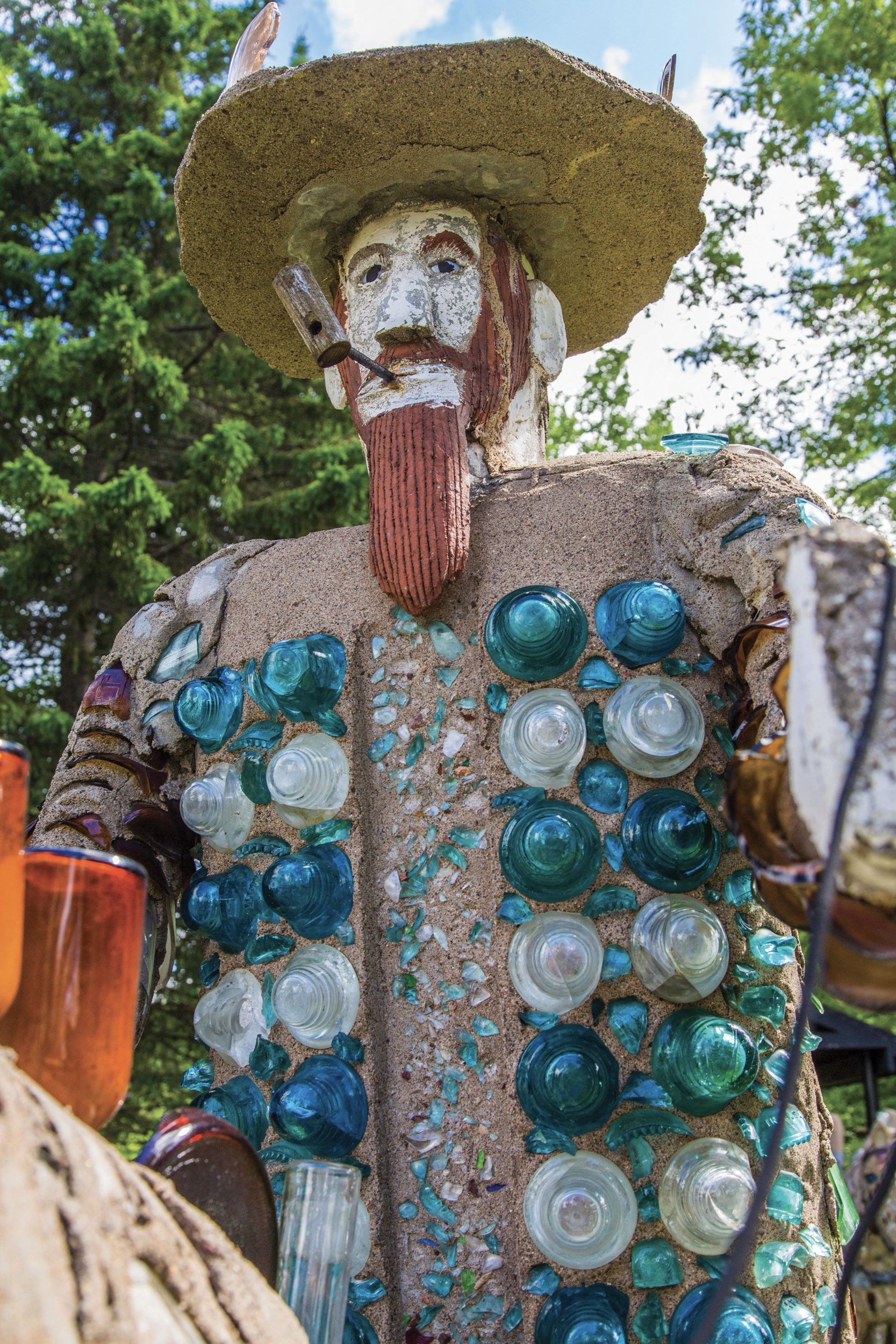
Retired lumberjack Fred Smith began creating concrete sculptures in the 1940s, after a visit to the Dickeyville Grotto inspired him to start working with concrete. He ultimately created a sprawling environment of more than 200 life-sized and larger-than-life depictions of humans and farm animals. Smith worked alone, mixing the concrete by hand and embedding found objects into the surfaces of the figurative sculptures he created.
Dr. Evermor’s Sculpture Park
S7703 US HWY 12, NORTH FREEDOM
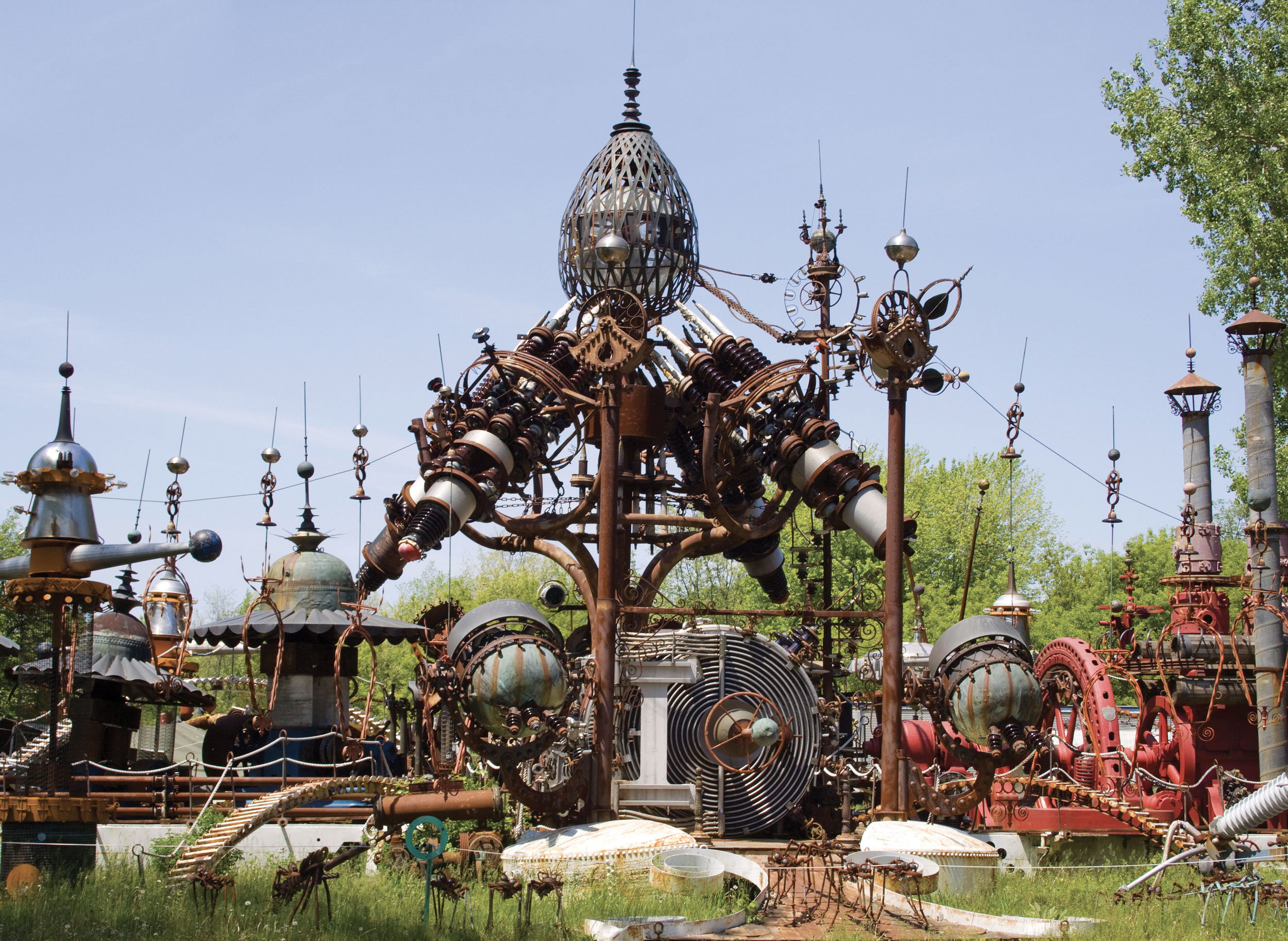
If Smith worked in concrete, Tom Every – a demolitions expert better known by his invented alias, Dr. Evermor – worked in steel and scrap metal. His North Freedom sculpture park is anchored by the Forevertron, a 50-foot-tall steampunk spaceship assembled from salvaged industrial parts. Around it swarm fantastical birds and mythic beasts. The late Every, who contributed to the site from the 1980s until shortly before his death in 2020, used to talk at length to visitors and spun elaborate backstories about his creations, blurring the line between sculpture and performance art.
Rudolph Grotto Gardens
6957 GROTTO AVE., RUDOLPH
Like the Dickeyville Grotto, the Rudolph Grotto Gardens began as a devotional project. In 1919, Father Philip Wagner felt called to build a shrine at his new church. He began with trees and flowers, eventually stacking the stones that made up the oldest part of the site with far more enthusiasm than technical skill. In 1928, young parishioner Edmund Rybicki joined him. They spent the next 30 years transforming roughly seven acres into a garden featuring dozens of decorative stone shrines and an immersive cave. Rybicki continued to work on the gardens after Wagner’s death in 1959. The end result is equal parts peaceful and thought-provoking.
The Painted Forest
E846 PAINTED FOREST DR., WONEWOC
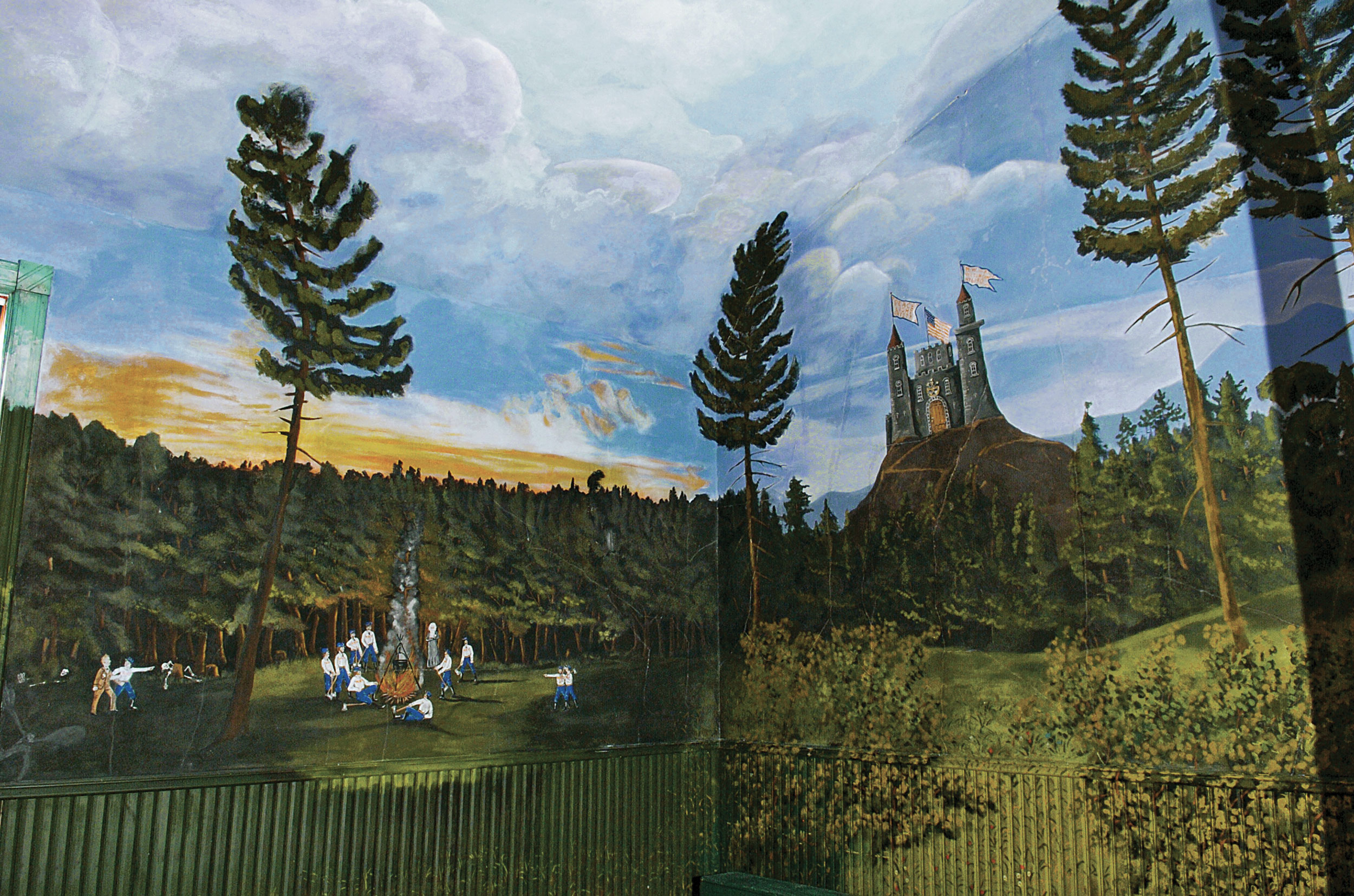
Inside this modest lodge 45 minutes west of Baraboo, the walls and ceilings bloom with bold, stylized murals of a historic naval battle and pastoral scenes rendered in intricate detail by Ernest Hüpeden, a self-taught German painter who for several months in 1898 lovingly transformed the interior of the building in exchange for room and board. Now stewarded by Madison’s Edgewood University, the site is typically open weekends during the warmer months and is best viewed when the surrounding landscape complements the rich greens and blues of the interior murals.